
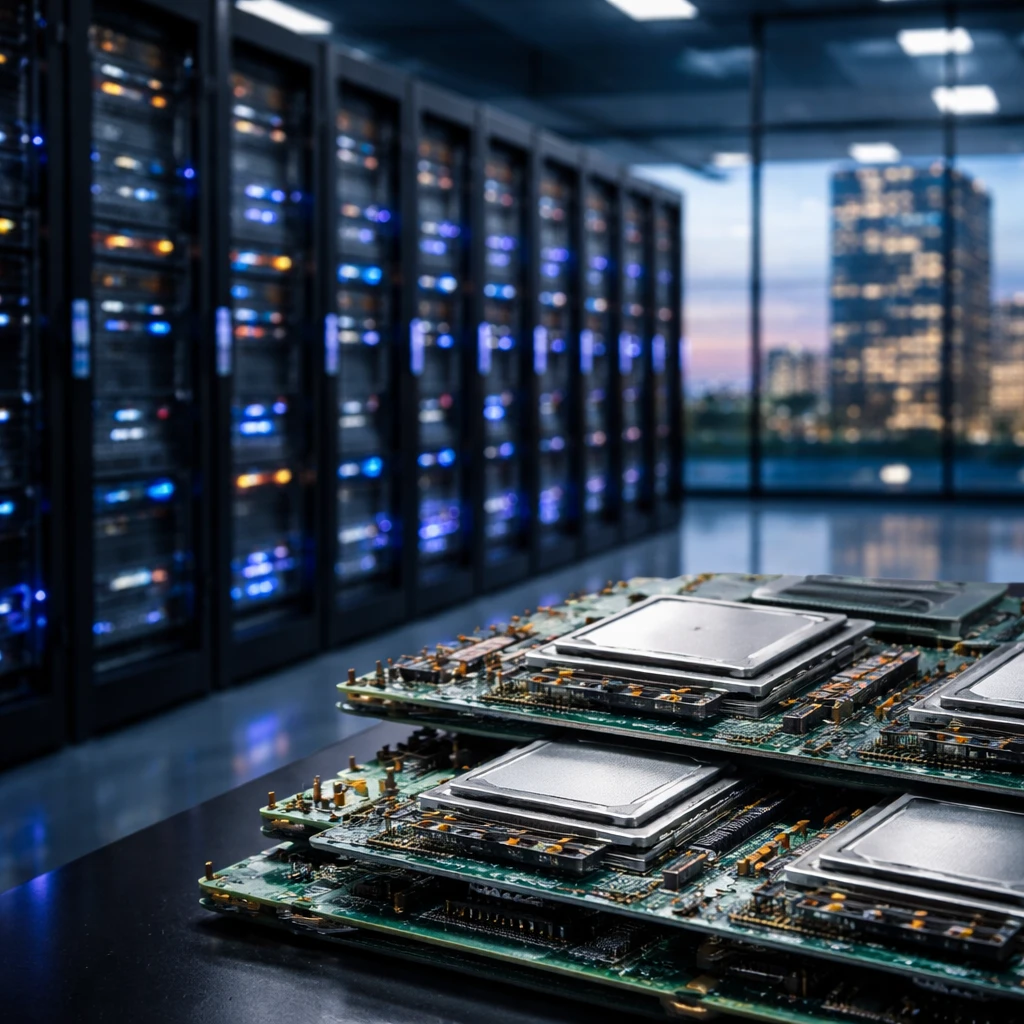
Google and Blackstone are planning a joint initiative to build a new cloud company centered on artificial intelligence workloads that will use Google’s specialized processors, according to people familiar with the arrangement.
Under the plan, Blackstone will commit $5 billion of capital and will be the majority owner of the new venture. Google will supply its Tensor Processing Units - the company’s custom AI chips - along with associated software and services to power the operation.
The partners have set an initial capacity target of 500 megawatts of computing power to be brought online by 2027, with the intention of substantially expanding that capacity over time. The project is designed to respond to rising demand for large-scale AI compute resources and to provide infrastructure optimized for AI model training and inference.
Executives involved in planning see the venture as likely to compete with existing AI compute providers such as CoreWeave. The effort will also accelerate Google’s push to build and monetize its own fleet of AI-specific chips, creating another source of market competition for companies that currently supply the processors widely used in the industry.
Market participants view Nvidia as the benchmark supplier of advanced processors for AI workloads. While Nvidia’s products are regarded as the most advanced in the sector, heavy demand across the industry has prompted some smaller firms to explore alternatives to Nvidia’s processors. The Google-Blackstone venture is part of that broader industry movement to diversify AI compute supply and scale capacity.
Google recently unveiled a new processor tailored to run AI models. The company plans to make those Tensor Processing Units and accompanying software and services available to the Blackstone-backed cloud company, enabling it to offer end-to-end AI compute solutions.
The planned venture reflects a response to rapidly rising compute needs in AI and represents a sizeable private capital bet on building dedicated AI infrastructure. The partners’ public statements on timelines, capacity growth beyond the 2027 target and commercial terms for customers have not been disclosed in detail.
Sectors impacted: Cloud infrastructure, AI hardware and software, data center operations, and enterprise AI services.