
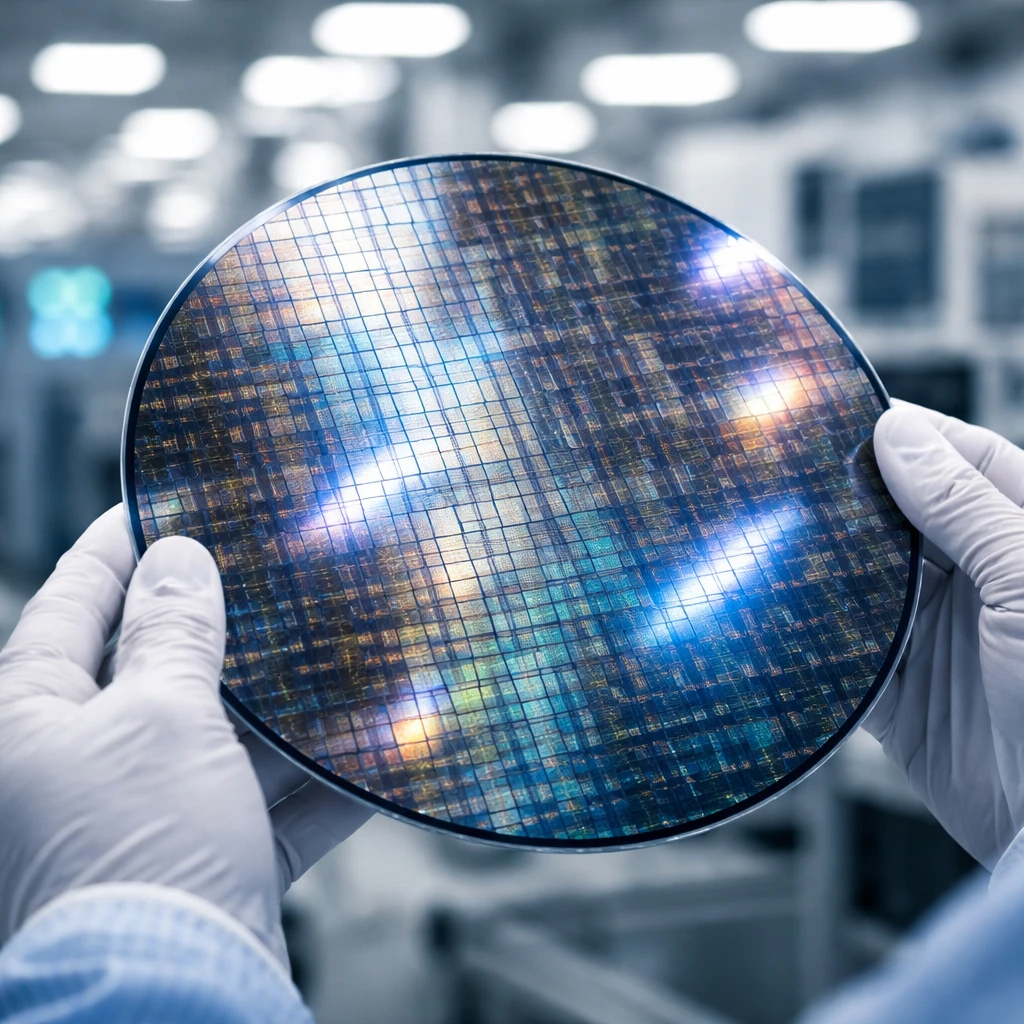
Goldman Sachs' research team has flagged a marked reallocation of fund portfolios as Q2 began, with both hedge funds and mutual funds increasing their exposure to semiconductor companies and trimming positions in software names tied to legacy services.
Analysts attributed the repositioning in part to the powerful run in AI-driven semiconductor plays that has helped lift markets to record levels this year. The Philadelphia Semiconductor Index recorded an 18-day winning streak from the end of March through the end of April - the longest such stretch in the index's history - a development that coincided with heavy demand for chipmakers.
That semiconductor strength has occurred even as markets digest other headwinds, including a drawn-out confrontation between Washington and Iran and a global bond sell-off prompted by rising expectations for interest rate hikes tied to higher oil prices. The research note observes that higher rates can weigh particularly on technology equities because their lofty valuations often depend on profits expected further out in time.
Within the AI-driven market narrative, investor sentiment has evolved, the report notes. Early in the rally, market participants broadly expected AI to buoy the entire technology sector. Over time, perceptions shifted toward the view that AI will create distinct winners and losers, rather than uniformly lifting all tech segments. As a result, software areas that provide traditional enterprise and office products, HR services, and sectors such as food delivery have been singled out as vulnerable to AI-related disruption.
The market bifurcation is reflected in performance gaps: while the SOX is up 72.3% year-to-date, the iShares Expanded Tech-Software Sector ETF is down 11.1% over the same period, underscoring the relative strength of semiconductor names versus many software plays.
Goldman Sachs published a wider analysis earlier in the week that examined roughly $9 trillion of equity positions at the start of Q2. In a research note, Ben Snider and his team summarized how positioning within the Information Technology sector has changed.
"Within the Info Tech sector, hedge fund and mutual fund positioning has mirrored the broader market shift away from Software and toward Semiconductors. Mutual funds entered Q2 carrying their lowest exposure to Software since at least 2012. Excluding the mega-caps, the mutual fund tilt in Semis vs. Software is the largest since 2012. Similarly, hedge funds entered Q2 with Software registering its smallest weight in the hedge fund long portfolio since 2019 and the weight of Semis at a record high," the analysts said in the note.
At the stock level, Microsoft was among the largest net reductions in shareholdings across both hedge funds and mutual funds, according to the research. Mutual funds broadly pared back ownership in several of Microsoft's large-cap peers within the so-called Magnificent 7, while hedge funds also cut positions in most of those big-cap names but, on net, increased holdings in Meta and Apple.
The sector-level reweighting toward semiconductors showed up in specific stock flows as well. Hedge funds added exposure to Lam Research, Applied Materials and ASML, while mutual funds increased positions in Intel and Sitime, according to Goldman Sachs' findings.
Separately, the report and accompanying commentary included a question aimed at individual investors: "Should you invest $2,000 in INTC right now?" The article referenced a ProPicks AI tool that evaluates INTC and other companies using more than 100 financial metrics to generate stock ideas and assess fundamentals, momentum and valuation.
Taken together, the research paints a picture of funds reallocating within the technology sector in response to an AI-led rally that has favored chipmakers, even as macroeconomic and geopolitical uncertainties persist.
Context note: The findings described above come from Goldman Sachs' analysis of fund positioning at the start of Q2 and the performance of various market indices and ETFs mentioned in the report.