
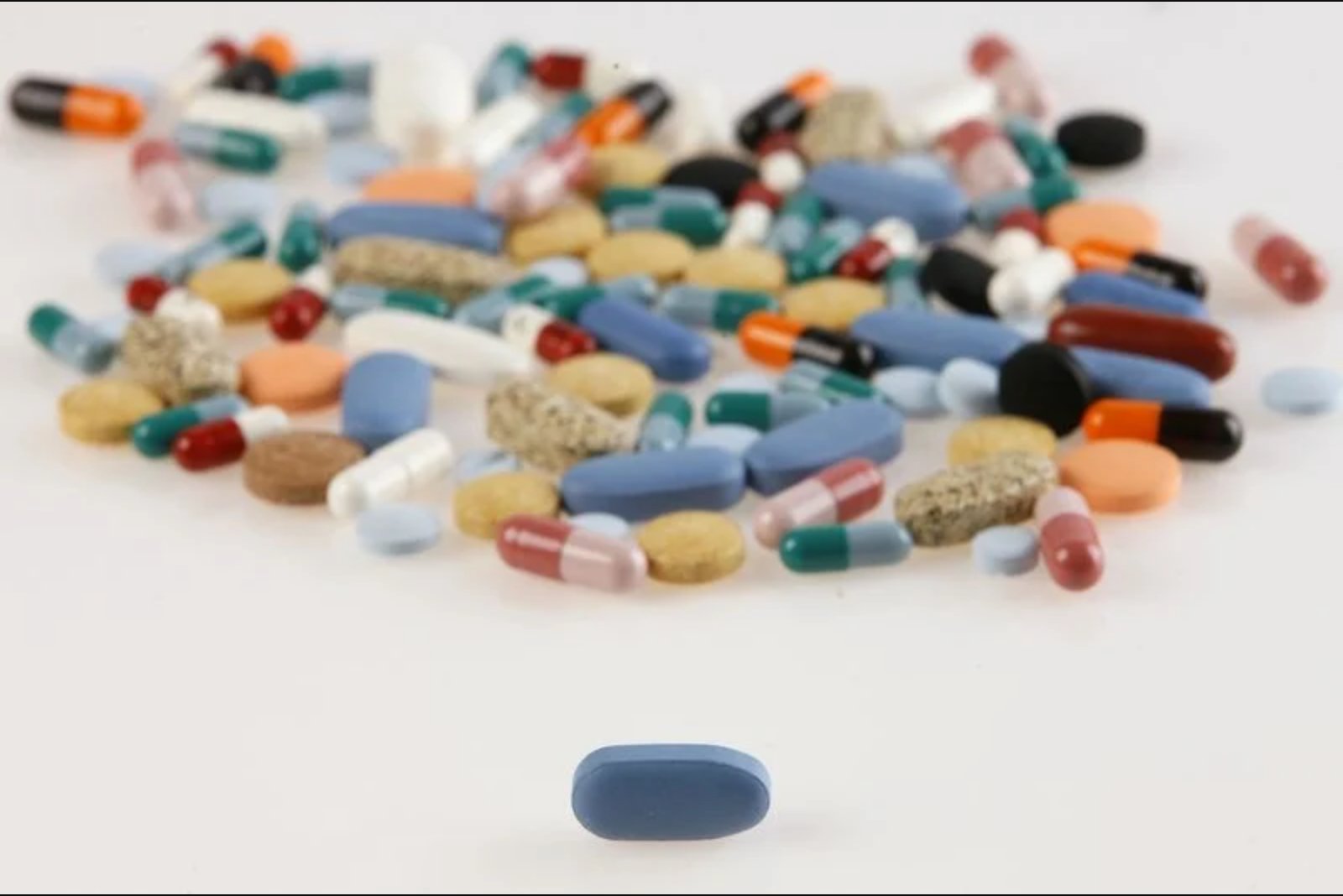
Global drugmakers are moving to significantly expand their presence in the United States through a wave of large-scale investments in manufacturing and research. Combined announcements from a range of companies account for roughly $500 billion in planned U.S. spending, with capital directed toward building new factories, enlarging research facilities and strengthening domestic supply chains.
This push has been described by company executives as a response to multiple pressures including the need to reinforce manufacturing networks, reduce supply-chain vulnerability and provide confidence to investors. The initiatives vary by company - from multi-year, multi-billion-dollar programs to targeted plant builds and capacity upgrades.
Key corporate commitments and plans
Pfizer - The company reached an agreement with President Donald Trump on September 30 to invest $70 billion in research and development and domestic manufacturing. As part of that arrangement, Pfizer secured a three-year exemption for its products from the pharmaceutical-focused tariffs.
GSK - The London-based company plans $30 billion in U.S. investments over five years, targeting research and development and supply-chain infrastructure.
Eli Lilly - Announced plans, first referenced by the U.S. President in January, to build six new plants in the United States. Previously, Lilly outlined at least $27 billion in spending to construct four U.S. plants to expand production and strengthen medical supply chains. The company has provided details for three sites located in Alabama, Virginia and Texas and in January disclosed a $3.5 billion pharmaceutical manufacturing facility in Pennsylvania - described as its fourth new site - intended to increase U.S. production capacity. In addition, Lilly has invested about $1 billion in Jacksonville, Florida, to support its eye care manufacturing; that facility is expected to be fully operational in 2028.
Johnson & Johnson - Plans to raise U.S. investments by 25% to reach $55 billion over the next four years, including construction of four plants. Two specified sites are in Wilson, North Carolina, and at Toky0-based Fujifilm Biotechnologies’ Holly Springs, North Carolina manufacturing complex. The company noted the Jacksonville investment separately as part of its broader U.S. manufacturing expansion.
Roche - The Swiss drugmaker pledged in April last year to invest $50 billion in the U.S. over a five-year period. Shortly thereafter it announced an additional $550 million for expansion of its Indianapolis diagnostics manufacturing hub. Roche said the expansion will span facilities in Indiana, Pennsylvania, Massachusetts and California and is expected to support the creation of more than 12,000 jobs. In January, the company also committed to more than double investment at its Holly Springs, North Carolina drug manufacturing site to about $2 billion, up from the previously announced figure of over $700 million in May 2025.
AstraZeneca - The Anglo-Swedish firm has pledged $50 billion for U.S. manufacturing by 2030. That plan includes construction of a new drug substance facility in Virginia - described as its largest single-site global investment - along with expansions across Maryland, Massachusetts, California, Indiana and Texas. Executives said they have initiated technology transfers and managed inventory in 2025 to limit any tariff impacts, which they described as likely to be very short-lived.
Novartis - The Swiss company plans $23 billion in spending to build and expand 10 U.S. facilities over five years. Its program includes six new manufacturing plants and expansion of its San Diego research and development site, with the latter expected to create more than 1,000 jobs.
Sanofi - The French drugmaker intends to invest at least $20 billion in the U.S. through 2030 to boost both manufacturing and research. Sanofi said it will expand capacity through direct investments at company sites and via partnerships with domestic manufacturers. The company’s CFO noted that potential tariffs were expected to have a limited impact in 2025 due to inventory already held in the U.S.
Biogen - The U.S.-based company will add $2 billion in investment to its existing North Carolina manufacturing footprint, increasing capacity for gene-targeting therapies and automation. Biogen operates seven factories in the state and said an eighth is scheduled to begin operations in late 2025.
Merck - The company has started construction on a $3 billion pharmaceutical manufacturing plant in Virginia as part of more than $70 billion in investments aimed at expanding domestic manufacturing and R&D. Merck also plans a $1 billion plant in Delaware for biologics and its cancer drug Keytruda, a move described as potentially creating over 4,500 jobs. Earlier this year Merck opened a $1 billion facility at a North Carolina site. Its animal health unit will invest $895 million to expand a Kansas manufacturing and R&D site, contributing to a broader $9 billion U.S. investment through 2028. Merck management said in July they anticipated minimal tariff impact in 2025, citing inventory management and shifts in manufacturing to the U.S.
Amgen - The company plans $900 million to expand an Ohio manufacturing facility, bringing its total investment in the state to $1.4 billion and adding 750 jobs. In December, Amgen committed $1 billion for a second facility in Holly Springs, North Carolina. The company is also investing more than $600 million in a new R&D center at its Thousand Oaks, California headquarters and $650 million to expand drug manufacturing in Juncos, Puerto Rico, expected to create nearly 750 jobs. Additional investment of $300 million was announced to grow its U.S. manufacturing network and support construction jobs.
AbbVie - The company said in January it committed $100 billion over the next decade to U.S.-based R&D under a three-year deal with the administration focused on reducing drug prices. AbbVie operates 11 U.S. manufacturing sites and said inventory management had left it relatively insulated from tariff impacts in the near term. In February, the firm said it would invest $380 million at its North Chicago, Illinois campus to build two manufacturing facilities supporting neuroscience and obesity medications.
Gilead Sciences - Earlier this year Gilead announced $11 billion in new planned U.S. investment, bringing its total pledged investment to $32 billion. The company said in September it began work on a pharmaceutical development and manufacturing hub at its Foster City, California headquarters and is developing two additional sites.
Cipla - The Indian firm is expanding U.S. manufacturing capacity for complex respiratory products at facilities in Fall River, Massachusetts, and Central Islip, New York.
CSL - Australia’s CSL said in November it would invest $1.5 billion in the U.S. over five years to manufacture plasma-derived therapies. In March the company announced an expansion of a plasma therapy manufacturing facility in Kankakee, Illinois, expected to be operational by 2031.
Other firms - Several other major drugmakers appear in the group of investors. Novo Nordisk characterized itself as very U.S.-centric and said its strong U.S. manufacturing footprint positions it well for tariff challenges. Gilead, Amgen and others have detailed site-specific builds and expansions that add to the overall total of planned spending.
Supply-chain and policy context reflected by company statements
Company statements highlighted a combination of strategies to protect operations from trade pressure and supply-chain disruptions. These include building domestic capacity, technology transfers to U.S. sites, stockpiling inventory in the U.S. to cover near-term exposures and citing local hires and job creation as part of expansion plans. Several companies explicitly framed inventory management and relocation of production as reasons they expected limited near-term impact from tariff measures.
Investments are spread across a wide set of states and site types - drug substance facilities, biologics plants, diagnostics manufacturing hubs and R&D laboratories. Announced projects include greenfield builds and significant expansions of existing facilities, with timelines that stretch into the latter half of this decade and beyond.
What the announcements mean for the manufacturing and logistics sectors
The wave of commitments translates into near-term and long-term work for construction, specialized equipment suppliers, logistics providers and local labor markets. Companies noted site-specific timelines and operational targets - for example, a Lilly eye care plant expected to be fully operational in 2028 and CSL’s Kankakee expansion planned to be online by 2031. Job creation figures cited in company announcements range from the hundreds to the thousands, depending on the size and nature of the projects.
Conclusion
A raft of major pharmaceutical companies have committed extensive capital to expand U.S. manufacturing and research capabilities. The investments are aimed at reinforcing supply chains, limiting tariff exposure and signaling commitment to domestic production. Execution timelines vary by project and company, and many of the plans stretch over multiple years, reflecting the depth and complexity of pharmaceutical manufacturing expansion.