
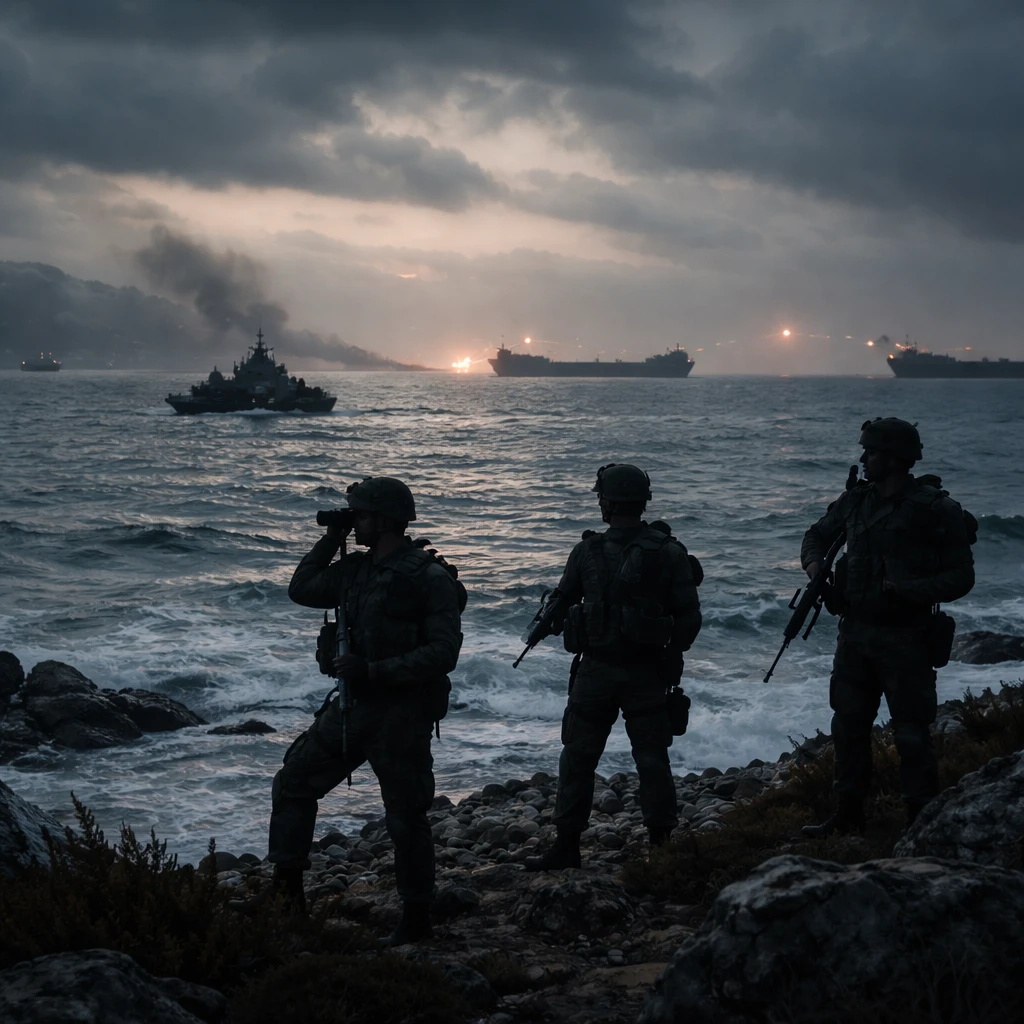
Clashes between Israeli forces and Iran-backed Hezbollah militants were reported in southern Lebanon on Tuesday, days before delegations from Israel and Lebanon are due to meet in talks hosted by the United States. The exchanges come amid fragile ceasefire conditions and ongoing indirect negotiations between Washington and Tehran.
Observers indicated that the ceasefire, which Washington helped broker, appears to be largely nominal and could jeopardize broader negotiations involving Iran. Tehran has conditioned any agreement on a cessation of hostilities in Lebanon as well, adding another layer of complexity to the diplomatic process.
Israeli Prime Minister Benjamin Netanyahu has announced plans to intensify operations in Lebanon, stating that Israel is "seizing strategic areas" and aims to strengthen control over portions of southern Lebanon it currently holds. Separately, Hezbollah reported it had carried out rocket, artillery and exploding drone attacks targeting Israeli troops and vehicles.
Those remarks and battlefield developments occur as U.S.-Iran talks to end what has been described as nearly three months of war face an uncertain trajectory. Media reports indicate indirect talks between Washington and Tehran have continued despite the recent exchange of fire, while U.S. officials emphasized that the ceasefire, though fragile, remains in effect. Iran has warned it would retaliate should the truce be violated.
U.S. Secretary of State Marco Rubio said this week that it will take a "few days" for Washington and Tehran to reach a deal. Other media reports have suggested that negotiators were close to a framework accord, with proposed terms reportedly including an extension of the ceasefire and a reopening of the Strait of Hormuz.
The Strait of Hormuz, a key maritime corridor off Iran's southern coast, was highlighted for its significance to global energy flows. One report cited in negotiations said the strait channels roughly a fifth of the world's oil, and that reopening the waterway has been a central element of the proposed framework. The strait has been largely closed since the start of the war in late February, a disruption that has constrained oil supplies and pushed crude prices higher.
Market indicators reflected the continued sensitivity of energy markets to the conflicts and diplomatic progress. Brent crude futures, considered the global oil benchmark, were last reported down 3.2% at $96.44 a barrel. The price remains below recent peaks that exceeded $100 a barrel but is still elevated compared with pre-war levels, sustaining concerns about a potential energy-driven spike in inflation.
As delegations prepare to meet and indirect negotiations persist, both the military developments on the Lebanon-Israel front and the conditions attached to any Iran deal - including the status of the Strait of Hormuz and the extension of the ceasefire - remain pivotal. The coming days are expected to be decisive in determining whether a durable truce and a diplomatic resolution can be secured.