
Ford Motor Company Chief Executive Jim Farley urged modifications to the USMCA North American trade agreement that, in his view, should favor manufacturers that build vehicles in the United States and impose consequences on automakers that rely substantially on imports.
Speaking in a phone interview with CNBC on Wednesday, Farley said the revamped deal should make U.S. manufacturers more competitive against companies bringing vehicles in from Japan and South Korea. He said Ford seeks provisions that confer benefits on automakers that primarily produce within the United States.
"It's imperative that any new agreement makes it easier, not harder, to compete with U.S. makers who import from Japan, South Korea and global competitors that import from those locations," Farley said. "That's the key for us."
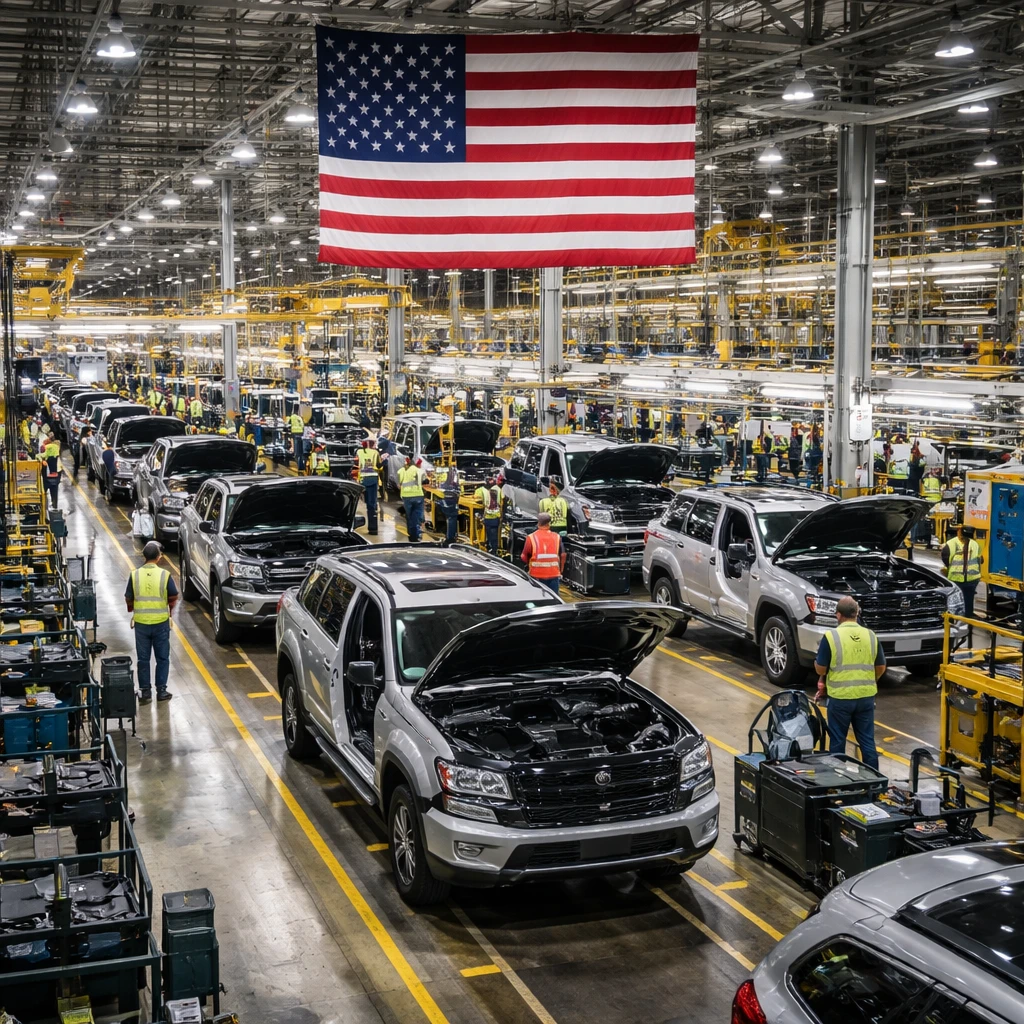
Farley framed his argument by pointing to Ford's scale of U.S. manufacturing. The company assembled more than 2 million vehicles in the United States last year, a figure he cited as the highest among automakers operating in the country. Ford also exported 311,000 units to over 60 international markets while importing 378,000 vehicles, which represented 17% of its 2.2 million U.S. sales.
By contrast, industry data show that General Motors and Toyota Motor are both leaders in U.S. sales and also rank as the top two importers of vehicles in 2025. GM imported 1.17 million vehicles, equal to 41% of its U.S. sales, while Toyota imported more than 1.19 million units, or 47% of its domestic sales.
"Ford's a leader of U.S. auto production with the most U.S.-built vehicles but, more importantly, we import very few, and we export the most, and we have the most UAW [union] workers here," Farley said. "So we're very proud, especially of the ratio between what we build here and what we import."
Farley's comments arrive against a backdrop of policy shifts: the Trump administration chose not to renew the trilateral trade pact with Canada and Mexico and instead opted for annual reviews of the treaty, a process that could ultimately terminate the agreement by 2036. Separately, industry figures indicate the auto sector accounted for roughly 18% of U.S. trade with Canada and Mexico in the last year.
Farley's proposal centers on altering incentives and penalties within trade rules so that automakers with higher domestic production are advantaged relative to competitors that import a significant portion of their vehicles. The CEO positioned Ford's production and trade ratios as justification for such changes but did not detail specific policy language or mechanisms for assessment and enforcement.
The debate touches on manufacturing footprints, trade flows and how trade rules intersect with corporate sourcing decisions. Any changes to the USMCA or the rules governing North American trade would have implications for automakers, suppliers and cross-border commerce tied to the auto industry.