
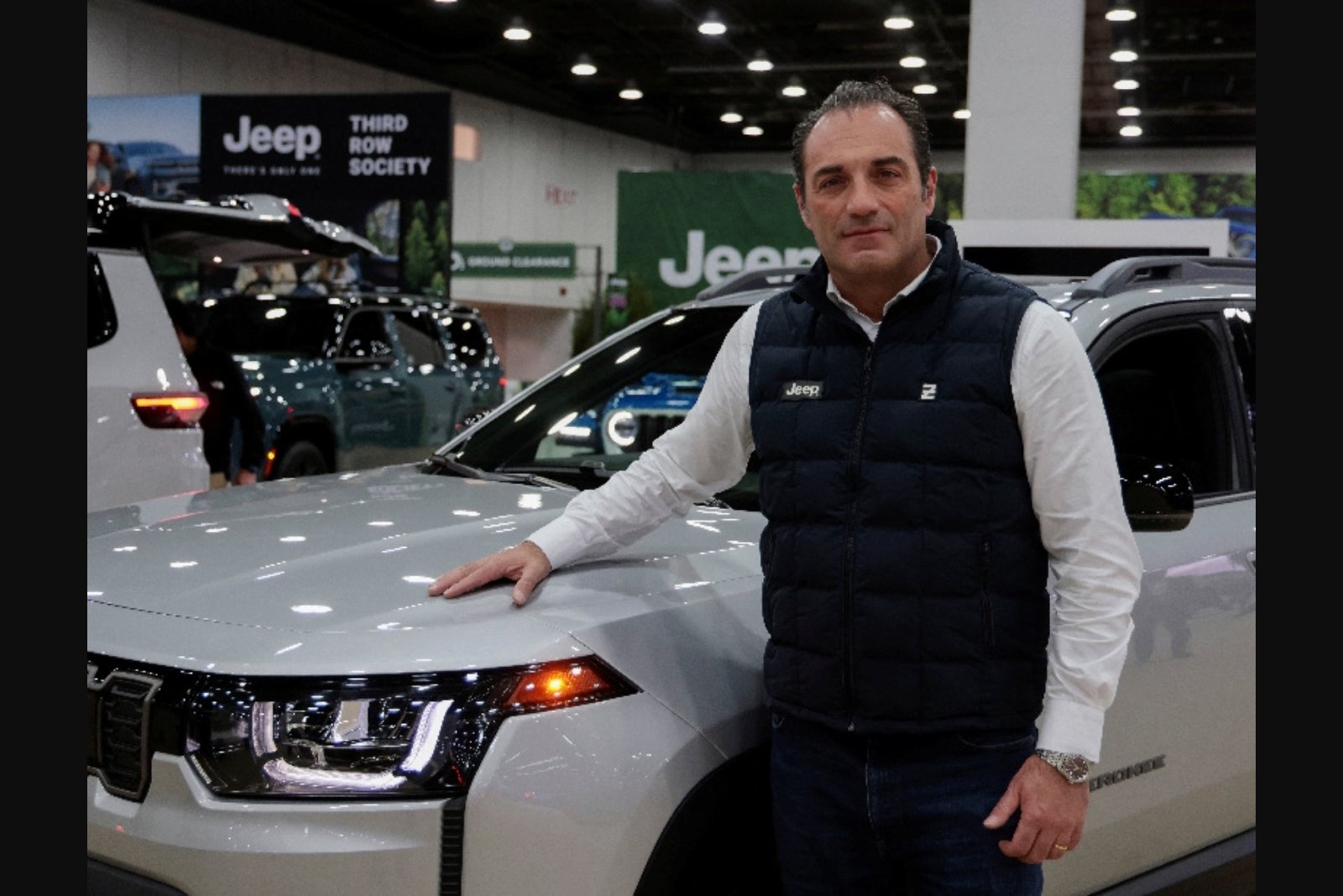
Stellantis’ chief executive, Antonio Filosa, will lay out a multi-year strategy to investors on Thursday at the automaker’s capital markets day in Auburn Hills, Michigan, with three central priorities: revive faltering U.S. sales, streamline the company’s broad brand portfolio and expand collaborations with Chinese carmakers.
The presentation marks a pivotal moment for Filosa, who was appointed last year to arrest the group’s deteriorating performance after it ceded ground in both the U.S. and Europe. Stellantis’ shares reached an all-time low in March of this year, underscoring investor impatience and the urgency of delivering a credible recovery plan.
Strategic focus and capital allocation
Sources familiar with the plans say the automaker - the world’s fourth-largest by sales - intends to concentrate funding on a smaller set of four core brands. The move is intended to reallocate capital toward higher-volume, higher-margin labels rather than pursuing an even split across the group’s extensive brand stable.
Executive commentary indicates remaining names in the 14-brand portfolio will continue to exist but be repositioned to serve niche or regional roles rather than receive broad, equal investment. Filosa has cautioned against abrupt eliminations of marques, arguing that exiting a brand entirely risks handing its customer base to rivals. "The real point is not to select one, two, three, or four brands," he said. "The real point is to combine efficient capital allocation with brand-specific strategies."
China partnerships and manufacturing cooperation
Filosa’s address is expected to include a significant China element. Stellantis has already signaled moves in this direction by expanding a European joint venture with Leapmotor and striking a deal with Dongfeng to produce vehicles in China. A person familiar with the matter said Filosa’s presentation will contain "a lot of China in it."
The group is reported to hold excess manufacturing capacity across several countries and, much like some European peers, is open to sharing factory space in Europe with Chinese automakers beyond the Leapmotor tie-up. Company statements last week suggested that the manufacturing cooperation with Dongfeng may broaden beyond China in time.
Executives and analysts see such partnerships as a way to reduce industrial cost pressures and to tap Chinese know-how on electric vehicle platforms and supply chains, which are characterized in the plan as offering major cost advantages and faster vehicle development timelines. Those potential technology and supply-chain gains could feed back into improvements in Stellantis’ own EV programs.
Investor priorities and market challenges
Investors will be watching closely for confirmation that Filosa’s agenda can generate a sustainable sales rebound and margin uplift while confronting persistent structural issues. These include brand complexity across 14 names, industrial inefficiencies tied to excess capacity and recent charges totalling $26 billion linked to a rollback of certain EV ambitions.
Market participants such as Massimo Baggiani of Niche Asset Management have emphasized the importance of restoring a functioning North American business. "They just need their North American business to function. That will give immediate value to their stock," Baggiani said. His firm has acquired two tranches of Stellantis shares since March. He added that the company must address overcapacity in Europe, refine its brand strategy and defend profitable positions in regions like South America and Africa from growing Chinese competition. Baggiani said Filosa appears aware of these challenges and has ideas for addressing them, but added that those proposals will need to be tested over a longer period.
Product moves aimed at U.S. gaps
Analysts at Citi noted that Filosa is trying to plug gaps in the U.S. lineup, where Stellantis currently appeals to only about half of buyers. New product initiatives highlighted ahead of the presentation include the revamped Jeep Cherokee and plans for compact and midsize pickup trucks designed to increase relevance in the North American market.
Whether these product and portfolio shifts will translate into durable growth is the central question confronting investors at the capital markets day. The company’s approach balances retaining a broad set of brands with concentrating capital on the handful expected to drive the most volume and margin uplift.
Currency note
All dollar-to-euro conversions referenced in discussions around the company use the rate $1 = 0.8541 euros.
Filosa’s presentation will therefore serve both as a performance roadmap and a test of investor confidence: it must show a credible path for restoring U.S. competitiveness, clarify how partnerships with Chinese automakers will be structured and funded, and demonstrate that a more focused brand and capital allocation strategy can overcome the industrial and financial challenges the group currently faces.