
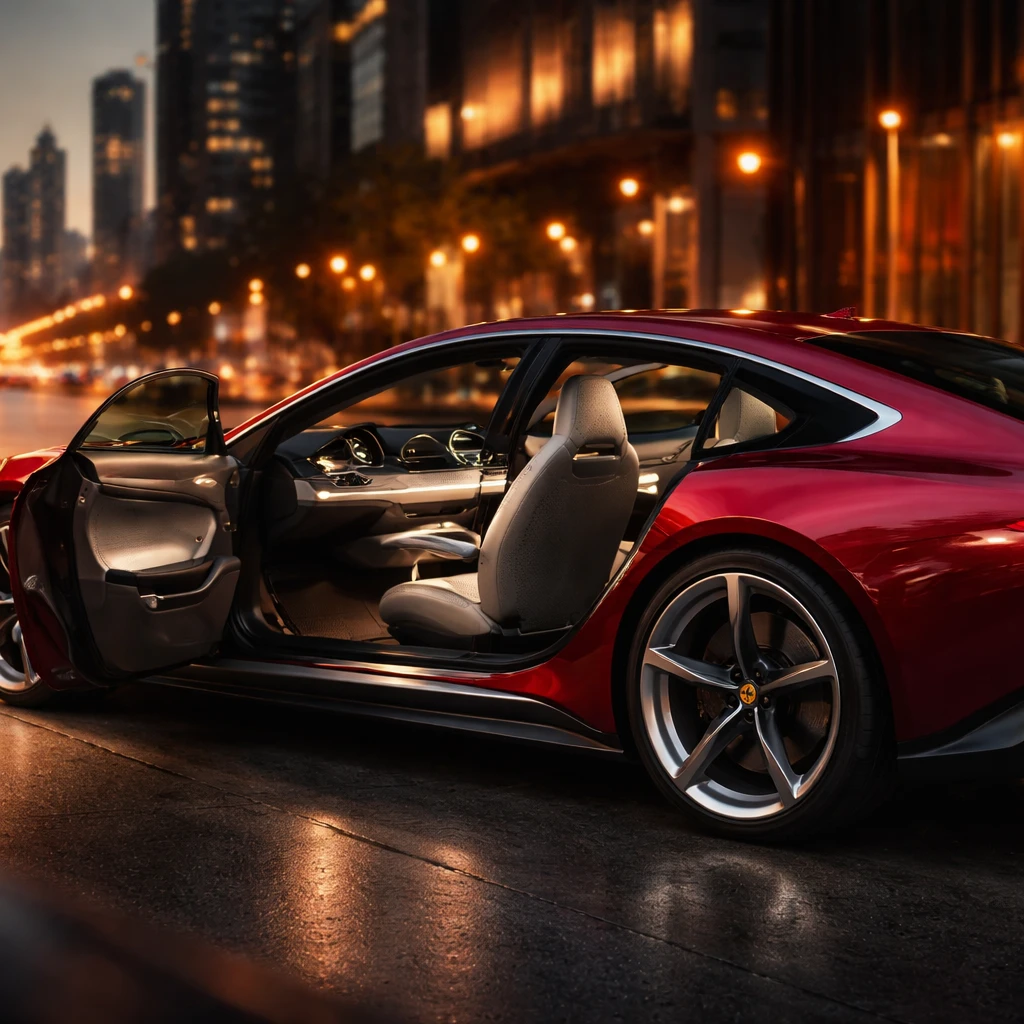
Shares of Ferrari NV dropped more than 6% in Milan trading on Tuesday, the day the company revealed the Luce, its first fully electric passenger car. Ferrari has priced the Luce at c550,000 and expects to begin deliveries in the fourth quarter of 2026.
The Luce is a five-seat, four-door model created in partnership with LoveFrom, the design collective led by Sir Jonathan Ive. Ferrari chief executive Benedetto Vigna characterised the vehicle as "the result of five years of work" and said it sits "at the heart of an ecosystem of collaborations with outstanding technology partners."
Ferrari provided technical specifications that position the Luce as a high-performance electric offering. The car uses four electric motors - one at each wheel - that together generate in excess of 1,000 horsepower. Ferrari stated a top speed above 310 kilometres per hour and a range in excess of 500 kilometres. The company disclosed a mass of more than 2.2 tonnes and said the model runs on a 122kWh battery pack built on an 800V electrical architecture. Ferrari also said it filed more than 60 new patents related to the vehicle.
On the interior, Ferrari said the cabin was developed with LoveFrom and long-term Apple supplier Corning. The dashboard is machined from a single block of aluminium, while the centre console uses Corning glass. Ferrari highlighted an audio system with 21 speakers and a 3,000-watt output, processed by proprietary Ferrari software. Unlike many rival EVs that emphasise touch controls, Ferrari retained physical controls in the Luce.
From a structural standpoint, Ferrari said the Luce’s chassis contains 75 percent recycled aluminium and that the car’s centre of gravity is 95 millimetres lower than that of the Purosangue. Matteo Lanzavecchia, head of vehicle engineering, said that 95 percent of the Luce’s components are new.
Ferrari indicated it expects most Luce purchasers to be new to the brand. Enrico Galliera, chief marketing and commercial officer, described the model as "absolutely stunning" and said it is aimed at clients "who are still looking for something completely different, to be used in different moments of life." The company also said it will continue to sell vehicles equipped with six-, eight- and 12-cylinder engines alongside the Luce.
Ferrari noted an intention to expand further into markets such as China, where the company observed that electric vehicles are already widespread and where large petrol cars are subject to heavy taxation. The firm framed the Luce as part of a broader strategy involving collaborations with technology partners and new engineering approaches.
Key points
- Ferrari launched the Luce EV at a price of c550,000 with deliveries slated for Q4 2026; shares fell over 6% in Milan trading on the day of the announcement.
- The Luce is a five-seat, four-door car developed with LoveFrom and Corning, featuring four wheel-mounted motors, a 122kWh battery on 800V architecture, and more than 60 patents filed.
- Ferrari expects the Luce to attract mostly new customers and plans to continue selling traditional six-, eight- and 12-cylinder models while pursuing growth in markets such as China.
Risks and uncertainties
- Market reaction: Ferrari shares declined sharply on the day of the Luce launch, indicating near-term investor sensitivity to the EV introduction.
- Customer mix uncertainty: Ferrari said most Luce buyers are expected to be new to the brand, creating uncertainty about the model's effect on existing customer dynamics and brand positioning.
- Engineering and production complexity: Ferrari reported that 95 percent of components are new and that it filed more than 60 patents, reflecting a high degree of new technology and potential production challenges.
The Luce combines elements Ferrari emphasised as technical and aesthetic differentiators while the company stresses it will maintain its lineup of internal combustion engine cars. Investors and market observers will be watching how the new EV affects Ferrari's customer base, production plans and positioning in markets where EV adoption and taxation regimes are evolving.