
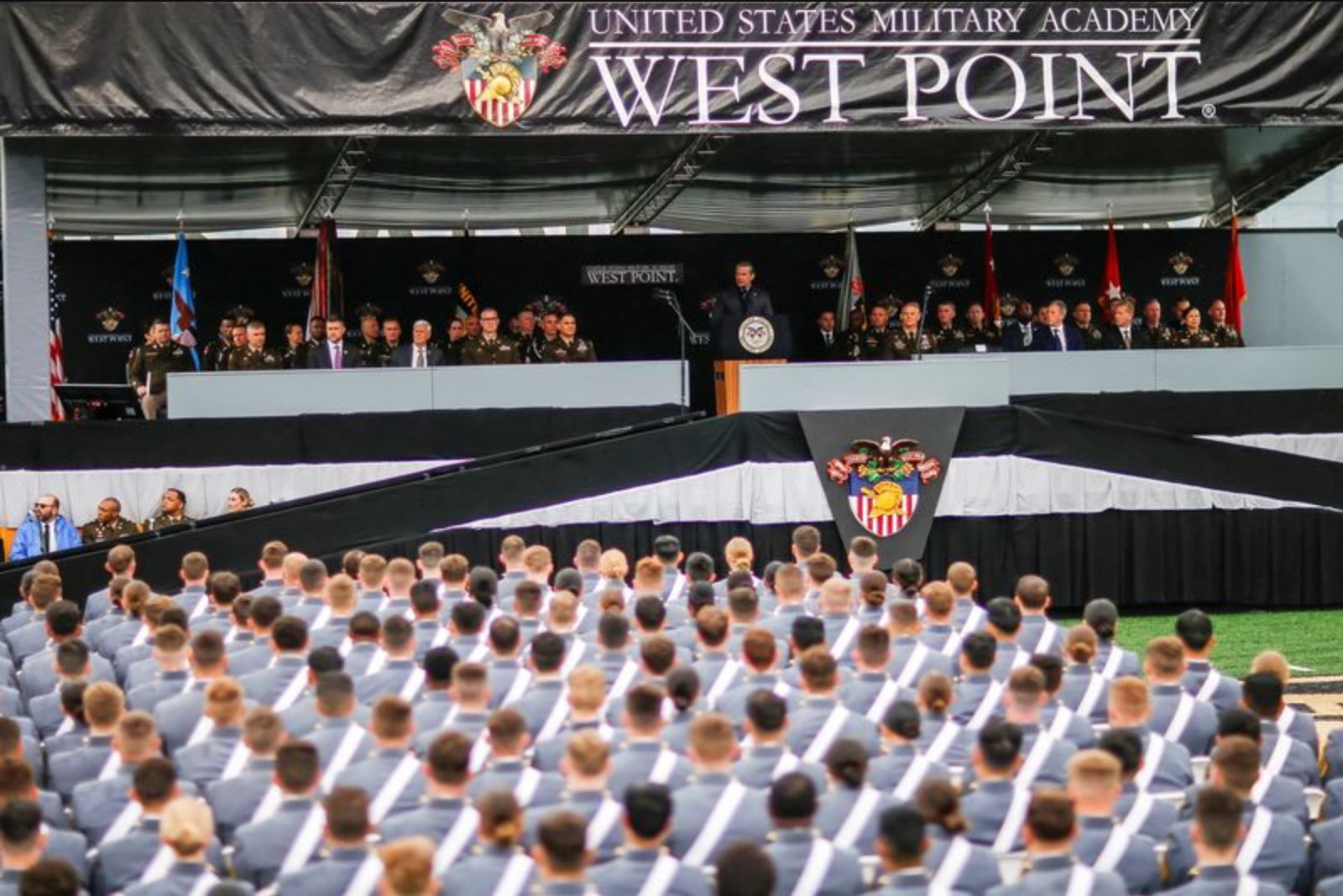
A federal judge in White Plains, New York has temporarily enjoined the U.S. Military Academy at West Point from enforcing a policy introduced in February 2025 that required civilian faculty to seek prior approval before speaking publicly or publishing in an official capacity. The preliminary injunction, issued on Tuesday by U.S. District Judge Cathy Seibel, was granted in response to a class-action lawsuit brought by Tim Bakken, a civilian law professor at West Point.
The lawsuit, filed in September, contends that the academy's changes curtailed faculty speech in violation of the First Amendment. In addition to blocking enforcement of the February 2025 policy against any civilian faculty member, Seibel's order specifically barred West Point from prohibiting Bakken from sharing his opinions with students on the subjects he teaches.
Seibel wrote that "West Point cadets are already, by definition, smart, tough and patriotic. They are not snowflakes who will somehow be harmed by learning about controversial issues or competing viewpoints." The judge described the policy shift as a likely violation of constitutional free speech protections and characterized the restrictions as a "broad and standardless" intrusion on civilian faculty speech.
The case focuses on two related institutional actions. The first is the February 2025 requirement that faculty obtain approval before public commentary or official publication. The second is an August directive that barred faculty from sharing personal opinions in the classroom. Bakken presented evidence in the litigation that the policy changes were designed to compel faculty alignment with then-President Trump's positions and to implement an executive order signed in January 2025.
That executive order directed West Point and other U.S. military academies not to promote certain "un-American, divisive, discriminatory, radical, extremist, and irrational theories," prohibited instruction asserting that America's founding documents are racist or sexist, and required academies to emphasize that the United States and its founding documents remain a force for good. Seibel said that restricting classroom discussion under such directives was "nonsensical if the mission is to prepare the nation's future military officers." The opinion also notes that Seibel was appointed by Republican President George W. Bush.
In response to the ruling, West Point issued a statement saying the academy will consult with U.S. Department of Justice attorneys on next steps. Bakken's lawyers, Jonathan Goldman and Stephen Bergstein, praised the decision, calling it a "ringing endorsement of freedom of speech in the academy," and adding, "The First Amendment protects all of us, inside and outside West Point."
The preliminary injunction temporarily prevents enforcement of the challenged policy for civilian faculty and safeguards Bakken's ability to express his instructional opinions to his students. The litigation remains active, and West Point's coordination with the Department of Justice indicates further legal proceedings or responses may follow.
Background: The dispute arises from policy changes implemented in February 2025 and an August directive that limited personal expression in classrooms, linked in court filings to a January 2025 executive order addressing curriculum and viewpoint restrictions at military academies.
Current status: A preliminary injunction issued by Judge Cathy Seibel blocks enforcement of the February 2025 policy against civilian faculty and protects the plaintiff's classroom speech while the case proceeds.