
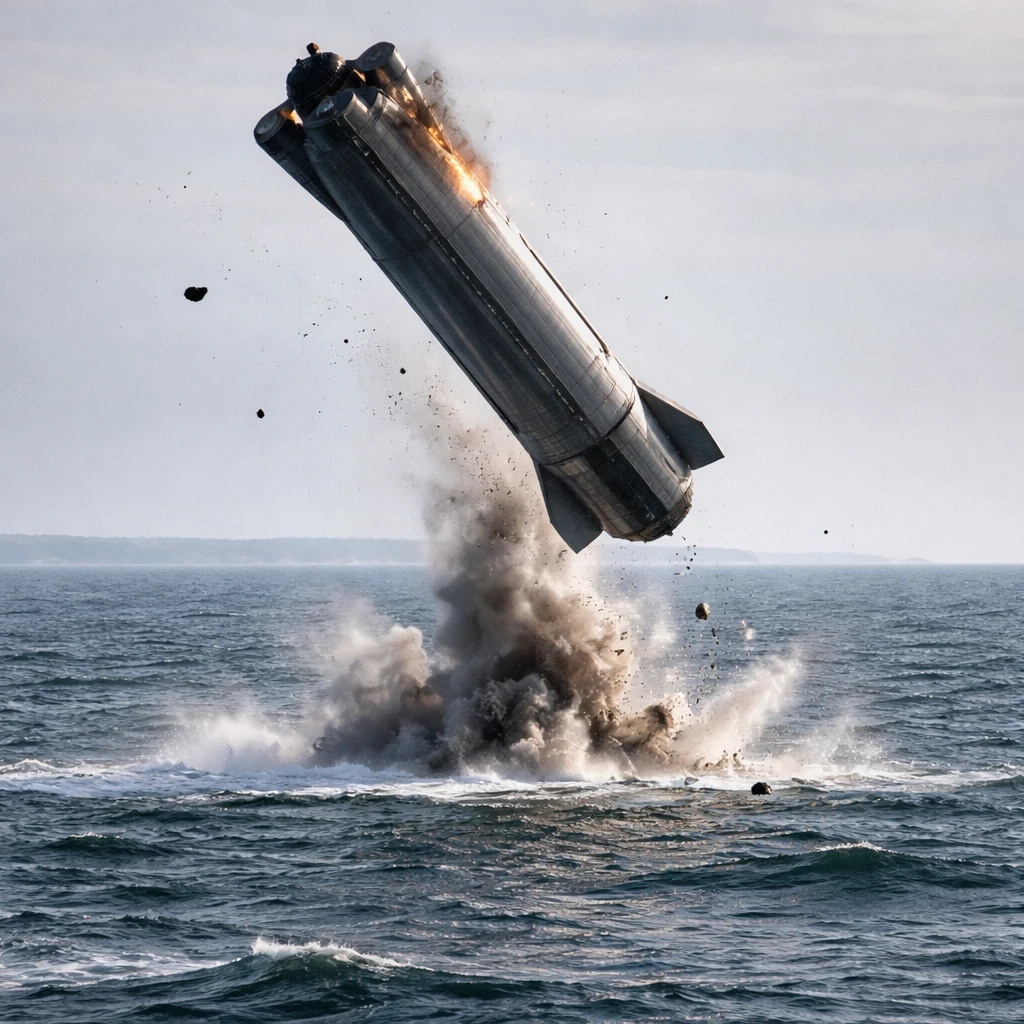
The Federal Aviation Administration has formally required SpaceX to conduct an investigation into a booster mishap that took place during the May 22 flight of the company’s Starship system, according to an FAA statement released to TechCrunch on Wednesday.
The agency concluded the flight produced a mishap involving the Super Heavy booster as it returned over the Gulf of America after stage separation. Under the FAA order, SpaceX must not proceed with further Starship test launches until the company completes the investigation and submits the results for FAA approval.
The FAA will oversee the SpaceX-led inquiry, participating at every step and reserving final sign-off on the company’s report and any corrective measures it proposes. The agency said there were no reports of injuries to the public or damage to public property as a result of the incident.
According to the account of events, the booster separated from the Starship vehicle but suffered an apparent engine failure when it attempted the sustained burn intended to redirect it toward SpaceX’s South Texas launch site. The booster then tumbled toward the Gulf and most likely exploded on impact.
The May 22 mission marked the first flight of SpaceX’s upgraded V3 Starship configuration. The vehicle flew with modifications to the booster design, the introduction of third-generation Raptor engines on the booster, and upgrades to the Starship vehicle itself. Following booster separation, one of the six Raptor engines on the booster was lost, which factored into the company’s decision to forgo a planned additional sustained burn in orbit as part of the test objectives.
The FAA-ordered pause reduces the likelihood that SpaceX will conduct another test launch before the company’s anticipated initial public offering in mid-June. SpaceX has said in its recent IPO filing that its Starlink business is its largest source of revenue and remains its only profitable segment. The company’s strategy depends on Starship becoming reliable and reusable to support further growth of its Starlink service.
Key points
- The FAA has ordered a SpaceX-led investigation into a Super Heavy booster mishap from the May 22 Starship test flight.
- All Starship test launches are on hold until the FAA approves the investigation report and any corrective actions.
- The incident may affect near-term testing schedules and the timeline ahead of SpaceX’s anticipated IPO in mid-June; Starship reliability is linked to Starlink expansion, which the company cites as its primary revenue driver.
Risks and uncertainties
- Regulatory oversight - Ongoing FAA supervision and the requirement for FAA approval create uncertainty about the timing of resumed test flights, which could delay development milestones in the aerospace sector.
- Operational reliability - The engine failure and loss of a Raptor engine during the flight raise questions about the V3 configuration’s performance until the investigation clarifies root causes, affecting the reusable launch sector.
- Capital-markets timing - The pause decreases the probability of additional tests before the company’s expected IPO in mid-June, introducing potential near-term timeline and market-impact uncertainty.
What we know and what remains unclear
The FAA statement identifies the event as a mishap involving the Super Heavy booster after stage separation and specifies that SpaceX must submit an investigation and corrective action plan for FAA approval. The account notes the booster experienced an apparent engine failure during an attempted sustained burn and then tumbled into the Gulf before likely exploding on impact. The statement also confirms no public injuries or property damage were reported. Details on the root cause of the engine failure and any technical findings await the conclusion of the SpaceX-led investigation and FAA review.