
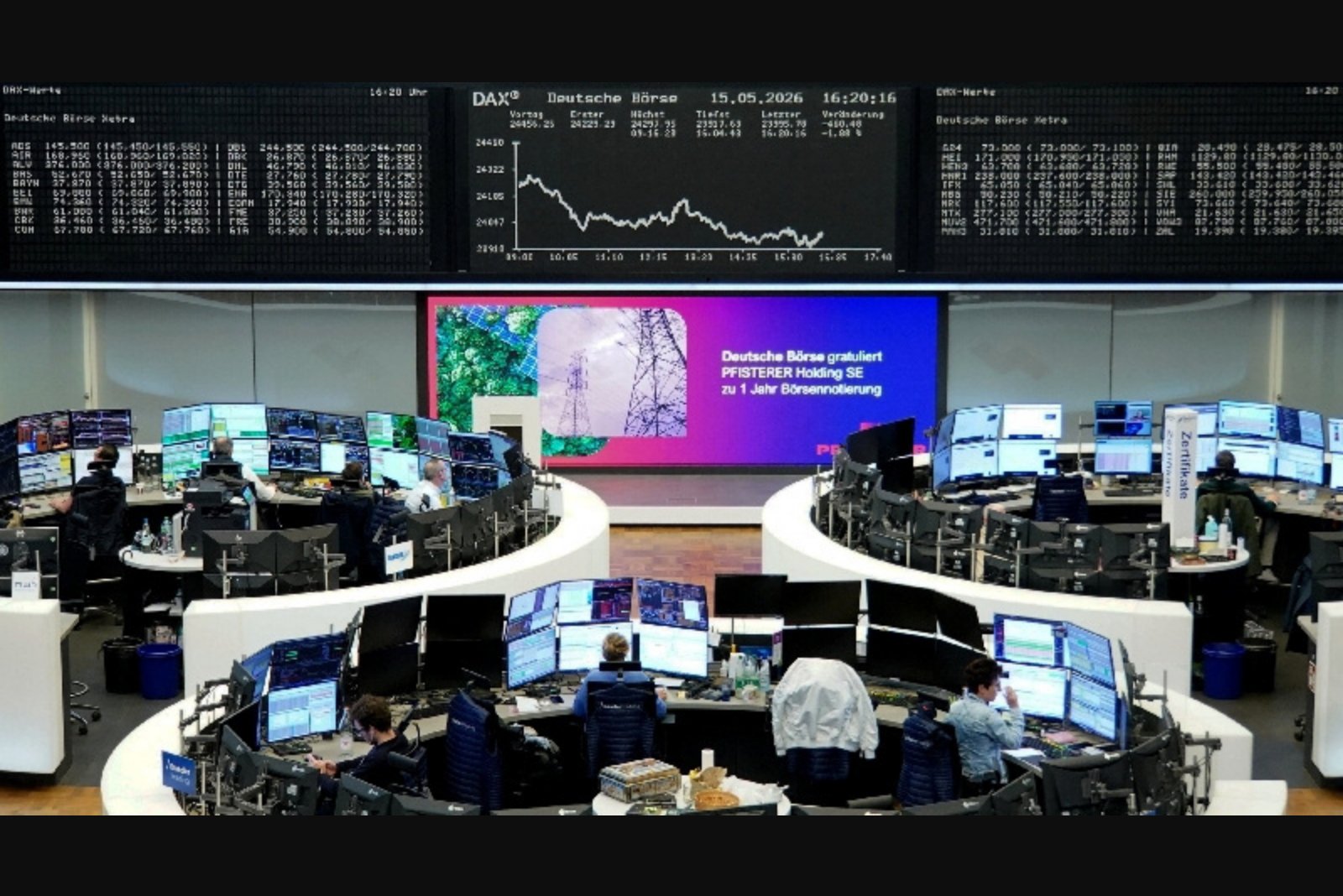
European share prices fell on Monday as energy costs climbed and bond markets continued to extend their recent sell-off, keeping inflation worries at the fore of investor concerns. By 07:03 GMT the pan-European STOXX 600 had declined 0.7% to 602.52 points, following a downbeat finish to the prior week.
Major bourses in the region also traded lower. Germany's DAX was down 0.5% and France's CAC 40 slipped about 1% in early hours. The market moves coincided with heightened geopolitical tension in the Middle East and tighter energy markets, factors that traders said have reinforced expectations for further central bank rate action.
In the Gulf, a drone strike sparked a fire at a nuclear power plant in the United Arab Emirates, while Saudi authorities reported intercepting three drones. U.S. President Donald Trump warned that Iran must act "fast" amid the continuing conflict. The piece described the conflict as a U.S.-Israel war on Iran now in its third month, with Tehran and Washington unable to reach a resolution and the strategic Strait of Hormuz remaining shuttered.
Those developments have supported higher oil prices, which in turn have fanned inflationary concerns and increased bets on additional rate hikes from global central banks. The combination of energy-driven cost pressure and tighter monetary policy expectations has left European equities lagging. The region's dependence on oil imports has prevented a recovery to pre-war levels, even while global equity indexes have seen a rebound driven by AI-related optimism.
At the stock level, pharmaceutical group AstraZeneca eased 0.8% in early trading, after news that the company's hypertension pill was approved in the United States. By contrast, Sonova rose 4.1% after the world's largest hearing aid maker forecast higher sales and earnings for its 2026/27 financial year.
The market reaction on Monday reflected a mix of macro and company-specific drivers: broad inflation worries and bond market moves tied to energy and geopolitical risk, alongside idiosyncratic updates from individual companies that produced divergent stock performances in early trade.