
European defense shares rallied across the board on Tuesday as three distinct developments converged to lift the sector. Market leaders logged gains typically in the 2-5% range after Sweden moved forward with a significant naval procurement, Citigroup upgraded two prominent defense contractors, and Tehran sent a conciliatory note to the United States that suggested a possible easing of regional tensions.
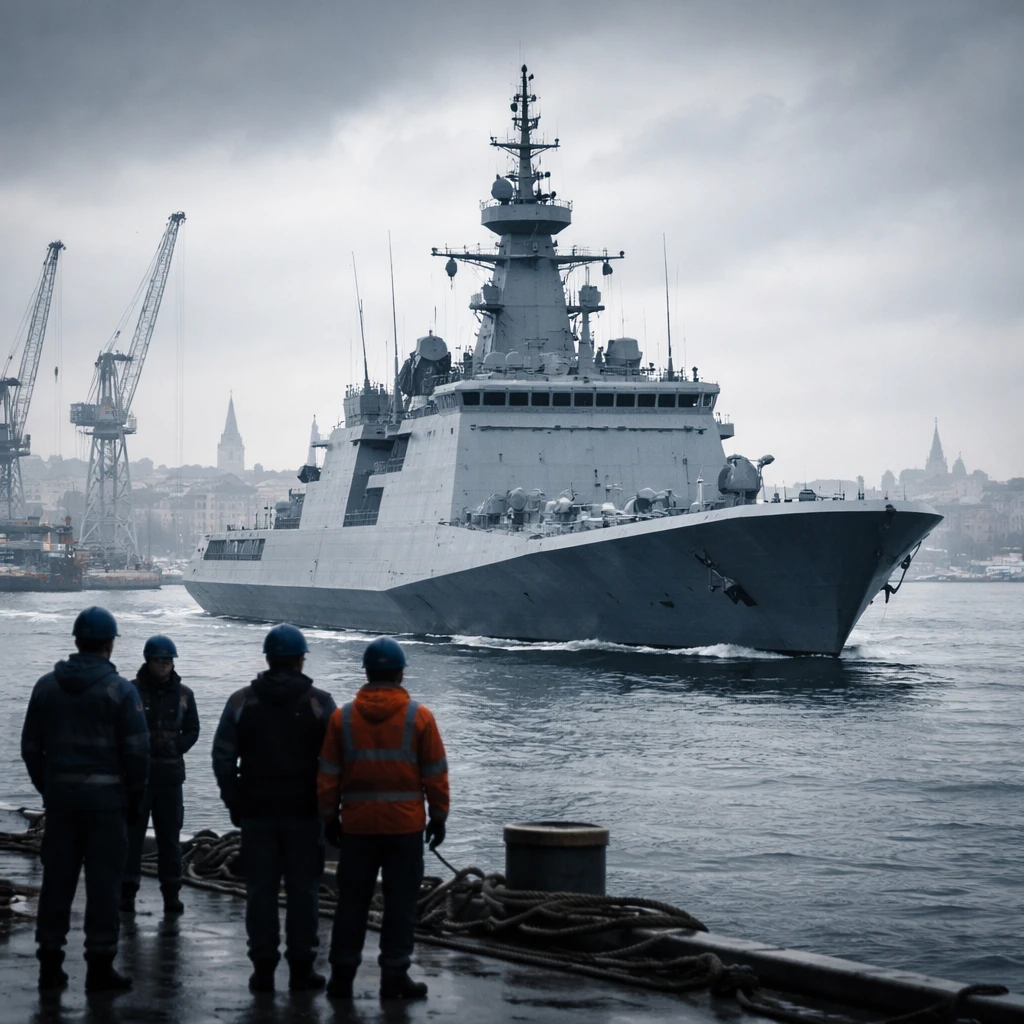
Sweden’s prime minister Ulf Kristersson confirmed that the country will buy four FDI frigates from France’s Naval Group in about a$4.25 billion deal, marking Stockholm’s largest military investment since the 1980s. The agreement also reflects growing defense cooperation between Paris and Stockholm - a dynamic that includes prior French commitments to acquire Saab’s GlobalEye airborne surveillance systems and invitations for Sweden to join discussions on European nuclear deterrence.
Among companies tied to the frigate program, Saab - which will supply radar and weapons systems for the vessels despite not securing the shipbuilding contract - jumped 4.86% to SEK 516.3. Other major European defense names climbed as follows: Rheinmetall led the pack with a 4.71% rise to e11,227.20, Thales surged 4.05% to e4228.70 as of 07:47 ET (11:47 GMT), BAE Systems added 2.21% to GBP 1,922, Leonardo rose 2.73% to e451.29, Dassault Aviation gained 2.54% to e4282.20, Airbus moved up 1.01% to e4172.10 and Safran edged 0.88% higher to e4276.30.
Citigroup contributed to the positive tone by upgrading Rheinmetall to "buy" with a e41,408 price target, arguing that the roughly 45% fall from record highs to near e41,100 did not reflect the sector's structural demand prospects. Citi's valuation broke Rheinmetall into components: it assigned the Weapons and Ammunition division a per-share value of e4266-e4372, and placed the remainder of the business at e41,089, together implying a 27% profit compound annual growth rate through 2031.
At the same time, Citi raised Saab to "neutral" with a SEK 527 target (up from SEK 516), noting the company's sharp slide from its January peak of SEK 748. The bank also highlighted a principal downside scenario - namely, a genuine peace agreement over Ukraine - which, according to Citi's Saab model, could result in a 20% derating and as much as 49% downside to SEK 248.
Rheinmetall further reinforced investor interest by announcing the start of serial production for its FV-014 loitering munition at the Neuss facility, a repurposed automotive plant. The program is supported by roughly e4300 million in Bundeswehr orders and a wider multi-billion euro framework contract. Reports of insider buying near current price levels by members of Rheinmetall's supervisory and management boards added another element of confidence for investors.
On the geopolitical front, Iran reportedly sent a peace proposal to the U.S. through Pakistani intermediaries calling for a ceasefire across all fronts, removal of sanctions and U.S. force withdrawals from the region. Reuters, as reported in market coverage, described the terms as not materially different from earlier offers President Trump dismissed as "garbage" last week. Iranian state television characterized Mr. Trump's pause on fresh strikes as a retreat born of "fear."
Separately, the coverage included a promotional note inviting readers to explore market-moving headlines and analyst alerts via InvestingPro at a 55% discount, and posed an investment question about the ticker AIR, referencing the ProPicks AI tool's evaluation and noting past winners highlighted by that system. The promotional copy mentioned examples of historical returns such as Super Micro Computer (+185%) and AppLovin (+157%) within the sign-up pitch.
Implications
- Procurement decisions are acting as a form of geopolitical coordination among allies, supporting demand for defense suppliers involved in the Sweden-France alignment.
- Analyst upgrades can amplify sector momentum when they follow steep prior drawdowns, as seen with Citigroup's bullish take on Rheinmetall and adjusted view on Saab.
- Any genuine de-escalation in regional conflicts or a diplomatic breakthrough in Ukraine would represent a major downside risk for companies priced on sustained elevated defense demand.