
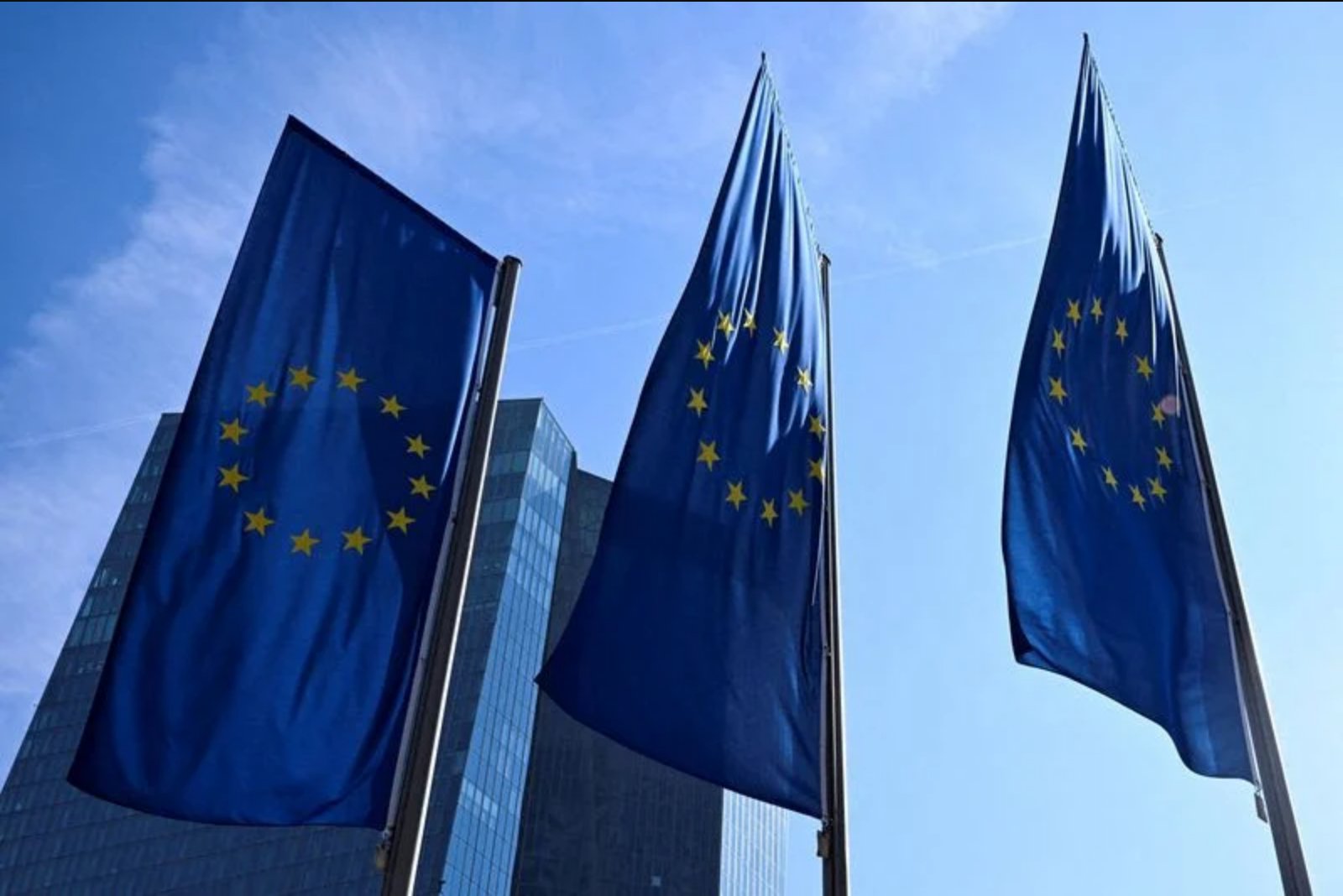
The European Commission presented a package of measures aimed at bolstering the bloc's technological autonomy, prompting one senior official to exclaim "Today is Tech Liberation Day." Yet business and industry voices cautioned that genuine independence from dominant U.S. technology firms will take significantly longer to achieve.
The proposals seek to accelerate the growth of European technology companies while limiting access for the largest U.S. rivals in specific high-sensitivity areas. Officials framed the package as an important opening move, acknowledging that Europe trails the United States and parts of Asia across key domains such as artificial intelligence, semiconductor manufacturing, cloud services and data centre capacity.
Ralf Wintergerst, president of the German digital-industry association Bitkom, described initiatives including a proposed Chips Act 2.0 as a "step in right direction," while stressing the need for decisive follow-through. "It is now crucial that these efforts do not stop at mere announcements. Europe needs to move quickly," he said, arguing that the bloc requires tangible actions and an improved investment climate spanning chips to AI infrastructure.
Under the package, the EU's technology commissioner Henna Virkkunen outlined measures that would bar U.S. giants such as Amazon, Microsoft and Google from competing for the most sensitive cloud contracts. Simultaneously, the plan aims to spur a swift roll-out of data centres that incorporate at least some European-made hardware or software.
On semiconductors, the approach focuses less on luring top-end fabrication plants and more on reinforcing existing competitive positions. The strategy emphasises support across the chip value chain, from materials and equipment suppliers to advanced packaging, with a nod to existing strengths tied to leading equipment maker ASML. Public procurement measures are intended to help startups scale, using government demand as a lever.
Despite these moves, industry observers underscore that the EU lacks regional equivalents to the largest players that currently set the pace globally. There is no European counterpart to Nvidia for AI chip design, no homegrown equivalent to Taiwan's TSMC for high-end manufacturing, and no software colossus able to stimulate demand via sprawling cloud platforms comparable to major U.S. providers.
"We will continue to rely on Nvidia and AMD for GPUs and will need to cooperate with international partners on certain AI models. This is not a weakness, but realism," said Achim Weiß, chief executive of German cloud provider Ionos. He added that sovereignty should not be conflated with self-sufficiency.
The package contains limited new direct funding, particularly when compared with the scale of investments underway in the United States and China. As a result, implementation will depend in large part on member states, many of which face fiscal constraints. Companies operating in the region already contend with high energy prices, labour shortages and fragmented capital markets.
"Europe cannot regulate its way into semiconductor leadership," said Erik Rein, who leads the European chipmaker association ESIA and heads Bosch's semiconductor business. His comment highlights the view that policy alone cannot substitute for substantial capital and industrial scale.
Mitchell Rutledge, Europe Policy Manager at the Computer & Communications Industry Association, welcomed the emphasis on expanding data centre capacity but urged the EU to prioritise attracting investment rather than erecting barriers. "It is good to focus on data centre capacity, but Europe needs to be attracting investment, not shutting it out," he said.
A Microsoft spokesperson said the company shares the EU's goal of strengthening technological sovereignty and global competitiveness in AI, while calling for open markets that preserve fair competition. Wolfgang Weber, managing director of ZVEI, the German electrical and digital industry group, praised proposals that would speed approvals for strategic tech projects requiring state aid, but cautioned that Europe cannot forcibly create sovereignty through protectionist measures. "Europe achieves sovereignty through its own strength, not through barriers," he said.
Some critics argued the final Commission package falls short of more forceful measures, pointing out that it does not adopt a strict "Buy European" policy. Greens/EFA member of the European Parliament Kim van Sparrentak expressed scepticism that the plan would secure long-term independence from U.S. technology companies, saying the package recognises the scale of Europe's digital dependency but ultimately does not go far enough.
Other observers saw the approach as deliberately measured. Julia Hess of interface, a German technology policy think-tank, said the package frames tech sovereignty more pragmatically than previous debates, staking out modest, achievable steps toward a broader objective.
Keegan McBride, Director of Science & Technology at the Tony Blair Institute, described the proposals as an important step forward but warned that a retreat into a Europe-first posture would weaken the continent. "Europe can't regulate its way to competitiveness, it must build," he said, adding that much more effort will be required if Europe aims to close the gap with the U.S. and China.
What this means for markets and industry
- Sector focus: The package will affect semiconductor supply chains, cloud and data-centre operators, AI hardware suppliers and technology infrastructure vendors.
- Investment implications: Firms seeking to scale in Europe may look to public procurement incentives, while private capital allocation will be shaped by the degree of state support and regulatory clarity.
- Competitive dynamics: Limiting access to sensitive public cloud tenders for certain non-European providers could reshape procurement decisions, but broader market influence remains anchored to existing global leaders.