
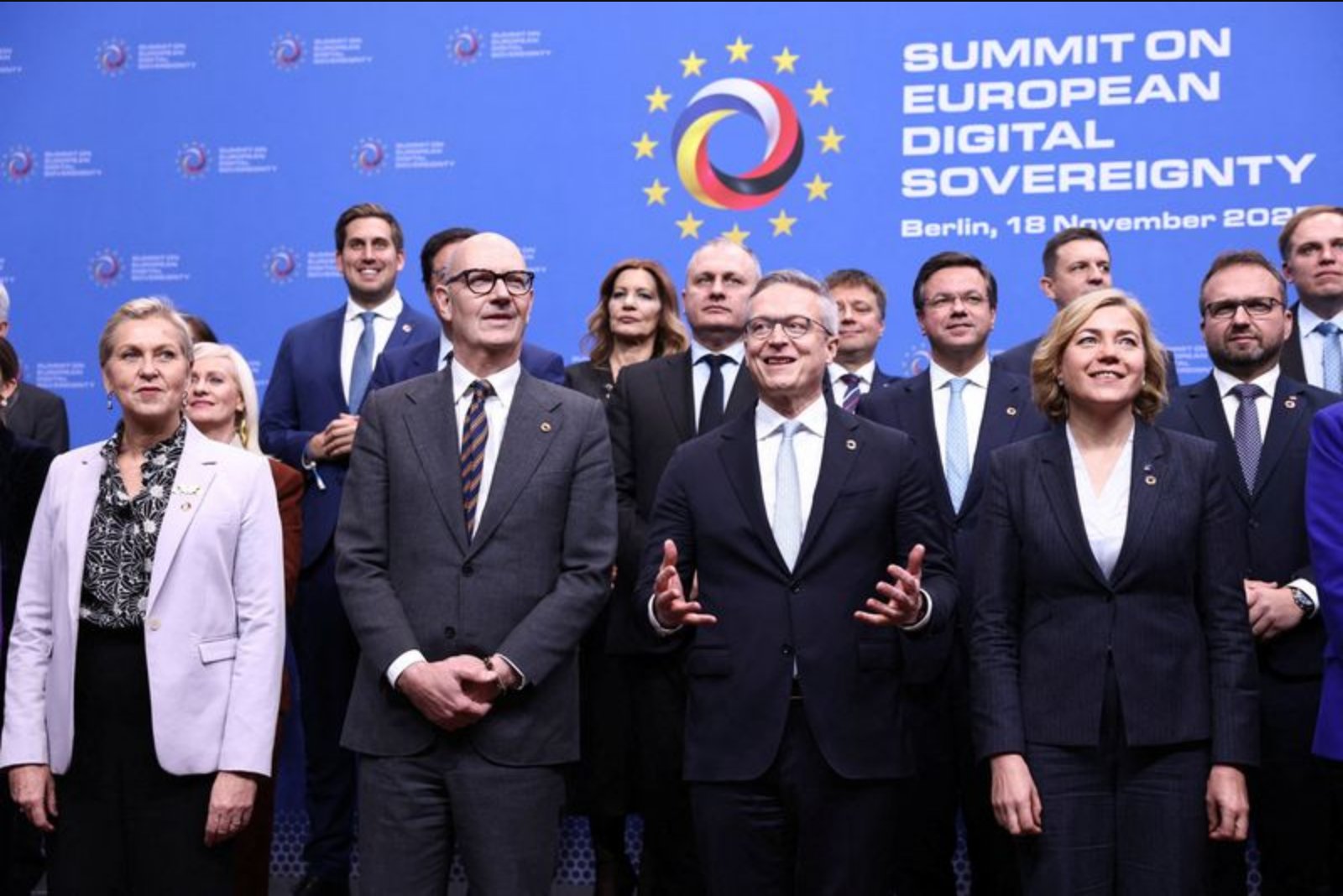
European capitals remain split over how forceful to be in rolling out industrial policies intended to reduce reliance on U.S. technology giants and to shore up the EU's tech sovereignty. Officials in Brussels are working through two consequential decisions: how to allocate mobile satellite spectrum and whether to restrict large non-EU cloud providers from sensitive EU public procurement.
Negotiators have reportedly reached a compromise on the allocation of mobile satellite spectrum that would predominantly reserve frequencies for European firms while still leaving an opening next year for operators such as Elon Musk's Starlink and Amazon's low-earth-orbit unit, Leo, to access lucrative bands. The changes to spectrum allocation are expected to be announced on Wednesday and target the 2 gigahertz band, which has both military and commercial importance and is currently used by U.S. companies including Viasat and EchoStar.
In parallel, EU institutions are preparing a Cloud and AI Development Act, due to be unveiled on June 3 after delays linked to internal disagreement. People familiar with the proposals expect the draft law to curb, but not fully block, access by Amazon, Microsoft and Google to the EU cloud market, particularly in sensitive public procurement projects. Together the three U.S. firms account for a dominant share of global cloud infrastructure: 28% for Amazon, 21% for Microsoft and 14% for Google, with a combined market share around 63%.
The two measures demonstrate a strategic push to promote European suppliers such as OVHCloud and Deutsche Telekom, while reducing potential exposure to non-EU providers where national security or sensitive data are involved. Advocates of a more assertive "Buy European" posture include the EU industry commissioner Stephane Sejourne and the EU defence chief Andrius Kubilius, who argue that defence and military needs warrant preferences for EU-based suppliers, according to people familiar with the discussions.
Conversely, Finnish EU tech chief Henna Virkkunen favors a rules-based approach that would apply uniformly to all companies rather than expressly excluding non-European firms. Sources indicate Virkkunen's position carries weight because she holds direct responsibility for the file now under discussion, making her approach likely to prevail in shaping the final texts.
Stakeholders have warned about both practical and strategic constraints. Alba Ribera Martínez, editor-in-chief of the Stanford Computational Antitrust project, highlighted vulnerabilities in the current geopolitical environment, saying the landscape has shown structural risks of being cut off from essential infrastructure. At the same time she cautioned that Europe faces a massive investment shortfall to compete on cloud infrastructure, describing it as a "€1 trillion investment gap" compared with the United States.
Lobbying groups representing major tech companies also voiced concerns. The Computer & Communications Industry Association, which counts Amazon, Google, Meta and EchoStar among its members, warned against the blanket exclusion of non-EU firms and cautioned that restrictive policies could veer into protectionism and reduce consumer choice.
The mobile satellite proposal will require feedback from EU member states before it can be adopted, and the Cloud and AI Development Act will need to be negotiated with national capitals and the European Parliament over the coming months. Those discussions could strengthen or modify the initial draft once it is formally tabled.
For European cloud customers and public sector buyers, the pending measures introduce a level of uncertainty about future procurement options. If the final text restricts the role of non-EU suppliers in certain categories of contracts, buying authorities will need to evaluate alternatives and assess their ability to meet security, performance and cost requirements. For cloud providers, the draft legislation would likely change the competitive landscape in sensitive segments without cutting off market access entirely.
On the spectrum side, the revised allocation process for the 2 GHz band could open market opportunities for European entrants while limiting expansion by non-European satellite operators. How those market shifts play out will depend on the technical and licensing conditions the Commission proposes and on feedback from member states.
What remains clear from the current debate is that Europe is trying to balance strategic ambitions with practical constraints: building domestic capacity and protecting sensitive data while not provoking an acute backlash from international partners or creating gaps in capabilities that could harm users and services. The final forms of the spectrum allocation and the Cloud and AI Development Act will reflect how that balance is struck.