
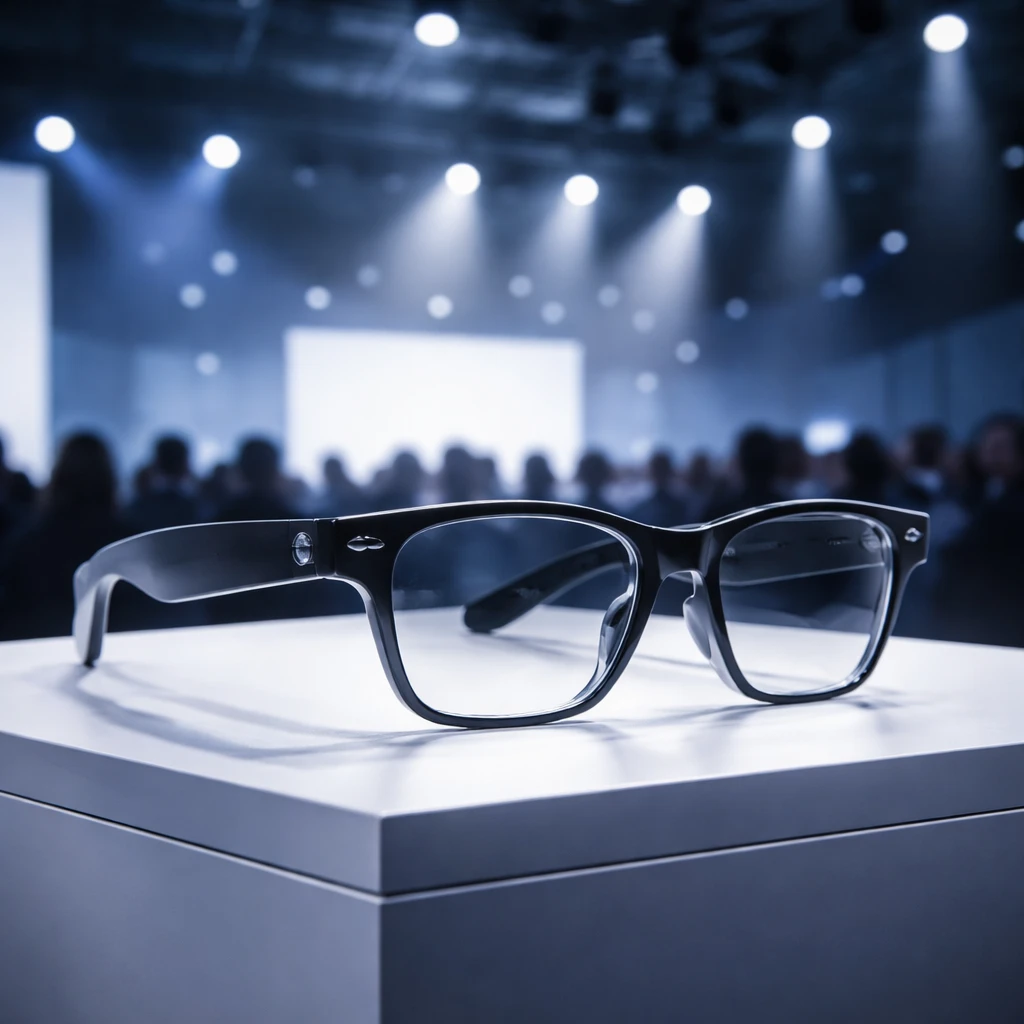
Investors pushed EssilorLuxottica SA shares lower on Wednesday following product reveals at Google’s annual I/O developers conference in Mountain View, California, where Google and Samsung publicly introduced competing AI glasses designs. The announcements heightened competition in a segment currently dominated by the Ray-Ban Meta series, produced in partnership with EssilorLuxottica and Meta Platforms, which holds an 85.2% market share.
At I/O, Samsung and Google jointly presented two AI glasses models. One model was developed with fashion label Gentle Monster and the other with eyewear retailer Warby Parker. These showings marked the first time the companies disclosed finished product designs publicly; last year’s conference included only a prototype demonstration.
The devices announced run Google’s Gemini AI on the Android XR operating system. They include cameras positioned at both ends of the frames, plus built-in speakers and microphones. According to the companies, the feature set enables users to access navigation, receive menu recommendations and obtain real-time translation - all without needing a smartphone.
Samsung said the new models will go on sale after a formal launch slated for its Galaxy Unpacked event in London in July. The move is part of a broader company effort to expand its AI device footprint - Samsung framed this push as an attempt to grow its installed base of AI-enabled devices from 400 million units last year to 800 million units this year.
Market reaction included share moves shown in the session: EssilorLuxottica (ESLX) down 0.82%, Google (GOOGL) down 2.34%, Meta (META) down 1.41% and Samsung Electronics (005930) up 0.18%.
Analyst commentary highlighted both the competitive threat and reasons why incumbents may retain strength. Citi noted EssilorLuxottica shares have meaningfully underperformed amid concerns about competition in smart glasses. On balance, Citi said the overnight details supported a view that EssilorLuxottica and Meta should remain sizeable players in the category, citing their first-mover advantage, emphasis on fashion and well-known brands, and distribution scale versus entrants tied to Gentle Monster and Warby Parker.
The brokerage also flagged shortcomings in the Google-Samsung breakouts, observing that the Google glasses lack "fashion appeal" and that the companies did not announce any display-enabled products for launch. Citi additionally pointed to integration challenges for prescription lenses as a limiting factor for mainstream adoption of current designs.
Market data cited in commentary indicates rapid growth in the category: global shipments of AI glasses rose 435% last year and are forecast to expand another 322% this year to reach 8.7 million units, according to Omdia. The report also notes that Chinese participants, including Xiaomi, currently hold single-digit market shares.
Separately, Meta introduced two new products in South Korea the day before Google’s I/O event, underscoring active product cycles across the leading players in the space.
What this means
- Competition in AI-enabled eyewear is intensifying as major technology and fashion-aligned companies reveal consumer-ready designs.
- Incumbents retain structural advantages through brand partnerships and distribution, but new entrants are aiming to scale quickly.
- Technical and product design constraints - such as prescription lens integration and lack of display-enabled models - remain relevant hurdles for broader adoption.