
Elbit Systems' shares rose 8% on Tuesday after the defense contractor announced it had secured a $1.4 billion European contract tied to military modernization and disclosed its financial results for the first quarter of 2026.
For Q1 2026, the company reported revenues of $2,188.8 million, up from $1,895.8 million in the same quarter a year earlier. Gross profit on a GAAP basis was $552.1 million, equal to 25.2% of revenues, compared with $454.3 million, or 24.0% of revenues, in the first quarter of 2025.
On a non-GAAP basis, gross profit reached $558.7 million, representing 25.5% of revenues, versus $460.6 million, or 24.3% of revenues, in the year-ago quarter. The company also reported that its backlog exceeded $30 billion for the first time.
In a prepared comment, Bezhalel (Butzi) Machlis, President and CEO of Elbit Systems, said: "We began 2026 with a strong quarter across all key metrics, including double-digit growth in revenue and profitability, with Non-GAAP operating margins surpassing the 10% mark."
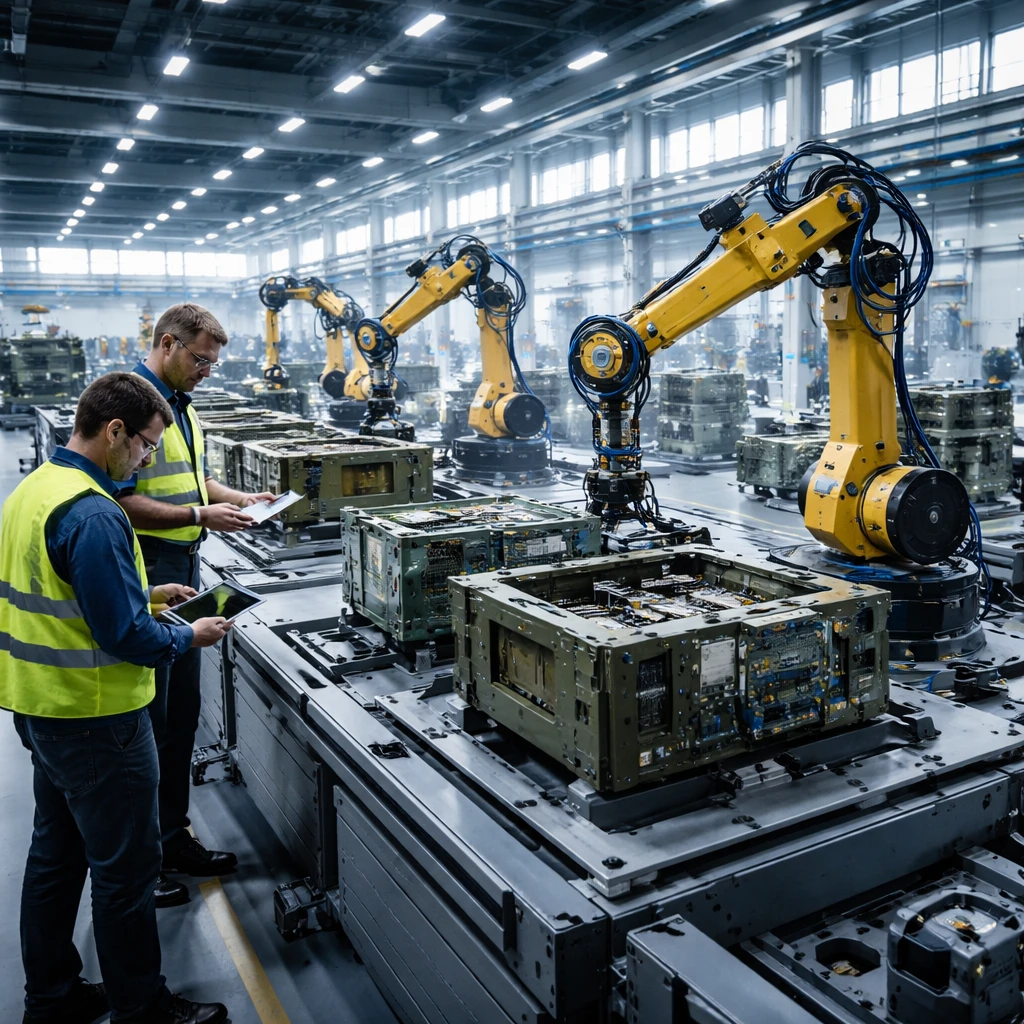
Machlis noted that the newly announced European contract reinforces Elbit Systems' role as a strategic partner to customers worldwide. To meet what management described as rising demand, the company is scaling production capacity and increasing the use of automation, robotics and artificial intelligence. These operational measures are being pursued while the company seeks to maintain capital discipline and expand operational margins.
Elbit Systems is also boosting investment in research and development to support development of next-generation offerings.
Market reaction
The 8% share-price increase followed the combined impact of the large European contract and the quarterly financial results, which showed both revenue growth and margin improvement on GAAP and non-GAAP bases. The milestone backlog figure exceeded $30 billion for the first time, reflecting order intake and future revenue potential embedded in the company’s pipeline.
Operational priorities
Management emphasized scaling manufacturing output and greater adoption of automation, robotics and AI tools to handle higher production volumes. At the same time, the company highlighted efforts to preserve capital discipline while expanding margins and said it is stepping up R&D spending to develop next-generation products.