
Elbit Systems reported a notable increase in first-quarter results, with revenue climbing 15% year over year to $2.19 billion. The defense contractor also posted adjusted earnings per share of $3.87 for the quarter, up from $2.57 in the prior-year period, and disclosed a record order backlog of $30.2 billion.
Drivers of growth
The company attributed the revenue advance to stronger sales across several of its business units, led by the Land, C4I and Cyber, and ISTAR and EW segments. Elbit cited increased shipments of ammunition and munitions, along with higher volumes of radio systems and electronic warfare equipment, with particularly notable demand in Israel and across Europe.
Elbit said it experienced a material rise in orders from the Israel Ministry of Defense amid ongoing and recent regional conflicts. That uptick coincided with elevated sales in its sensors, communications, and weapons-related product lines.
Profitability and operating performance
Adjusted gross profit for the quarter was $558.7 million, while adjusted operating income came in at $222 million. The company reported that several operational challenges weighed on its results during the period, including supply chain constraints, higher input costs, and employee call-ups.
Management said those operational effects have lessened following recent ceasefires, though they still factored into the quarter's performance.
Capacity and longer-term posture
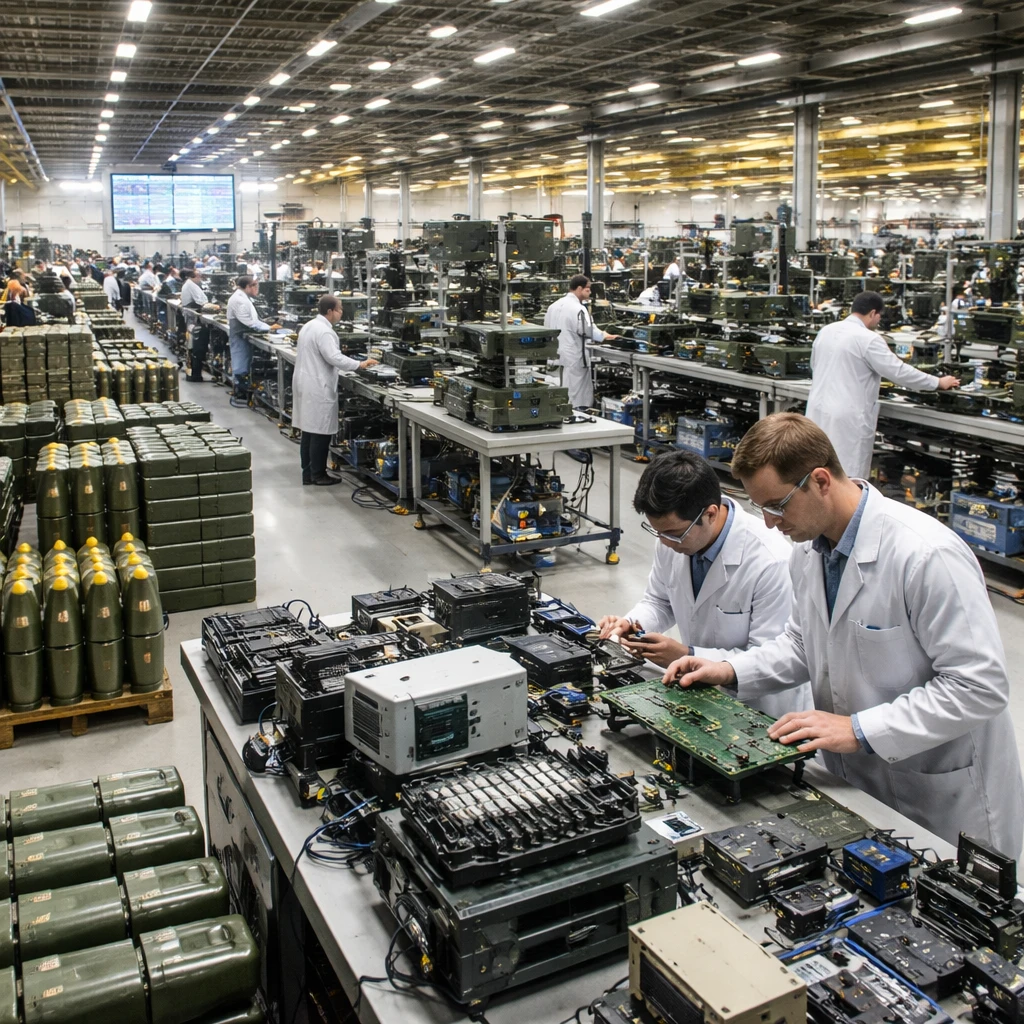
Elbit indicated that current demand levels remain well above historical norms. To support sustained growth, the company is scaling production capacity and increasing investment in research and development. These steps are intended to underpin longer-term revenue and capability expansion across its defense technology offerings.
Outlook and uncertainty
The company highlighted that uncertainty tied to ongoing conflicts in the Middle East may influence future results. That caution reflects the possibility that shifting geopolitical dynamics could alter demand patterns, operational conditions, or cost structures.
Key points
- Revenue rose 15% to $2.19 billion and adjusted EPS increased to $3.87 from $2.57 year over year.
- Order backlog reached a record $30.2 billion, driven by higher defense orders, including from the Israel Ministry of Defense.
- Adjusted gross profit was $558.7 million and adjusted operating income was $222 million; the company is expanding production capacity and R&D spending.
Risks and uncertainties
- Ongoing conflicts in the Middle East could affect future performance and demand.
- Operational disruptions from supply chain constraints, rising costs, and employee call-ups have affected results and could re-emerge.
- Elevated demand places pressure on production capacity and execution, creating operational and market risks for defense suppliers and related manufacturing sectors.