
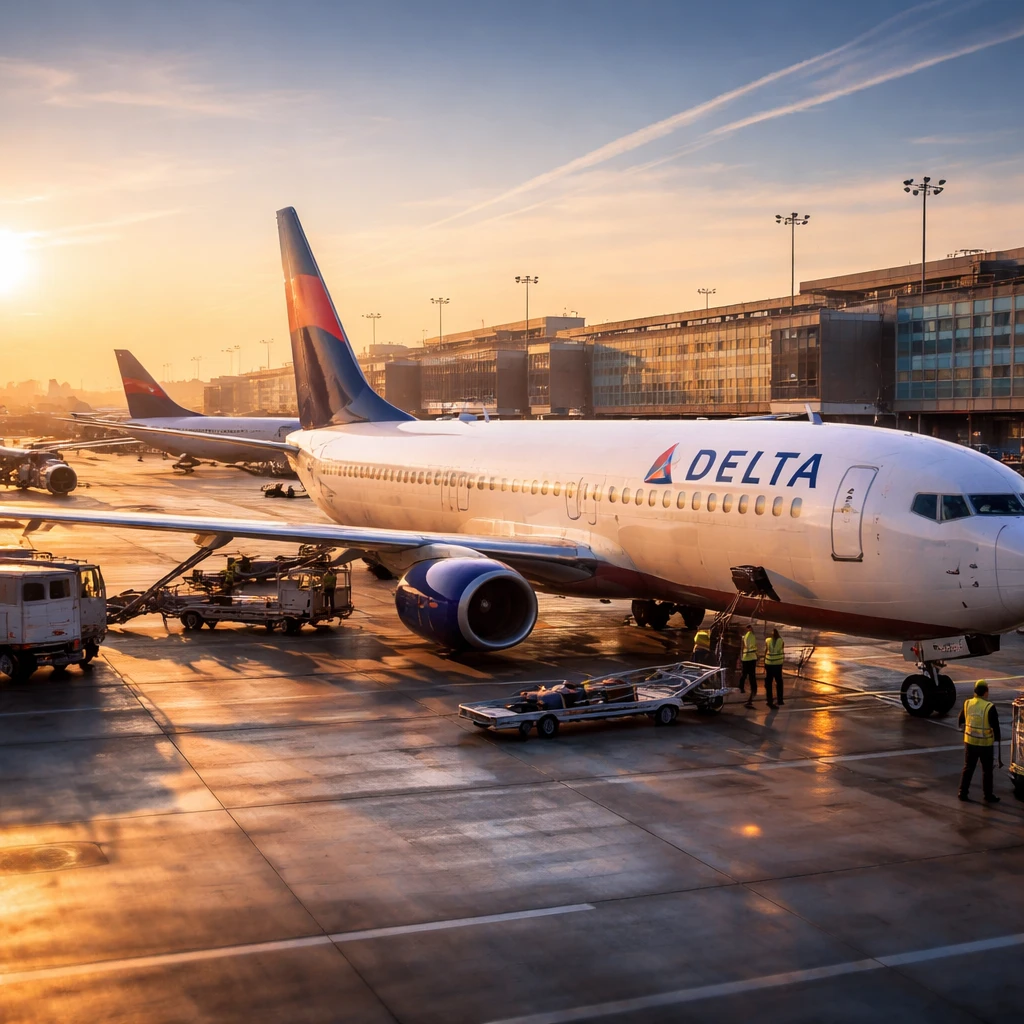
Delta Air Lines shares rallied sharply in morning trading, gaining 4.4% to $82.84 and touching a fresh 52-week high of $83.76. The spike came as a cluster of industry-specific and company-level developments eased investor concerns about fuel costs and reinforced positive expectations for the carrier.
Market attention centered on a retreat in crude oil prices after renewed optimism about a possible U.S.-Iran peace agreement. Brent crude futures slid as fears of supply disruptions in the Middle East diminished. Observers noted the importance of the Strait of Hormuz as a critical oil shipping corridor, and the prospect of diplomatic progress was credited with lowering geopolitical risk and raising the prospect of reduced fuel and operating costs for airlines.
Analyst moves added momentum. TD Cowen increased its price target on Delta to $92 from $84 while keeping a Buy rating, citing robust pricing trends, favorable checks and moderating spot fuel prices. Earlier in the week UBS lifted its price target on Delta to $98 from $95 and maintained its Buy rating. UBS analyst Atul Maheswari highlighted that a potential resolution to conflict in the Middle East could act as an important catalyst for airline stocks. UBS’s updated projections foresee roughly 50% earnings per share growth in 2027 for several carriers, and the firm expects the sector to benefit as markets begin to price in meaningful earnings expansion.
Institutional interest provided additional support. Berkshire Hathaway disclosed a stake in Delta worth more than $2.6 billion, making it the conglomerate’s 14th-largest holding at the end of March. The investment represents Berkshire’s return to the airline industry after fully exiting the sector during the Covid-19 pandemic in 2020, and that endorsement continues to underpin investor sentiment around Delta.
Company-level actions also featured in the market narrative. Delta agreed to extend the lock-up restriction on all its Wheels Up common shares for one more year through May 22, 2027. The carrier is additionally leading a newly announced $100 million term loan commitment for the private aviation company. Management’s willingness to extend the lock-up and to provide financing for Wheels Up was presented as a sign of strategic engagement with the private aviation business.
Demand signals reinforced the constructive picture. Recent surveys cited by market participants indicate a marked increase in traveler preference for Delta, which, together with falling fuel costs, has helped create favorable momentum for the stock. Sector peers participated in the upswing: Alaska Air Group and American Airlines were also trading higher on the day, reflecting a broad lift across the airline group tied to easing cost pressures and geopolitical optimism.
Market breadth suggested the move in Delta was driven by sector and company dynamics rather than a broad market rally. The Dow Jones Industrial Average was modestly higher at +0.4%, while the S&P 500 and NASDAQ were slightly lower, underscoring that Delta’s advance was largely the result of airline-specific catalysts.
In sum, a convergence of weaker fuel prices, analyst price-target increases, continued institutional backing from Berkshire Hathaway, Delta’s Wheels Up lock-up extension and improving demand indicators combined to push shares to a new 52-week peak during the session. The convergence of these factors appears to have created a favorable backdrop for Delta well ahead of the wider equity market.