
Dell Technologies shares climbed 9.2% in morning trading, extending a powerful upswing that began in the prior session after the company released fiscal Q1 FY2027 results on May 28, 2026. The quarter produced company-record revenue of $43.8 billion, an 88% increase compared with the year-earlier period, and set new highs for both non-GAAP and GAAP diluted earnings per share.
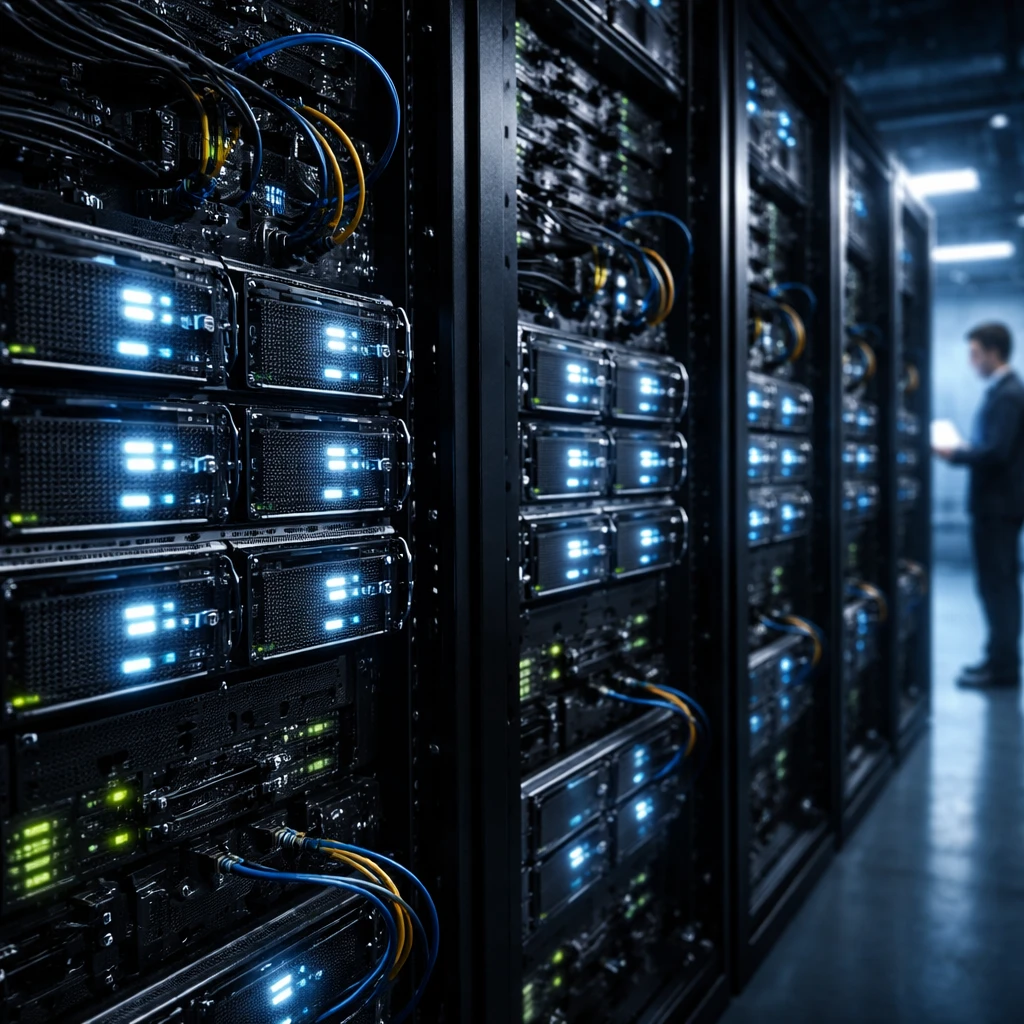
Non-GAAP diluted EPS for the quarter came in at $4.86, up 214% year-over-year, while GAAP diluted EPS reached $5.24, a 282% year-over-year increase. The dominant factor in the uplift was Dell's Infrastructure Solutions Group, where sales of AI-optimized servers totaled $16.1 billion, a 757% increase versus the comparable quarter a year earlier.
Management highlighted the strength of in-quarter demand and the breadth of product innovation across PCs, compute and storage. Chief Operating Officer Jeff Clarke emphasized the AI contributions, noting that the company booked $24.4 billion in AI orders during the quarter and recognized $16.1 billion of AI server revenue.
The company exited the quarter with a record AI server backlog of $51.3 billion. That backlog and the robust pace of AI-related orders supported a materially higher full-year outlook. Dell raised its guidance for fiscal 2027, forecasting AI-optimized server revenue of roughly $60 billion for the full year. Management also lifted the midpoint of non-GAAP diluted EPS guidance to $17.90, which represents a 74% increase year-over-year at the midpoint.
Investor reaction was accompanied by a wave of analyst upgrades and price-target increases. Goldman Sachs moved its price target to $500 from $230 while maintaining a Buy rating. Bernstein SocGen raised its target to $500 from $280 and kept an Outperform rating. These revisions followed the company’s large earnings and revenue beat and the significant upward revision to full-year guidance.
Strategic relationships and contract wins further reinforced the market’s view of Dell’s position in AI infrastructure. The company’s partnership with NVIDIA was cited by analysts and observers as a meaningful enabler of its AI server offerings. Separately, Dell secured a $9.7 billion government contract that covers Microsoft software and cloud services for the U.S. military, intelligence agencies, and the U.S. Coast Guard, a contract that adds to its commercial and public-sector momentum.
Broader market and sector forces also amplified the move. The wider AI infrastructure theme was gaining traction in early trading, with peer Lenovo Group rising more than 10% and reaching an all-time high on what was described as sympathy optimism for companies exposed to AI infrastructure demand. Computex 2026, running June 1 through 5 and themed around AI infrastructure, provided additional sector attention, and the event included a keynote from NVIDIA CEO Jensen Huang.
Dell entered the earnings print on an already elevated base. Announcements at Dell Technologies World 2026 around AI products had driven roughly a 24% rally in the previous week. The current gains add to that prior advance, while broader indices showed far smaller moves: the S&P 500 rose just 0.03% and the NASDAQ was up 0.1% in early trading, underscoring that Dell’s move was largely company-specific.
The confluence of a historic quarterly beat on both the top and bottom lines, a marked upgrade to full-year guidance, a record AI server backlog signaling future demand, and synchronized analyst upgrades combined to create unusually strong buying momentum. The stock reached a new 52-week high of $461 during the session as investors reassessed Dell’s exposure to AI infrastructure spending.
While the immediate market response centered on revenue, backlog and guidance revisions, the results also reinforced the view that Dell is a major beneficiary of corporate AI spending - a characterization driven by the company’s server revenue growth, confirmed order flow, and strategic ties to AI hardware suppliers. For market participants focused on infrastructure and enterprise compute, Dell’s quarter provided a clear snapshot of how AI-driven demand can translate into rapid revenue and earnings expansion.