
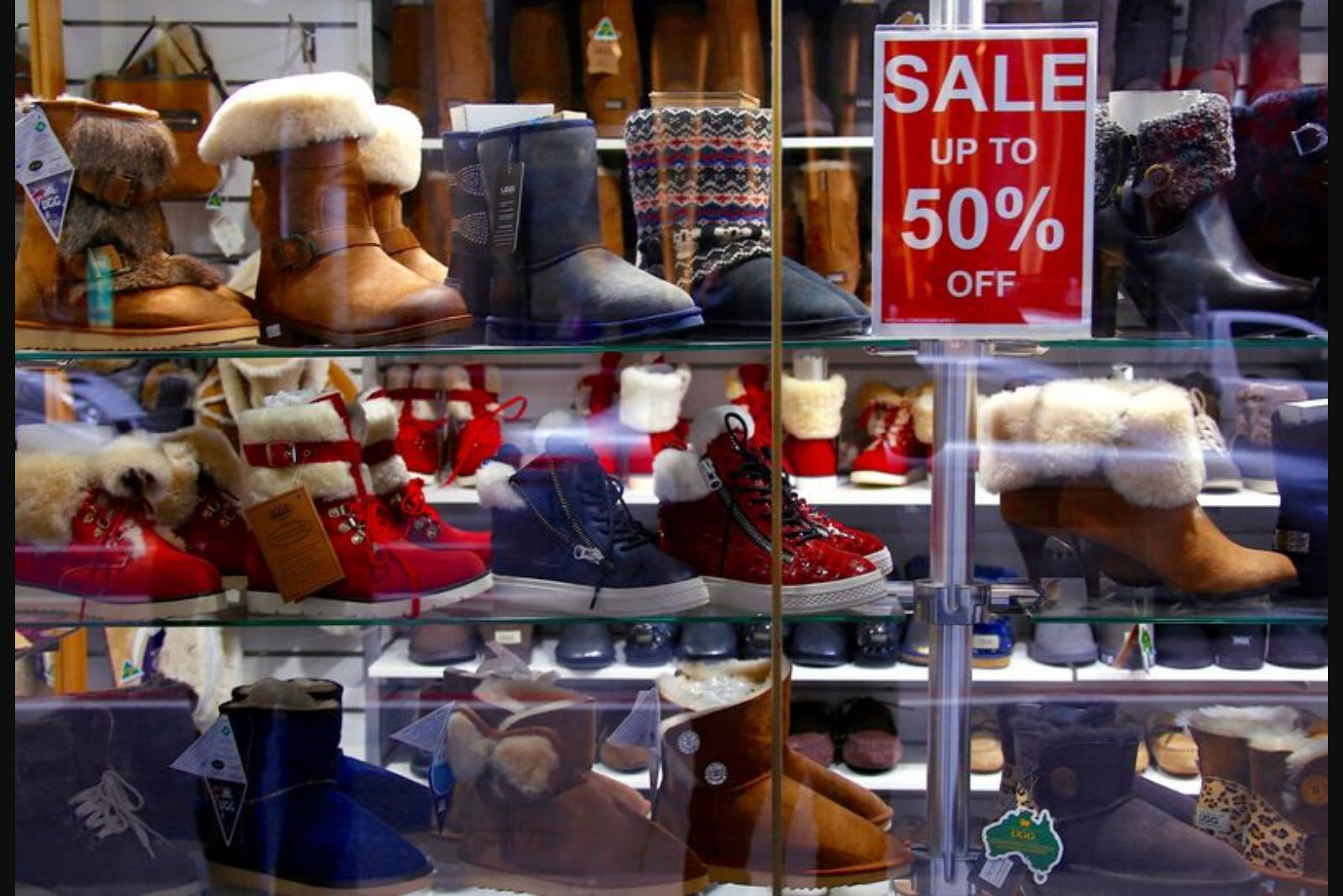
Deckers Outdoor provided an upbeat outlook for the fiscal year, forecasting sales and earnings that sit above analyst consensus, as resilient consumer demand for its UGG boots and Hoka running shoes supported growth across channels.
The company said growth was powered by gains in both wholesale and direct-to-consumer (DTC) channels and by the rollout of new products, even as lower-income shoppers faced pressure from persistent inflation.
Deckers reported that sales at its Hoka brand rose 14.5% in the fourth quarter, while UGG sales increased 9.2%. Overall quarterly revenue climbed 10% to $1.12 billion, and earnings per share were 96 cents, with both figures topping analysts' expectations.
For fiscal 2027, the footwear and apparel maker expects revenue between $5.86 billion and $5.91 billion. That guidance compares with analysts' average estimate of $5.82 billion, based on data compiled by LSEG. On the profitability front, Deckers projects annual per-share earnings of $7.30 to $7.45, versus analysts' consensus of $7.34.
CEO Stefano Caroti emphasized the company's strategic priorities in a statement: "Our focus on brand building, product innovation and category leadership, along with marketplace execution continues to drive full-price demand across an expanding global audience," he said.
The company also noted its manufacturing footprint, saying it relies heavily on Vietnam as a key manufacturing hub.
Context and implications
- Deckers' guidance for fiscal 2027 is narrowly above the analyst average, reflecting management confidence in continued brand momentum and full-price selling.
- Quarterly results showed double-digit top-line growth and earnings that outperformed expectations, led by Hoka and UGG.
- Wholesale and direct-to-consumer channel strength, together with new product introductions, were cited as primary contributors to the company's performance.
What the company flagged as challenges
- Deckers acknowledged pressure on lower-income consumers from sticky inflation, which has the potential to constrain spending among certain customer segments.
- The firm noted its heavy reliance on Vietnam for manufacturing, indicating concentration risk in its supply chain.