
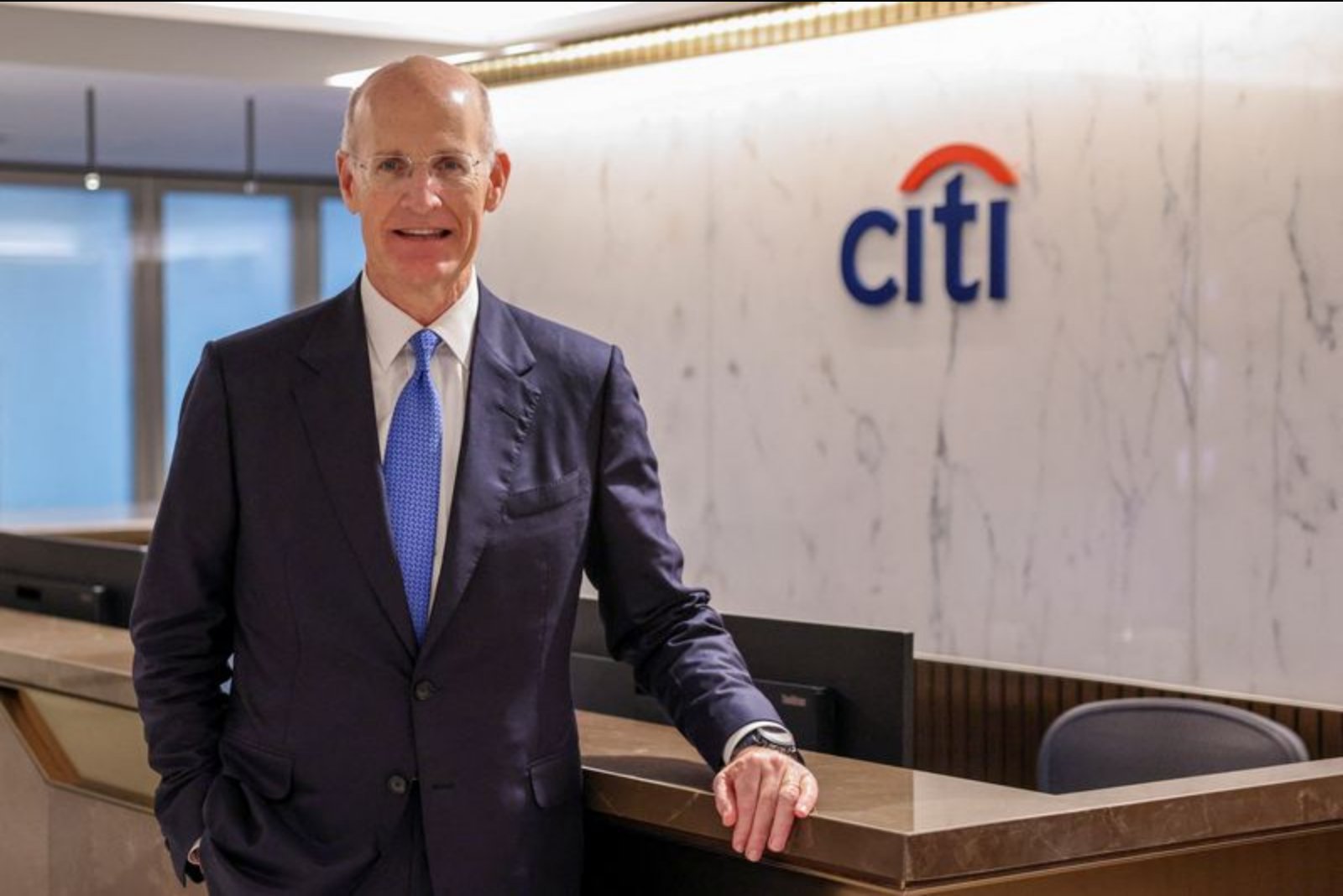
HONG KONG, May 22 - Citigroup intends to direct a substantial share of its new wealth-management hires to Asia, where its private banking operations are expanding most quickly and delivering the highest productivity, the bank’s global wealth head said in Hong Kong.
Andy Sieg, who was hired in 2023 to lead a renewal of Citi’s wealth franchise, said the bank’s recently announced global hiring plan will be "anchored" in Asia alongside other regions. As part of broader efforts to improve returns in the wealth business, Citi intends to recruit about 100 private bankers globally, in addition to roughly 400 other specialists, Sieg said at the bank’s investor day earlier this month.
"In the private bank, our business in Asia is the fastest growing part of our private bank," Sieg said in an interview. "It’s the most productive area of the private bank." He declined to provide granular details on the regional hiring rollout but added that "a significant percentage of the hiring will be here in Asia, you know, commensurate with the fact that this is a large percentage of our global business."
Citi has set a target for the wealth unit of a return on tangible common equity of 15% to 20% in 2027 and 2028, and above 20% over the medium term. The division reported net income of $1.5 billion in 2025, an increase of nearly 50% compared with the prior year.
Asia plays a central role in that performance plan. Citi’s official filings show the bank’s Asia wealth franchise - which the bank defines to include Japan, Asia North and Australia, and Asia South - produced about $3 billion in revenue in 2025, representing roughly 35% of the bank’s global wealth revenue.
Sieg pointed to Indonesia as an example of how Citi can support affluent clients through episodes of market and policy uncertainty, noting the current environment there is "also complex right now." He said markets have been volatile and that political and policy changes have been announced frequently, reinforcing demand for wealth-management services that help clients navigate such shifts.
While Citi exited consumer banking in 14 markets across Asia, Europe, the Middle East and Mexico in recent years as part of a strategy to simplify operations and concentrate capital on higher-return businesses, it has retained wealth, cards and retail banking in Hong Kong and Singapore. The bank has also moved to fold U.S. retail banking into its wealth unit in the first quarter to increase income from existing clients.
Sieg emphasized that leadership expects material progress. "Jane and the board, they will not be satisfied with a business which is only marginally advanced from where we are today," he said. "They expect us to build an industry leader in wealth management."
The hiring plan and regional emphasis are being rolled out against that backdrop of targets and recent earnings improvement, with Asia serving as a strategic pillar for scaling the unit’s revenue and productivity. Sieg’s remarks underline Citi’s intention to align recruitment resources with the geography that currently contributes a significant portion of global wealth revenue.
Context and implications
By anchoring a large part of its wealth hiring in Asia, Citi is allocating human capital where it perceives the greatest growth potential and productivity. The company’s explicit financial targets for the wealth unit and the recent near-50% increase in net income to $1.5 billion in 2025 reflect the strategic priority being placed on improving returns and scaling fee-generating businesses.
At the same time, the bank’s retained presence in key Asian hubs such as Hong Kong and Singapore, despite earlier exits from consumer banking in other markets, suggests a deliberate positioning to serve high-net-worth clients across the region and to leverage existing cards and retail capabilities where they remain.