
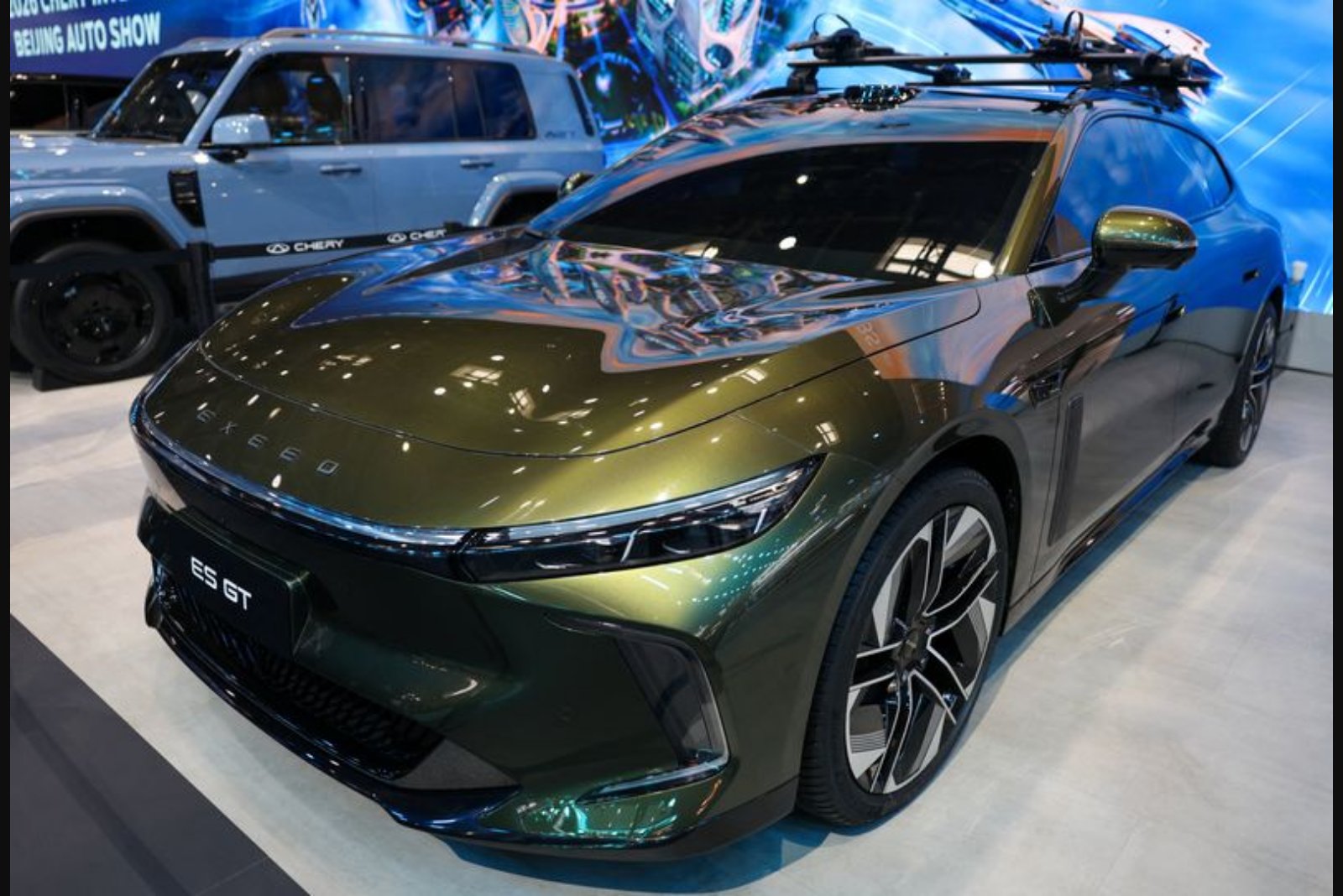
CHERY GROUP HEADQUARTERS, Wuhu, China - Chery, the country’s largest exporter of passenger cars, said it is weighing the option of entering the United States market but will only do so when circumstances are appropriate. The company did not provide a specific timeline for such a move.
Speaking at Chery’s headquarters on Wednesday, Zhang Guibing, president of Chery International, said the company has its sights set on the U.S. market while stressing the decision will follow a careful assessment. "When we find a good and suitable time in the future, we definitely hope to enter it," Zhang told reporters. "Everyone knows the American car market is huge ... we definitely have the idea of selling cars in the United States. Everyone definitely has that idea."
Zhang emphasized that any entry would be conditioned on both Chery’s internal readiness and the direction of auto industry policies in China and the United States. He did not expand on which specific benchmarks or milestones Chery would need to meet prior to committing to U.S. sales.
The U.S. market has long been a coveted but challenging target for Chinese automakers. The United States currently levies 100% tariffs on Chinese-made electric vehicles. In addition, U.S. measures restricting certain Chinese connected-car technologies and increasing scrutiny from lawmakers add further obstacles for potential market entrants.
To date, Chery has not listed the United States among its export destinations. Instead, like many of its domestic peers, it has concentrated its international efforts on Europe, Latin America, the Middle East and Southeast Asia, where demand for lower-cost Chinese vehicles has been rising.
Chinese automakers have also sought to expand abroad through partnerships with established automakers, aiming to utilize underused manufacturing capacity across Europe. Some Chinese firms maintain research and development or design facilities in the United States, and others have established or broadened manufacturing footprints in the U.S. under non-Chinese brands.
One example noted at the company briefing is that Geely-owned Volvo Cars operates a manufacturing plant in South Carolina. At a January Consumer Electronics Show event, company representatives indicated that an unnamed Chinese automaker was eyeing U.S. expansion and could announce plans within a 24 to 36 month window, according to comments made by its global communication chief, Ash Sutcliff.
The largest Chinese electric vehicle maker, BYD, has an American presence through its electric bus operations but has stated it does not plan to sell passenger cars in the United States. Xiaomi, another high-profile potential EV entrant, has said it has no plan to enter the U.S. market. Several Chinese automakers, including BYD, Chery, Geely and Great Wall Motor, have investigated or expanded operations in Mexico and Latin America - markets viewed by some as possible springboards or alternatives for access to North American consumers.
Context for markets and sectors
- Auto industry: Potential new entrants and cross-border partnerships could influence manufacturing footprint decisions, distribution strategies and competitive dynamics in regional markets.
- Trade and policy: Tariffs and technology restrictions remain material considerations for market access and product planning.
- Supply chain and manufacturing: Expansion through partnerships and use of underutilized plants in Europe or operations in Mexico and Latin America are current strategies among Chinese automakers.