
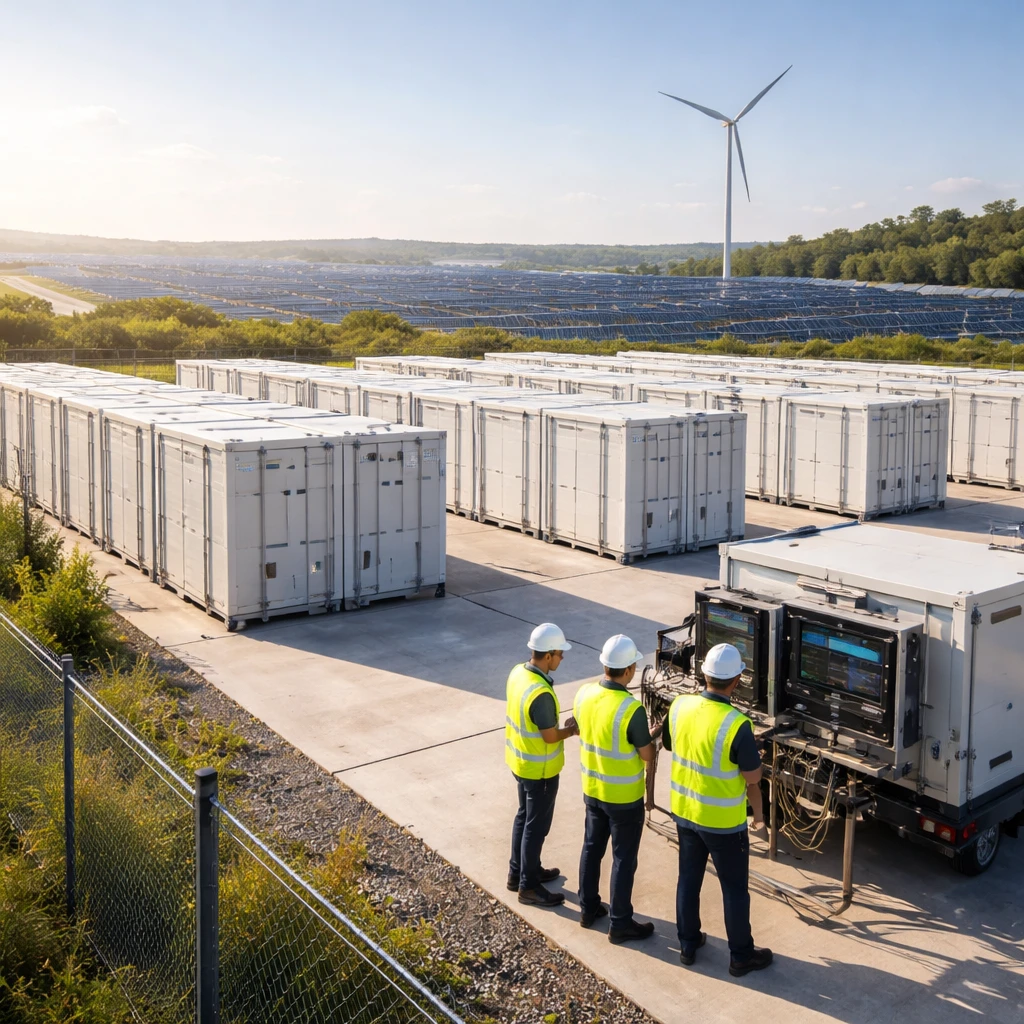
CATL anticipates a marked rebalancing of its revenue mix over the coming decade, projecting that energy storage systems will make up 50% of global sales by 2030, according to remarks made by a company executive on Thursday.
Kevin Tang, who leads CATL’s energy storage systems efforts in Europe, recounted the rapid growth of the business line. He noted that energy storage represented just 2% of the company’s battery sales five years ago and has expanded to roughly a quarter of sales today.
From EV batteries to storage
CATL, established in 2011, began as a maker of lithium-ion cells for electric vehicles, a segment that still comprises about three quarters of its current sales. Tang said the increasing deployment of intermittent renewable generation is a central factor driving demand for batteries designed to store energy.
"Once we have more renewable energy, we need energy storage," Tang said at a conference in Shanghai focused on photovoltaic power generation and smart energy.
Regional dynamics and manufacturing footprint
In Europe, which CATL identifies as its third-largest market for energy storage after China and the United States, customers are funding both combined renewable-plus-storage projects and grid-side storage solutions. Decisions often hinge on congestion points within local power networks, Tang said.
CATL currently operates production facilities in Germany and Hungary. The company has also begun building a new plant in Spain through a joint venture with Stellantis, expanding its European manufacturing presence.
Safety testing and recycling
This week CATL announced a planned investment of 3 billion yuan, roughly $440 million, to create an energy storage testing center. The facility is intended to simulate grid conditions and investigate the causes of storage-related fires and explosions.
Tang also noted CATL’s activity in the upstream and circular economy: the company mines lithium in southern China and operates what it says is the world’s largest recycling plant for recovering battery raw materials.
Cost pressures and supply-chain expectations
Citing the recent spike in prices for key raw materials such as lithium, copper, and aluminum in the wake of the U.S.-Israel war with Iran, Tang acknowledged that manufacturers face headwinds. He expressed an expectation that costs will fall over time as the supply chain matures.
That expectation points to a longer-term view that technological deployment and supply-chain development will moderate input costs, even as near-term volatility remains a challenge for the sector.