
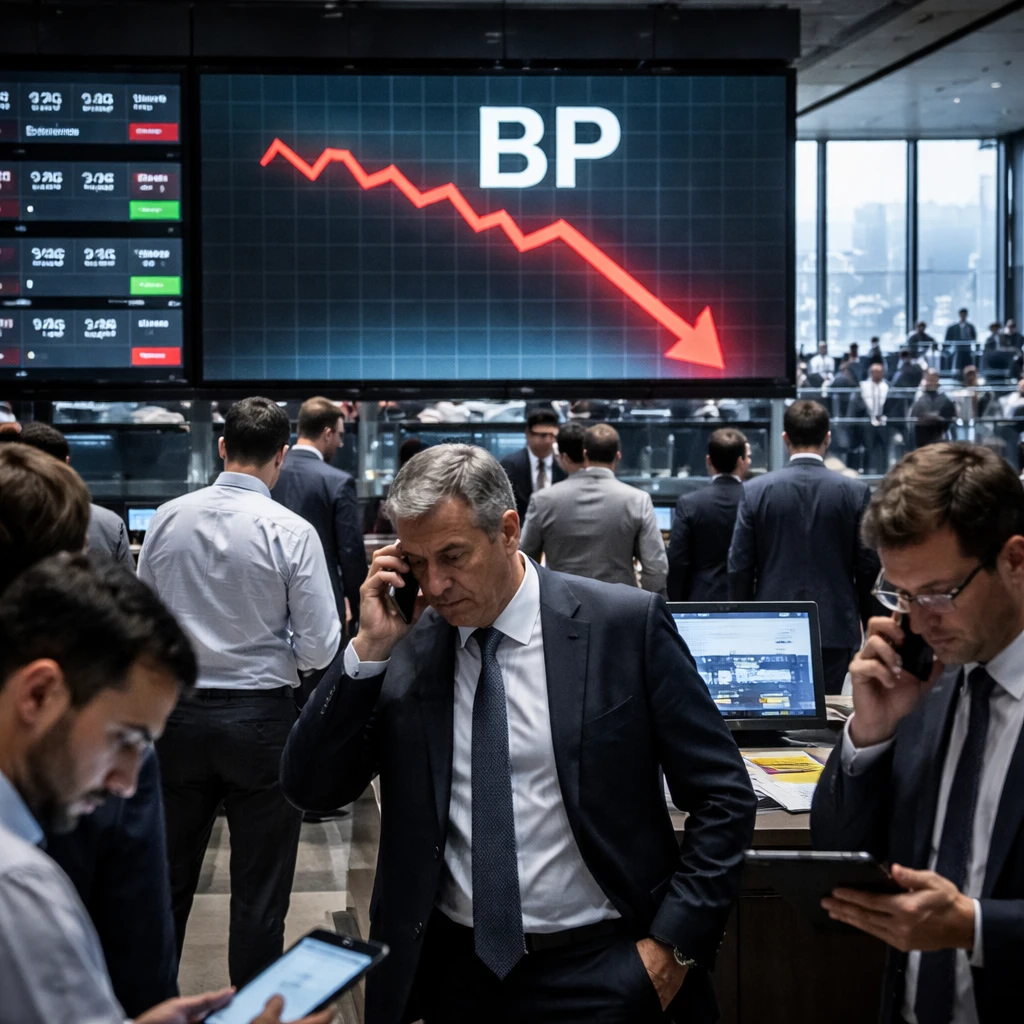
BP shares tumbled sharply after the oil major’s board said it had unanimously removed Chairman Albert Manifold with immediate effect, citing serious concerns around governance standards, oversight and conduct. The company declined to provide further specifics on the nature of the concerns, leaving investors to react to the abrupt leadership change.
The board named Ian Tyler as Interim Chair immediately. In a statement, Tyler said the board remains confident in BP’s strategic direction and praised CEO Meg O’Neill’s stewardship since she joined the company. Amanda Blanc, the Senior Independent Director, acknowledged Manifold’s contributions to BP’s ongoing transformation but said the board had been "surprised and disappointed to learn of governance oversight and conduct issues it deems unacceptable and has taken decisive action." The company did not elaborate on those issues.
The governance shock follows a recent period of boardroom friction at BP. Manifold had been appointed chair in October 2025 to oversee the company’s strategic overhaul and faced notable shareholder resistance at the April 2026 annual general meeting, where he secured roughly 82% support - a level of opposition that stood out as a protest vote against a chair. Investor groups including Elliott Management and others have previously pushed BP for operational improvements and greater transparency.
Market context did not explain the selloff. On Tuesday, May 26, the FTSE 100 was trading up about 0.7% as markets responded to cautious optimism around US-Iran ceasefire negotiations. That broader positive tone helped offset a renewed rise in global crude prices, with Brent crude climbing more than 2% a barrel after US Central Command confirmed "self-defence strikes" on Iranian missile launch sites and boats near the Strait of Hormuz.
Despite the generally supportive backdrop for energy equities, BP’s share decline was dramatically steeper than peers. Shell slipped only modestly in early London trading on the same day, underscoring that BP’s losses - a decline of about 5.4% to trade at 521.5p, and an intraday low of 500p - were driven by company-specific governance concerns rather than sector or macro developments.
The combination of an unexplained, immediate removal of the chairman, a recent history of leadership instability, and the absence of details on the alleged conduct generated a heightened uncertainty premium. Investors appeared unwilling to hold the position through that uncertainty, producing a pronounced outlier move in BP’s share price while the broader FTSE 100 gained.
Summary
BP shares slid after the unanimous and immediate removal of Chairman Albert Manifold over undisclosed governance, oversight and conduct concerns. Ian Tyler was appointed Interim Chair. The move created a company-specific selloff even as the FTSE 100 rose and Brent crude prices recovered, highlighting that the decline was rooted in corporate governance worries rather than market or commodity drivers.
Key points
- BP removed Chairman Albert Manifold immediately and unanimously citing serious governance, oversight and conduct concerns; no further details were released.
- Ian Tyler was named Interim Chair; the board signalled continued conviction in BP’s strategy and praised CEO Meg O’Neill’s leadership.
- The share drop was company-specific - BP fell about 5.4% to 521.5p (intraday low 500p) while the FTSE 100 traded up and Brent crude rose, and peer Shell experienced only modest weakness.
Risks and uncertainties
- Unclear nature of the governance and conduct concerns - the absence of public detail makes it difficult for investors to assess potential operational or legal implications.
- History of leadership instability - previous shareholder dissent (about 82% support at the April 2026 AGM for Manifold) and investor pressure for operational improvements may contribute to ongoing governance scrutiny.
- Investor confidence risk - an abrupt, unexplained chairman removal can sustain an uncertainty premium on BP’s equity until more information or management stability is restored.