
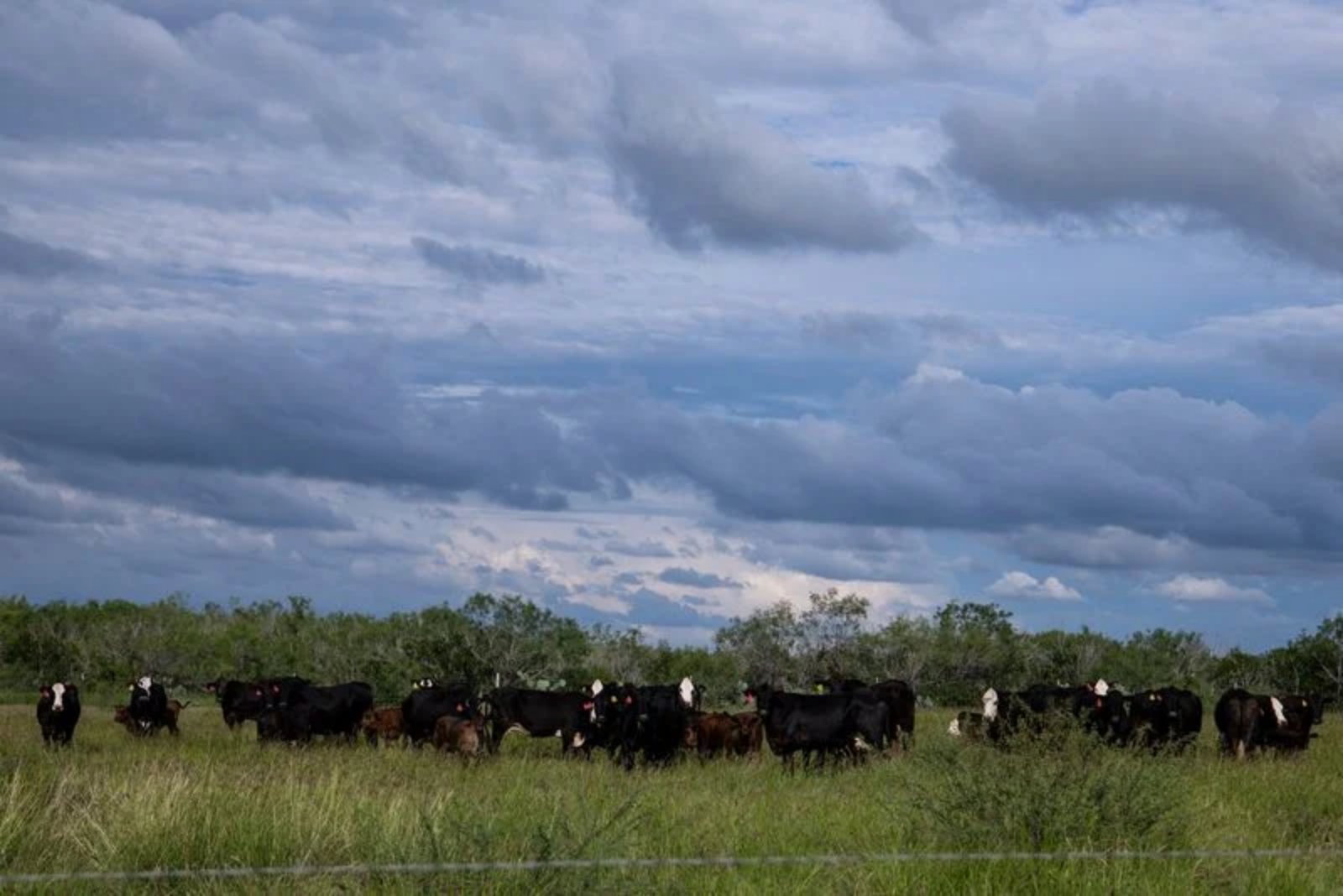
Rows of empty corrals at a West Texas feedyard reflect a dramatic reorientation of cattle flows across the U.S.-Mexico border. The 70-year-old Lubbock Feeders operation, which has fattened cattle in the Lubbock, Texas, region since the Eisenhower administration, now faces potential closure after a year-long halt to Mexican cattle imports removed the supply that historically provided the majority of animals it finished, according to one of the operation's owners.
U.S. federal authorities closed the border to livestock from Mexico a year ago as part of efforts to prevent the entry of New World screwworm, a parasitic fly that can infest wounds on warm-blooded animals. Mexican authorities have struggled to fully control the pest, and this week U.S. officials confirmed the first case of screwworm on a Texas cattle ranch in 60 years. The discovery adds a new complication to an American beef sector already stressed by thin supplies, trade policy shifts and an extended drought.
In contrast, parts of northern Mexico, notably the border state of Coahuila, present a markedly brighter picture. Ranchers who previously exported live cattle to the United States are increasingly keeping animals longer, fattening them on Mexican feedlots and investing in slaughter and packing facilities to ship meat north. Producers there say they have expanded staff and beef processing capacity with an eye toward selling finished product to U.S. consumers.
Supply chain shifts and the feedlot squeeze
The closure of the border to Mexican cattle has had tangible consequences for the U.S. beef supply chain. U.S. cattle inventories fell to a 75-year low, contributing to record-high retail beef prices this year. Industry participants say the restriction, together with drought-driven reductions in U.S. herds and wildfires across the Plains, forced many American producers to shrink their herds.
Before the ban, the United States imported more than one million cattle annually from Mexico, representing approximately 4% to 5% of all cattle sold for U.S. beef production, according to industry data cited by market participants. Those animals typically moved to U.S. feedlots for finishing and then to domestic processing plants, supporting jobs across trucking, feed production and meatpacking sectors. With the border closed, much of that economic activity is occurring within Mexico.
At Lubbock Feeders, managers say they ceased bringing cattle into the feedyard months ago because the high purchase prices for U.S.-sourced animals created the risk of losing more than $200 per head on fed cattle. The yard, which can house up to 40,000 animals, now contains roughly 4,000, according to company representatives. Routine tasks have thinned considerably; one long-tenured assistant manager now finds his daily animal check takes 22 minutes instead of a much longer shift amid a full yard.
"If they end up feeding and processing them in Mexico, how are we winning?" asked Kyle Williams, manager and part owner of Lubbock Feeders. "We're giving this to them on a silver platter, the feeding industry. That's work, that's labor, that's people that are not getting to do it here in the U.S." Williams and other feeders argue that the United States could resume safe imports with inspections and treatment protocols at ports of entry, noting that training has been conducted on both sides of the border.
Mexican producers move up the value chain
Producers in Coahuila and other northern Mexican states are taking advantage of the market disruption to add capacity and capture margins that previously accrued when live calves were exported. Rancher Enrique García, who historically exported about 900 head a year to Kansas, began fattening cattle on a smaller scale four years ago to diversify and has increased his operations since the U.S. border closure.
García said he has doubled his workforce to accommodate both fattening and processing activities. He reported an increase in income of roughly 8% to 10% as the business shifted from exporting live animals to preparing meat for sale. With the recent confirmation of screwworm in the United States, he said the likelihood of sustained border restrictions makes investment in on-farm finishing and processing more attractive.
"In the end, we are going to get to the United States just the same, but now with meat," García said.
Mexico's main meat producers council reported a 23% increase in Mexican beef shipments to the United States in the first four months of 2026, and it is targeting a doubling of shipments next year. Coahuila officials say they are working with federal authorities to expand federally and U.S.-certified slaughter and packing capacity to support higher exports.
Isaias Montemayor, Coahuila's deputy minister of livestock and rural infrastructure, said the market response demonstrates that adding on-farm value can create profits comparable to, or larger than, the returns from exporting live calves.
Regulatory actions, eradication history and containment strategy
The screwworm poses a serious livestock health threat because the parasitic fly lays eggs in wounds, and larvae feed on living tissue if untreated. U.S. Agriculture Secretary Brooke Rollins referenced historical eradication efforts in which authorities released sterile flies from a Texas production plant to halt past epidemics. That effort effectively ended the earlier epidemic, but Rollins noted it took the cattle industry three decades to recover from that prior outbreak when justifying the border closure last year.
Rollins said suspending cattle movement can slow the pest's incursion and that ports of entry will remain closed to Mexican cattle until further notice. The White House referred questions about the issue to the U.S. Department of Agriculture. In a statement, the USDA said: "Efforts at the federal, state, and local levels have been focused on containing the pest and implementing protocols." The agency also indicated that training and inspection protocols exist and could be applied to safely resume movement if deemed appropriate.
Mexican livestock organizations say the border measures forced the domestic industry to adapt and, in some respects, strengthen. "The profit from producing meat now stays in Mexico with a consequent impact on the American industry," said Rogelio Perez of Mexico's National Confederation of Livestock Organizations.
Effects on meatpackers and plant operations
U.S. meatpackers have felt the squeeze from tighter cattle supplies. Processors report falling profitability in U.S. beef operations when cattle input costs rise faster than retail beef prices. Tyson Foods, for example, reported steep losses in its U.S. beef business as cattle costs outpaced beef price gains. The company reduced operations this year at a beef plant in Amarillo, Texas, and permanently closed a large beef plant in Nebraska. Tyson said the operational changes were made to improve competitiveness, but they eliminated thousands of jobs.
Other large processors have confronted labor unrest that has disrupted plant operations. Rival firms JBS and Cargill have faced rare labor disputes at U.S. beef plants, reflecting broader pressure across the processing sector as companies balance labor costs, plant efficiency and supply constraints.
Executives at U.S. meatpacking firms say they are dependent on domestic producers expanding herds to restore efficient plant utilization. Company officials have also indicated that resuming live cattle imports from Mexico would have the largest immediate effect on supplies over the next 12 to 18 months, compared with other policy moves.
Policy responses and price politics
Rising retail beef costs have become an affordability concern for consumers ahead of U.S. midterm elections. The political response included direct appeals from the White House for cattle producers to lower prices, an order for the Department of Justice to investigate meatpackers, and authorization for low-tariff beef imports from Argentina. Industry participants note, however, that what would most materially reduce prices is an expansion in U.S. cattle numbers - a process that can take roughly two years because it depends on herd rebuilding and biological timelines for turning cows into slaughter-ready cattle.
Some U.S. producers say the government's move to permit cheaper imports from Argentina made it harder to persuade them to rebuild herds, because potential increased competition could depress future prices. Producers pointed to persistent uncertainty over rainfall and profitability as reasons they have been reluctant to increase herd sizes.
On-farm decisions and drought pressures
Producers coping with drought face difficult decisions about herd size. In Tulia, Texas, approximately 72 miles north of Lubbock, farmer Eddie Womack said severe drought left him without crops to use as feed, forcing him to buy more-expensive feed and contemplate reducing his herd from about 600 cows to 200 unless rain arrives this summer. Womack said another devastating year could push him to exit the business entirely.
At Lubbock Feeders, the staff impacts are evident. Bobby Swift, the feedlot's 57-year-old assistant manager and a 30-year employee whose father and grandfather also worked at the yard, now arrives later because there is little to do. "When you're as slow as we are, mentally it takes an effect on you," Swift said, describing how reduced activity has changed daily routines for long-term employees.
Industry perspectives on reopening the border
Meat industry advocates and distributors have urged federal authorities to reopen imports from Mexico under safe protocols. Darin Parker, president of global meat distributor PMI Foods, said USDA should reopen the border and argued for protecting the domestic beef industry. Packers and feeders alike contend that allowing inspected and treated cattle to cross at ports of entry would provide the quickest improvement in U.S. supplies and plant utilization.
Yet, federal officials maintain that protecting animal health remains the priority. Rollins reiterated that suspension of Mexican cattle imports successfully delayed screwworm's incursion into the United States and that officials will keep ports closed until risk assessments and containment efforts warrant a change.
Outlook and immediate implications
The border closure and the confirmed domestic screwworm case have accelerated structural shifts in the North American beef system. U.S. feeders and processors face leaner supplies, elevated input costs and reduced utilization. Mexican producers have responded by integrating further into finishing and processing, collecting margins formerly captured across the border and expanding exports of processed beef. While policy actions, such as allowing some low-tariff imports and investigating packing industry practices, aim to address consumer price pressures, industry participants emphasize that rebuilding U.S. herd sizes and restoring cross-border live cattle movements - under conditions deemed safe by authorities - would be the most direct path to larger domestic supplies and lower prices over the medium term.
For now, the operational, labor and trade adjustments remain in motion. U.S. feedlots that once relied on Mexican-sourced animals are operating well below capacity. Mexican operations are moving up the supply chain to fatten and slaughter animals locally. The resulting redistribution of economic activity highlights how animal-health measures can reshape regional production, processing and employment patterns across a cross-border agri-food system.