
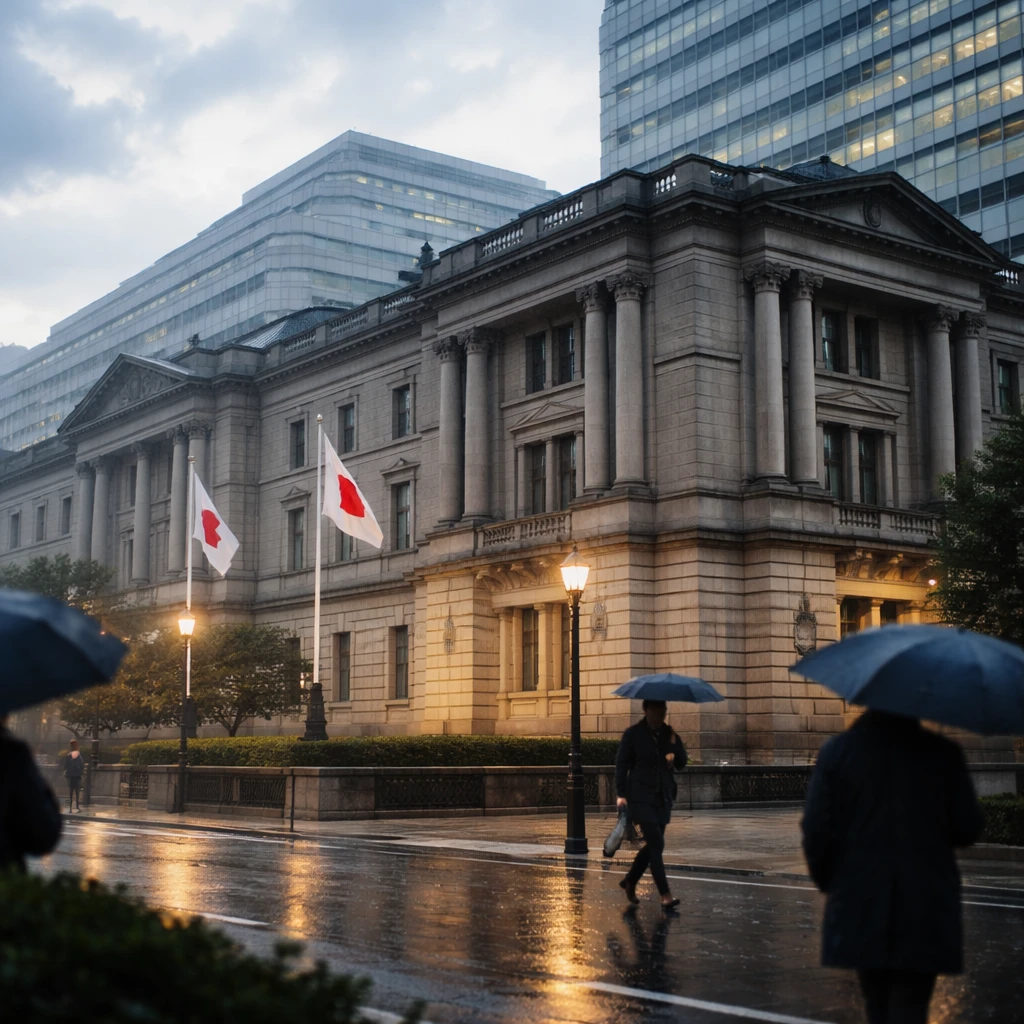
Bank of Japan Deputy Governor Ryozo Himino said on Tuesday that the central bank will monitor developments in the Middle East and adjust its monetary policy stance if those developments affect Japan's economic outlook and price trends.
Himino reaffirmed the BOJ's intention to continue raising the policy rate, adding that the bank will fine-tune the level of monetary accommodation in response to three core variables: economic activity, price movements and financial conditions. His remarks framed policy adjustments as conditional on how external events translate into domestic economic effects.
Those comments come at a moment when market participants have increasingly priced in the likelihood of a rate increase of at least 25 basis points in June. That shift in expectations reflects concern about potential inflationary effects linked to the conflict in the Middle East.
At present, Japanese consumer inflation has remained relatively subdued, a pattern the deputy governor and others attribute in part to government subsidies that have lowered costs for gas and electricity. By contrast, producer inflation experienced a pronounced uptick in March and April. Himino and the central bank signaled that this rise in producer prices could foreshadow a future acceleration in consumer inflation.
The deputy governor’s remarks emphasize a conditional strategy: policy will move depending on how external shocks - specifically those arising from the Middle East - feed through to domestic prices, activity and financial market conditions. That approach keeps the BOJ's path for rate hikes tied to observable economic indicators rather than a fixed schedule.
Context and implications
- Himino's statement makes clear the BOJ is prepared to raise interest rates further while retaining flexibility to alter the pace of tightening according to incoming data.
- Government subsidies have so far muted consumer-level price pressure, but the spike in producer inflation in March and April presents a channel through which higher costs could eventually reach consumers.
- Markets are increasingly convinced a June rate action of at least 25 basis points is likely, reflecting concern that external developments could boost inflation.
The deputy governor did not provide a schedule of rate moves or quantify thresholds for action, instead tying future decisions to how the situation in the Middle East affects Japan's economy and price path. The BOJ's approach, as described by Himino, links monetary tightening to observable changes in activity, prices and financial conditions rather than precommitment to a specific numerical path.