
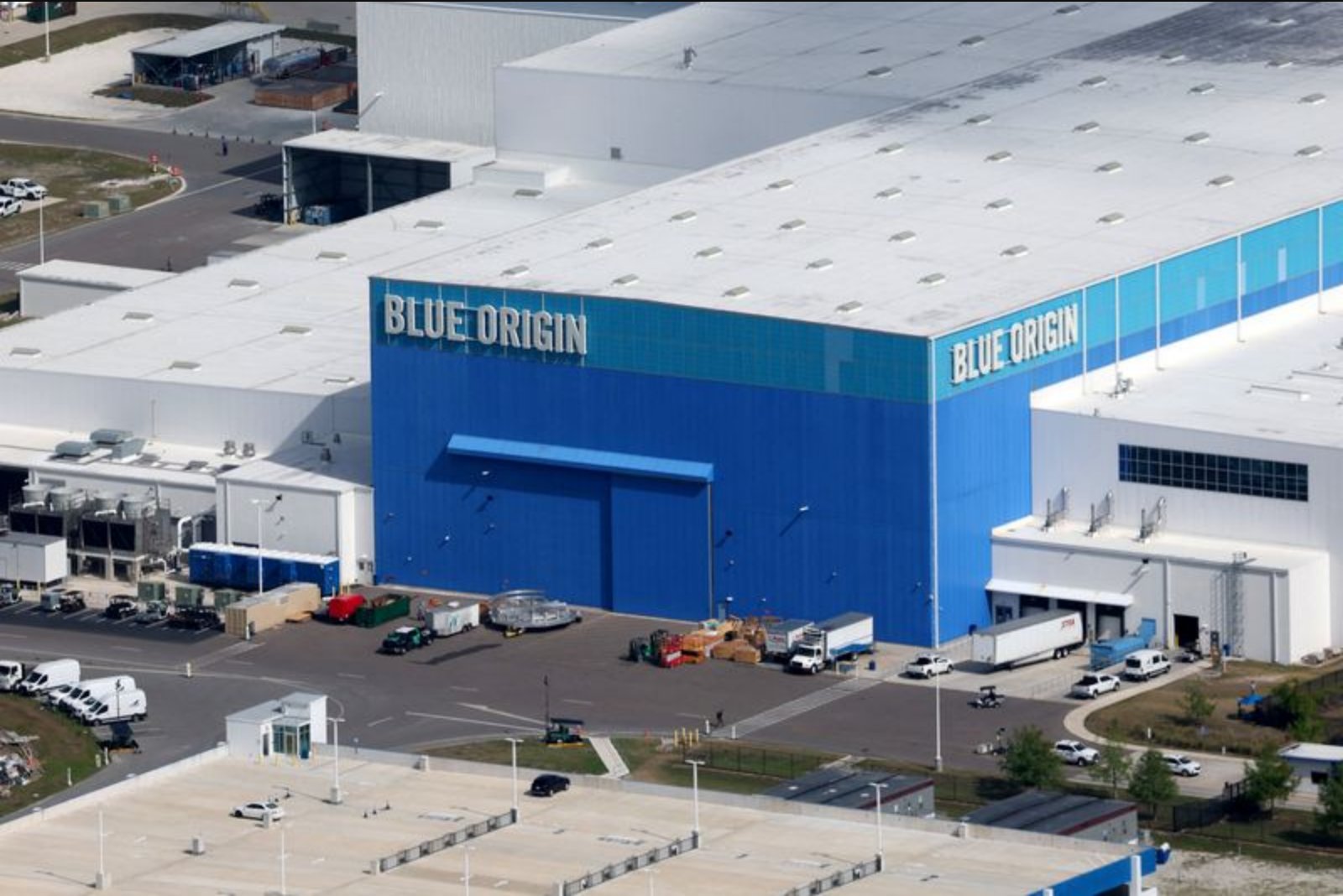
Florida Governor Ron DeSantis announced on Friday that Blue Origin will expand its Rocket Park campus in Cape Canaveral with a $600 million development. The centerpiece of the plan is a large-scale upper-stage manufacturing building intended to support ongoing vehicle production and to add a substantial number of aerospace roles to the local workforce.
The company described the facility as an 830,000-square-foot plant focused on upper-stage manufacturing. Blue Origin said the site will support 500 aerospace jobs, and the company reported an expected average salary for those positions of more than $98,000.
Blue Origin framed the initiative as part of a longer-term commitment to Florida. In a statement, CEO Dave Limp said, "Project Horizon is the latest and most ambitious chapter in Blue Origin’s decade-long commitment to Florida." The company also provided figures describing its existing footprint in the state: since 2015 it has grown to nearly 4,000 employees and invested more than $2.3 billion across 500 Florida suppliers.
- The new upper-stage manufacturing facility will encompass 830,000 square feet.
- The project is projected to support 500 aerospace jobs, with an average salary above $98,000.
- Blue Origin reports nearly 4,000 employees and more than $2.3 billion invested with 500 Florida suppliers since 2015.
State support for the expansion will be channeled in part through the Spaceport Improvement Program, a collaboration between Space Florida and the Florida Department of Transportation. That program previously provided funding for Blue Origin’s new launch pad at Launch Complex 36.
Company officials also noted that Blue Origin remains the only firm that both manufactures and launches rockets from Florida. The announcement arrives while a key rival, SpaceX, is preparing to pursue a public listing with a target valuation of $1.75 trillion.
Regulatory and operational questions remain in the backdrop. In April, federal aviation regulators required Blue Origin to conduct an investigation into an upper-stage malfunction of its New Glenn rocket during a failed satellite launch from Florida. That inquiry was ordered by aviation authorities and relates directly to the upper-stage hardware that the new facility is intended to produce.
From a sector perspective, the expansion touches aerospace manufacturing, state-supported space infrastructure programs, and the regional supplier ecosystem. The plan ties capital investment, workforce creation, and existing state funding mechanisms together while occurring in a competitive landscape that includes a high-profile rival preparing a public offering.