
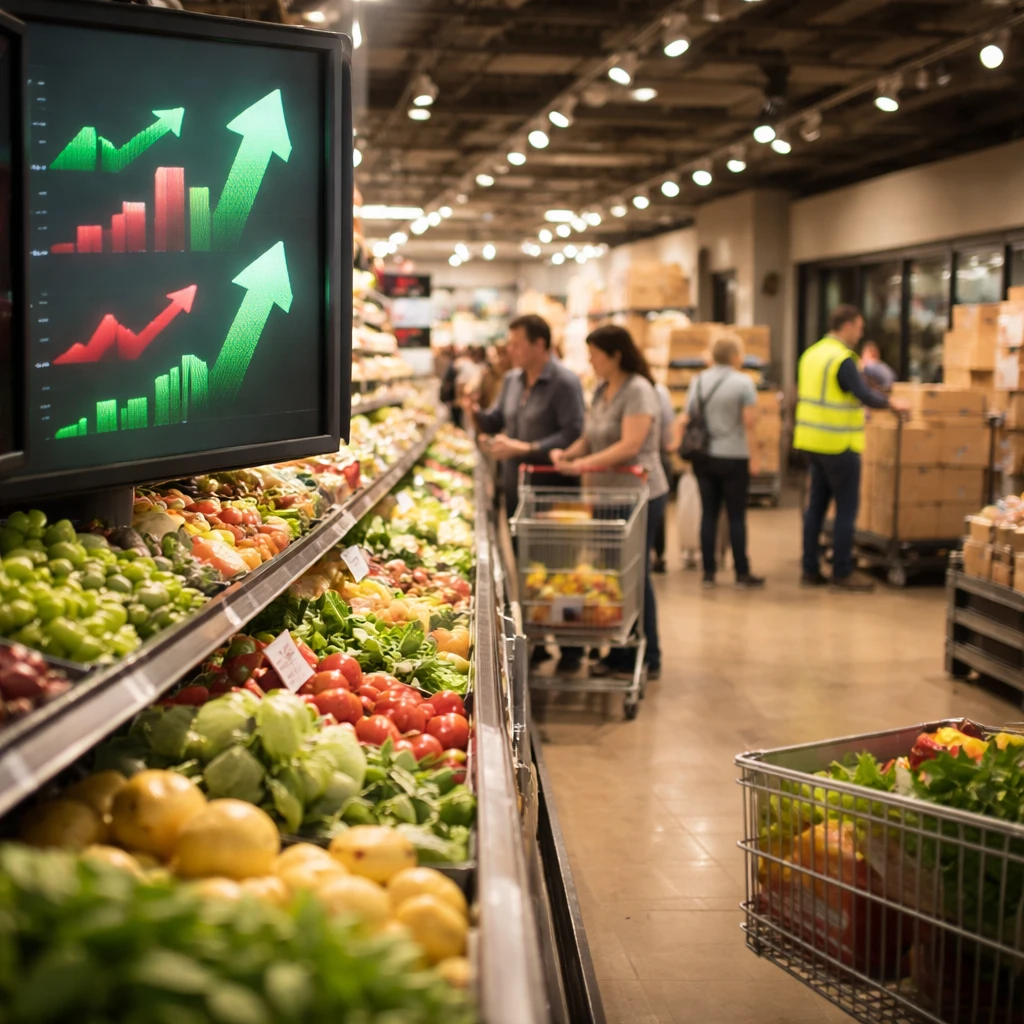
Bernstein said in a note dated Friday that a renewed rise in food inflation is likely to support earnings at European grocery retailers over the coming 6-12 months. The brokerage flagged that UK food consumer price inflation (CPI) is expected to lift to 4-6% in 2027, which compares with current consensus like-for-like sales estimates of roughly 3% for both Tesco and Sainsbury's.
In its sector recommendations, Bernstein named Tesco and Jeronimo Martins as its top picks, and highlighted Marks & Spencer as a transformation story. The broker placed Ocado, Axfood and B&M in an underperform category.
Drivers and timing
According to Bernstein, food inflation is being driven mainly by three factors: higher oil prices, rising food commodity prices and movements in foreign exchange. The broker expects UK food inflation to average 3-5% in 2026, before climbing to 4-6% in 2027, with the high point arriving around January-February 2027.
Bernstein noted that producer price inflation typically takes 6-12 months to filter through to consumer prices. On that basis, the firm expects the inflationary effect to hit production during the third quarter of 2026 and to begin reaching consumers in the fourth quarter of 2026 and into the first quarter of 2027.
"Food inflation is good for the sector - it grows the profit of food retailers, and it is passed onto consumers through price increases," Bernstein wrote.
Scenario framework
The note sets out a range of scenarios.
- Under the low/base case, UK food CPI is forecast to average 3.1% in 2026 and then ease to 2.7% in 2027, with a peak of 4.4% in January 2027.
- The mid-case assumes food CPI of 3.2% in 2026 rising to 4.0% in 2027, with a peak at 5.2%.
- The high case assumes oil trades at $110 for the remainder of 2026 and through 2027, producing a 2027 average of 5.0% and a peak of 6.7%.
- The very high case assumes oil at $120 and a trade-weighted pound falling by more than 10%, which puts the 2027 average at 5.9% and the peak at 8.4% in February 2027.
Bernstein contrasted the current episode with the 2022 surge in food inflation caused by the Russia-Ukraine war. The broker said the Ukraine conflict created a direct supply shock by removing Russian and Ukrainian exports of wheat, maize and sunflower oil from global markets, as well as affecting gas and fertiliser. By contrast, the war in Iran is described as a secondary shock that primarily impacts input costs via oil, liquefied natural gas and fertiliser flows through the Strait of Hormuz.
"We would expect lower and less persistent food inflation than seen in 2022," the note said.
Bernstein also said retailers are more hedged on commodity pricing and foreign exchange than before, which can delay the pass-through of higher input costs into consumer prices.
Implications for consensus forecasts and valuations
Those projected inflation ranges compare with consensus 2027 like-for-like forecasts of 2.6% for Tesco and 2.7% for Sainsbury's, implying scope for upward earnings revisions unless the low/base scenario prevails.
On valuation metrics, Bernstein noted the following positions:
- Tesco trades at 15.4 times 2026 estimated earnings, with a price target of 520 versus a closing price of 448.20.
- Jeronimo Martins, rated outperform, trades at 13.6 times 2026 estimated earnings, with a price target of 29 versus a closing price of 17.71.
- Marks & Spencer trades at 10.9 times 2026 estimated earnings, with a price target of 440 versus a closing price of 367.40.
Bernstein reiterated its sector ratings while noting the potential for food inflation to expand grocery profit margins through higher prices charged to consumers.
What to watch next
Key timing elements to monitor include commodity price moves, the path of oil prices, and foreign exchange trends, all of which feed into producer prices and then, with a lag, consumer food prices. The broker's timeline anticipates production impacts showing up in Q3 2026 and consumer-facing price changes from Q4 2026 into Q1 2027, with a peak around January-February 2027 under several scenarios.