
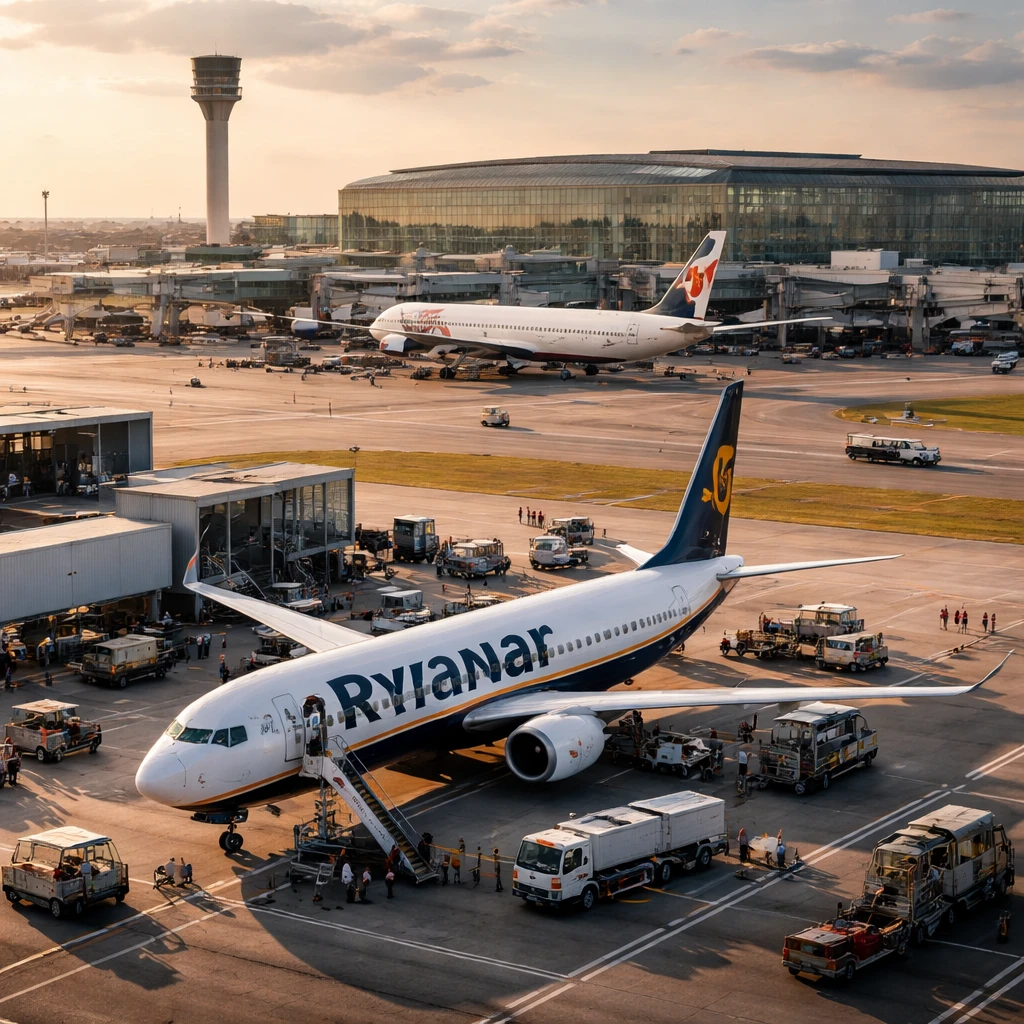
European carriers are entering a more challenging operational backdrop as jet fuel prices rise, Middle East disruption alters travel flows, and market participants grow more discerning about which airlines possess enduring structural strengths. In its latest sector review, Bernstein narrows its outperformer convictions to just two groups: Ryanair and International Airlines Group (IAG). While both are judged better positioned than peers to absorb industry stress, Bernstein stresses that each relies on a distinct strategic advantage.
Ryanair - low-cost resilience and balance-sheet flexibility
Bernstein terms Ryanair a "winner in every world," highlighting the carrier's exceptional cost discipline, streamlined operations, and conservative financial posture. The airline's claim to the lowest cost base in Europe is central to the thesis: when fuel costs push industry-wide expense levels higher, carriers with higher unit costs face pressure to raise fares, prune networks, or accept margin erosion. Ryanair's cost advantage mitigates those pressures.
Financially, Bernstein notes Ryanair's near net-cash position and high rate of fleet ownership as significant buffers. The combination of limited leverage and owned aircraft reduces exposure to operating and financing volatility. Historically, the firm has used downturns as opportunities to expand share while rivals scale back capacity. Bernstein emphasizes that industry disruption has often translated into share-gain opportunities for Ryanair rather than threats.
Beyond share growth, the investment case for Ryanair is shifting toward cash generation. Aircraft supply constraints and ongoing industry consolidation are driving stronger free cash flow prospects, in Bernstein's view. That improving cash profile is expected to underpin shareholder returns even as the airline continues to pursue growth.
IAG - asset quality and premium network advantages
By contrast, Bernstein frames IAG's appeal around strategic asset quality rather than cost leadership. The group operates some of Europe's most valuable airline franchises, notably British Airways at Heathrow and Iberia at Madrid. Those hub positions are increasingly meaningful as airport slot scarcity limits the ability of competitors to scale in key markets, bolstering pricing power for incumbents.
Heathrow exposure is highlighted as particularly valuable given London's constrained aviation environment and the persistence of premium travel demand. Iberia's continental position gives IAG meaningful exposure to Europe-Latin America routes, a network segment where competition is described as more rational and margins are comparatively attractive.
Bernstein argues that IAG's premium-weighted long-haul network provides a natural hedge against rising fuel costs, since long-haul premium passengers tend to be less price-sensitive than short-haul leisure travelers. The research note also flags shareholder returns as a core component of IAG's investment case, with expectations for meaningful capital return through dividends and buybacks in the years ahead.
Outlook
The analyst view compresses European aviation into a more binary landscape: a handful of structurally advantaged carriers that can protect margins and consolidate position, and a broader set of competitors that will confront rising costs and shifting demand patterns. Within that framework, Bernstein places conviction behind Ryanair and IAG as the two clear outperformers, each leveraging different strategic levers to navigate the tougher operating environment.