
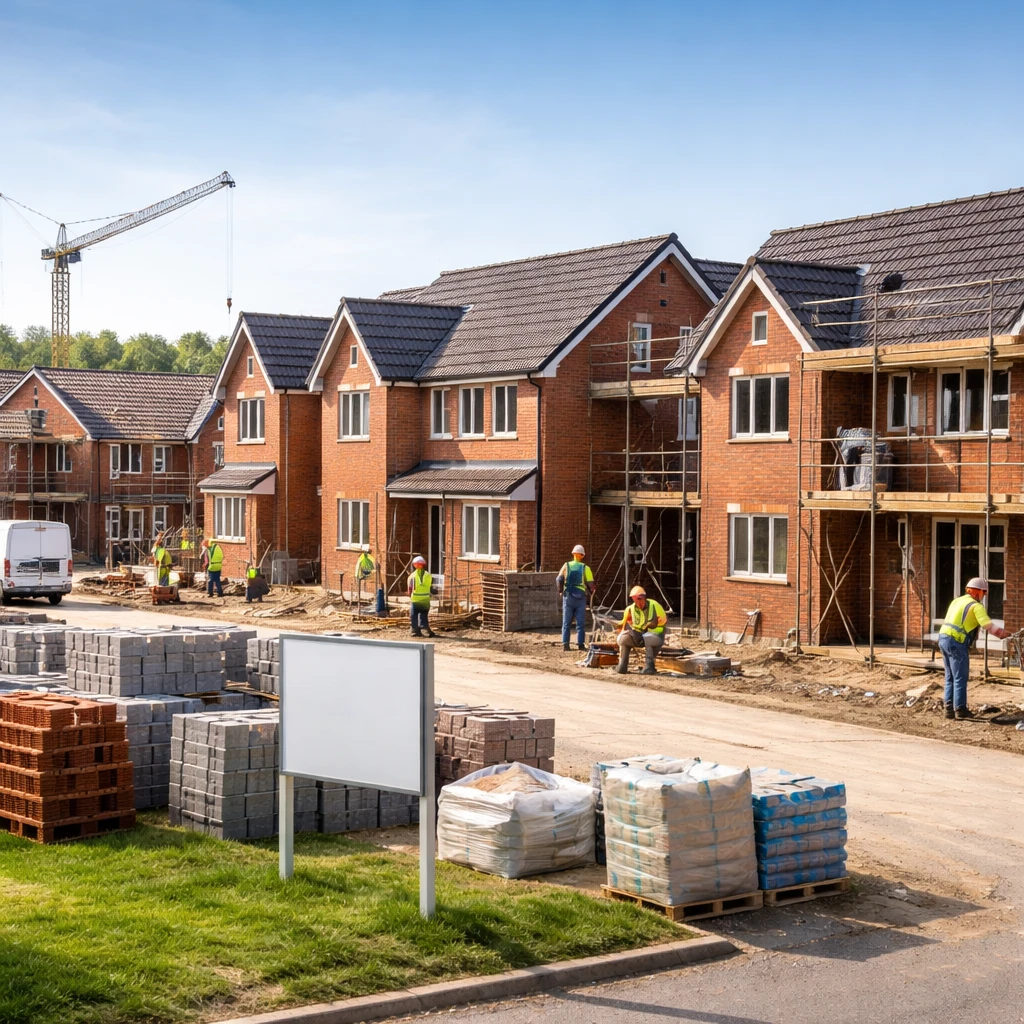
Summary: British homebuilder Bellway said demand eased in April and May as mortgage costs continued to affect buyer activity, yet the company maintained its full-year underlying operating profit guidance for FY26 at £320 million to £330 million and reiterated its planned volume output of 9,300 to 9,500 homes.
Bellway reported its forward order book at 5,345 homes valued at £1.57 billion as of May 29, 2026, down from 6,042 homes worth £1.65 billion a year earlier. The company said reservation activity slowed, with the private reservation rate dropping 6.2% to an average of 151 per week. Including social homes, the total reservation rate declined 5.1% to 186 per week. Cancellation levels remained low at 10%, compared with 11% a year earlier.
Chief Executive Jason Honeyman said, "Bellway continues to perform robustly in an increasingly challenging market." He added that the outlook beyond the current financial year remained uncertain, pointing to ongoing geopolitical tensions in the Middle East and a less predictable domestic political environment.
The group flagged renewed upward pressure on building material costs, attributing those increases to global trade conditions that have prompted suppliers to introduce surcharges and price rises. Bellway said it expected to gain clearer visibility on build cost inflation for FY27 when it publishes its full-year results.
Incentive usage by the business averaged around 5% over the period covered.
On the balance sheet, Bellway reported net debt of £236 million. Management expects to maintain adjusted gearing in the range of 5% to 10% by year-end, compared with an adjusted gearing level of 2.4% at July 31, 2025.
The board approved an interim dividend of 22 pence per share, an increase from 21 pence, which is scheduled to be paid on July 1, 2026. Full-year dividend cover is expected to be around 2.5 times.
Land buying activity continued in the current financial year, with Bellway contracting to purchase 6,744 plots across 24 sites at a cost of £363 million. This compares with 6,759 plots acquired for £495 million in the equivalent prior period.
Context and outlook
Despite the recent softening in customer demand and the fall in the forward order book, Bellway has kept its FY26 profit and volume targets unchanged. The company highlighted two cost pressures that will influence future performance: mortgage affordability for buyers and renewed supplier-driven increases in construction material costs.
Bellway said it will provide more clarity on build cost inflation for FY27 at the release of full-year results, leaving the near-term outlook dependent on how material cost trends and broader market conditions evolve.
Data recap
- Forward order book: 5,345 homes valued at £1.57 billion as of May 29, 2026 (down from 6,042 homes worth £1.65 billion a year earlier)
- Private reservation rate: down 6.2% to 151 per week
- Total reservation rate (including social homes): down 5.1% to 186 per week
- Cancellation rate: 10% (11% a year earlier)
- Underlying operating profit guidance for FY26: £320 million to £330 million
- Planned volume output for FY26: 9,300 to 9,500 homes
- Net debt: £236 million
- Adjusted gearing target by year-end: 5% to 10% (2.4% at July 31, 2025)
- Interim dividend: 22 pence per share payable July 1, 2026 (up from 21 pence)
- Land purchases since start of financial year: 6,744 plots across 24 sites for £363 million (versus 6,759 plots for £495 million in prior period)
- Incentive usage: approximately 5%
Implications for markets and sectors
The developments reported by Bellway touch on several parts of the housing ecosystem: buyer affordability amid higher mortgage costs, the construction supply chain facing renewed material price pressure, and capital allocation reflected in land buying and dividend decisions. These elements have potential implications for residential property markets, building-material suppliers, and investor assessment of housebuilders' balance sheets and dividend sustainability.