
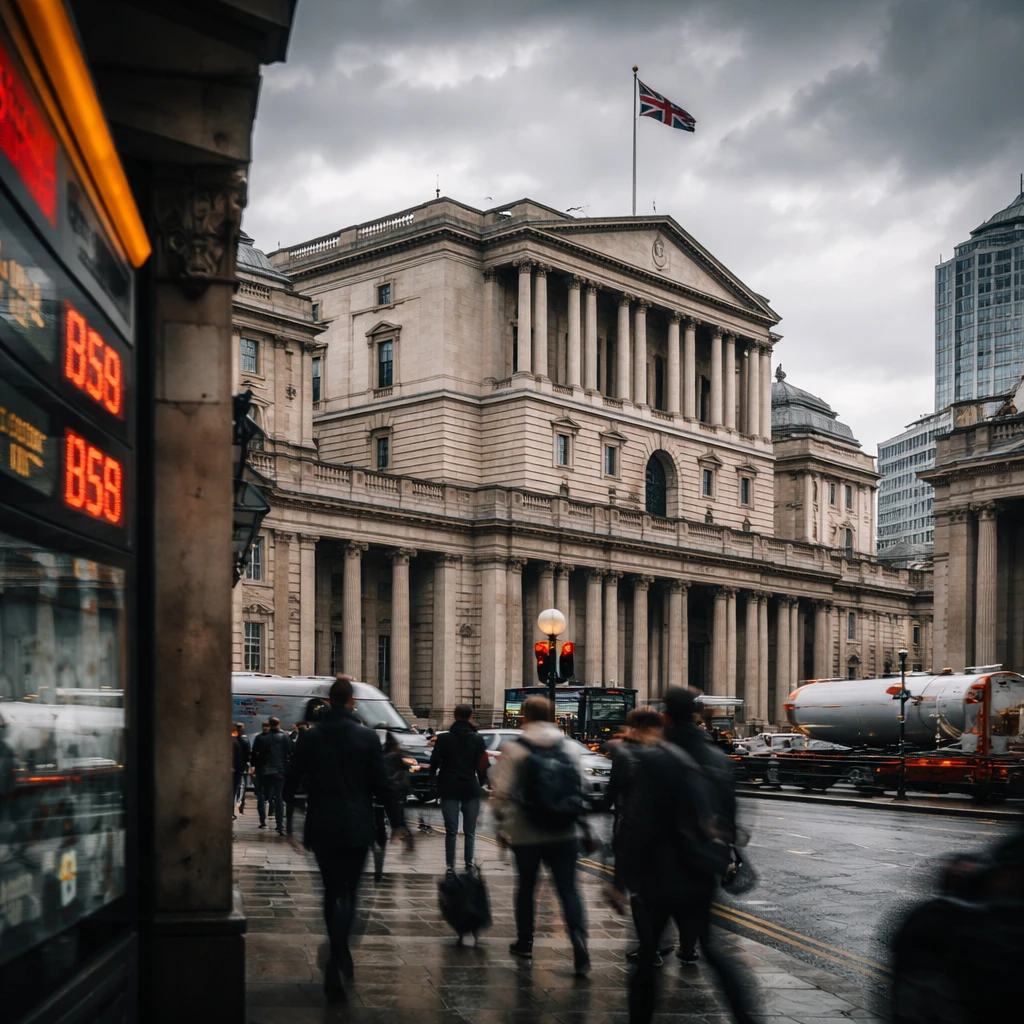
Economists surveyed between July 21-24 overwhelmingly expect the Bank of England to hold its policy rate at 3.75% at its upcoming decision and to leave it unchanged for an extended period thereafter. All 70 respondents in the poll saw no change at the meeting this week, reflecting concern that inflation will remain stubbornly above the Bank’s 2.0% target.
Official figures showed British consumer inflation eased to 2.6% in June, a decline that coincided with a brief de-escalation in the conflict involving Iran and a temporary pullback in fuel prices. However, the respite appears fragile - the conflict has since flared up again - limiting any sustained relief for households and complicating the policy outlook for the new government.
New Prime Minister Andy Burnham has signalled an intention to reduce living costs, but the precise measures and financing have not been disclosed. Any tax-related decisions are expected to be set out at the budget, anticipated in the autumn. Given the current outlook, little substantive support from the Monetary Policy Committee is expected to ease households' cost burdens in the near term.
The poll revealed that 58 of the 70 economists expect Bank Rate to remain at 3.75% through 2026. Eight participants forecast a 25-basis-point increase over that period, while four anticipated a reduction to 3.50%. Median projections from the survey put the first 25-basis-point cut no earlier than July of next year, followed by an additional cut in the fourth quarter of that year.
Market participants and policymakers are watching energy markets closely. "The situation is extremely fluid, and the risks certainly are we do indeed see a rate hike this year. However, for now, I think the MPC are basing their decision off the other fact policy is already in restrictive territory," said Ellie Henderson of Investec, who expected no change in rates this year. She noted that oil prices had fallen below $100 per barrel but had been above that level as recently as the previous day, raising questions about how long the Monetary Policy Committee will tolerate higher energy costs.
Across the broader European landscape, the European Central Bank left its key deposit rate on hold at 2.25% on Thursday. A separate poll of economists suggested the ECB could raise rates for a second time this year in September, taking the deposit rate to 2.50%.
The poll respondents expected inflation in Britain to rise to a peak of 3.3% in the next quarter before beginning to moderate. Nonetheless, they judged that inflation would not return to the Bank’s 2.0% target until the end of 2027. The survey results placed the annual average inflation rate at 3.1% for 2026 and 2.5% for 2027, both modest downward revisions from the previous month’s poll.
BoE Governor Andrew Bailey has expressed concern about the resumption of hostilities in the Gulf, but to date he judged the impact on Britain’s inflation outlook as limited. Other analysts caution that the renewed increase in energy costs could force the Bank into tighter policy. "While our view remains for no hikes from the Bank of England, we are acutely aware that we removed the only rate hike from our view at a time when energy prices were falling," said George Buckley at Nomura. He added that the sharp rise in energy prices increases the risk that the Monetary Policy Committee would need to respond to either realized second-round effects or the risk of those effects developing.
A private S&P Global survey published earlier in the week echoed these concerns, noting that inflationary pressures remain elevated and that the re-escalation of tensions risks reversing recent easing in cost burdens.
On the growth front, economists in the poll left their estimates unchanged from June, projecting economic expansion of 1.0% this year and 1.1% in the next.
Key points
- The entire poll of 70 economists expected the Bank Rate to be held at 3.75% on Thursday, with a strong majority forecasting no change through 2026.
- June inflation eased to 2.6% but is forecast to peak at 3.3% next quarter and not to return to 2.0% until late 2027; energy price volatility is a key upside risk.
- Economic growth projections were unchanged at 1.0% for this year and 1.1% for next year.
Risks and uncertainties
- Renewed hostilities in the Gulf and rising oil prices could push inflation higher, affecting consumer spending, household budgets, and energy-sensitive sectors.
- The timing and content of the new government’s cost-cutting measures remain unclear - fiscal policy decisions due at the autumn budget could influence inflation and markets.