
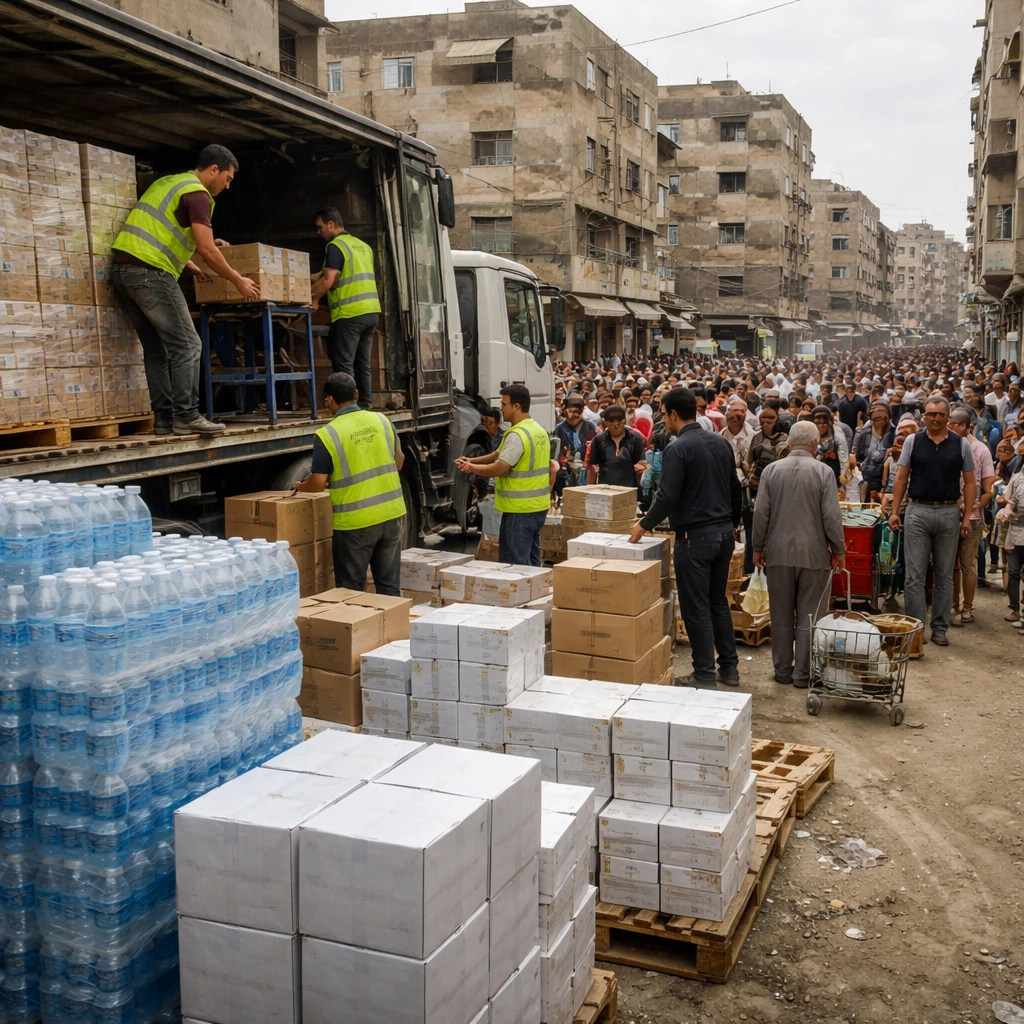
GENEVA, July 24 - The U.N. World Food Programme (WFP) said it will have to deepen cuts to its humanitarian assistance in Gaza unless new contributions arrive, a move that could affect roughly 70% of the territory's population who depend on the agency’s support.
The warning follows the latest assessment from the Integrated Food Security Phase Classification, which reported that more than two-thirds of Gazans could be experiencing acute hunger by the end of the year if aid flows continue to be reduced because of funding gaps. The monitor also noted that while the number of people in acute hunger fell to 1.2 million between mid-April and the end of June, that level may climb to more than 1.4 million people, or about 67%, by December as assistance wanes.
WFP officials emphasised that a majority of Gaza’s residents have little recourse beyond humanitarian supplies after two years of war, repeated displacement and stringent restrictions that have affected aid deliveries. The agency has already implemented cuts in the current month in response to constrained resources.
Smith, speaking to reporters in Geneva via video link from Rome, stressed the urgency of the funding gap.
"Without sufficient funding, we will be forced to scale back assistance for people who depend on it for survival," Smith said.
Operational pressures tied to broader regional instability have added to WFP’s challenges. Smith noted that the war in Iran has played a role by contributing to higher oil prices and disrupting supply chains, increasing overall costs. However, Smith identified donor fatigue - as global attention shifts elsewhere - as the primary driver of the shortfall, and did not provide details on specific funding that had been lost.
To sustain its operations in Gaza and the occupied West Bank through the end of the year, WFP said it required more than $420 million. In response to the current funding squeeze, cash assistance for 75,000 people was reduced by 25% this month, and food rations were halved for 220,000 households.
The agency warned that by October it will be compelled to implement substantially deeper cuts unless additional funding is secured. That prospect underscores the fragility of recent gains in food security and the sensitivity of relief operations to financing.
In a separate statement cited by officials, Israel’s Ministry of Foreign Affairs said that Israel does not restrict the entry of food into Gaza and has facilitated the delivery of more than 1.8 million tons of food into the enclave since an October 2025 ceasefire.
The combination of rising needs, elevated operating expenses and uneven donor support has placed WFP in a position where maintaining the current level of assistance is contingent on prompt new contributions.