
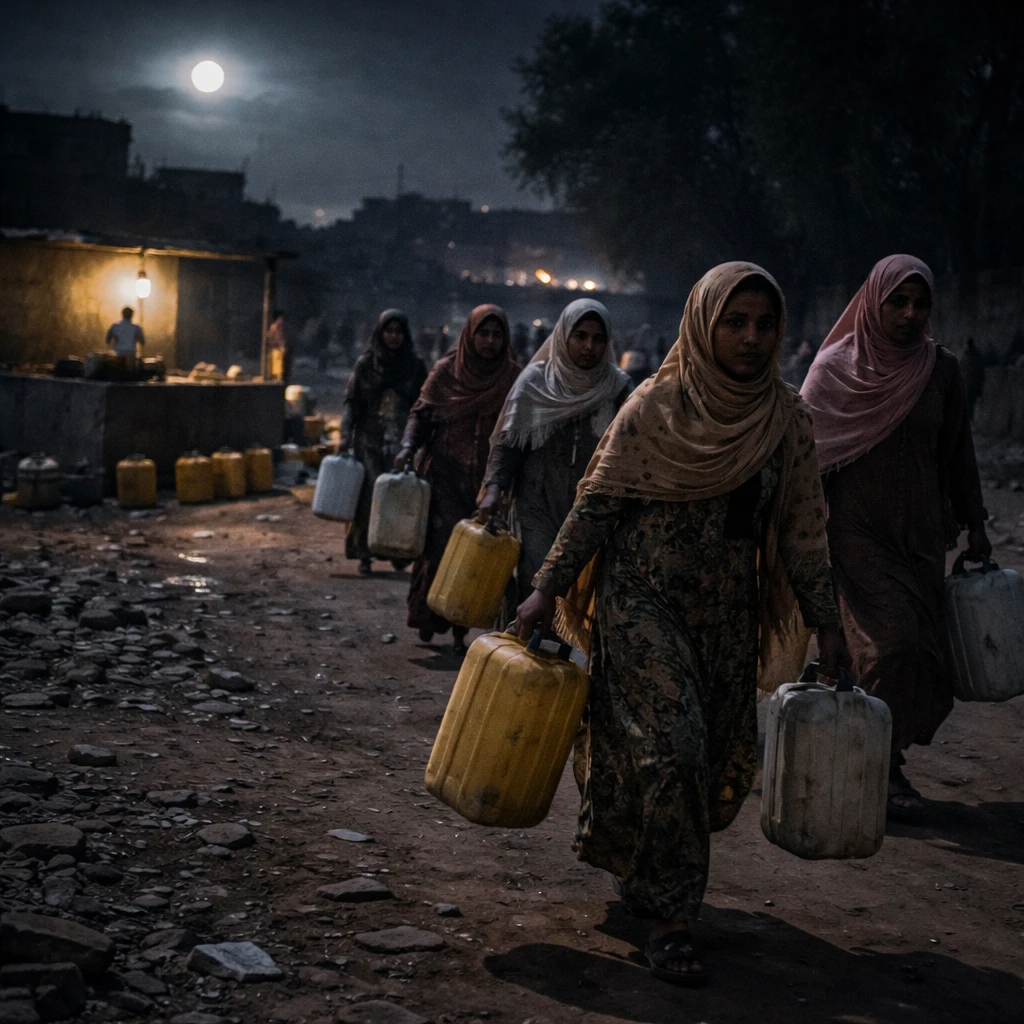
Women and girls in al-Obeid, the capital of North Kordofan, are being forced into perilous decisions to obtain water in a city beset by fighting and shortages, U.N. Women said.
The agency described a grim pattern: daytime drone strikes on water sources have driven many people to fetch water after dark, when they are exposed to harassment, rape and other forms of sexual violence. The situation comes as access to food and healthcare in al-Obeid is reported to be severely constrained.
U.N. Women regional leadership highlighted the breadth of the abuses. "These women and girls have been harassed. They’ve been raped, and they’ve been subjected to other forms of sexual violence, all while trying to access water, one of life’s most fundamental necessities in human rights," Anna Mutavati, U.N. Women Regional Director for East and Southern Africa, said to reporters in Geneva by video link from Nairobi.
The U.N. High Commissioner for Human Rights, Volker Turk, said civilians in al-Obeid have endured siege-like conditions for 18 months, pointing to critical shortages of clean water and a pattern of relentless drone strikes. He warned the conditions risk repeating atrocities reported elsewhere in the country.
U.N. Women noted there is effectively no safe time for women and girls to collect water in the city. The daytime attacks on water infrastructure have shifted the danger to nighttime, exposing those who leave their homes after dark to sexual violence and other abuses.
Across Sudan, U.N. Women estimates that 12.7 million women and girls require support from gender-based violence services this year, a figure the agency says is four times higher than before the war. While the agency did not provide a specific breakdown for al-Obeid, it reported the city is home to roughly 500,000 people, with approximately 70 percent being women and children, and anticipated a high level of need for support against sexual violence.
Compounding the problem, the agency warned that funding reductions for women-led organizations are reducing the availability of services. Two-thirds of the women’s organizations surveyed by U.N. Women in Sudan reported either closures or substantial reductions in safe spaces and gender-based violence services.
The combined effects of ongoing fighting between Sudan’s army and the paramilitary Rapid Support Forces, cutbacks in support services, and targeted strikes on essential water sources have created a complex humanitarian emergency in al-Obeid where basic needs, personal safety and health services are under acute stress.
What remains unclear: U.N. Women did not provide a specific breakdown of gender-based violence cases limited to al-Obeid, and broader national figures are cited to indicate scale rather than locality-specific counts.