
Barclays continues to express a negative stance on European original equipment manufacturers, pointing to a convergence of structural and cyclical challenges that are straining profitability and market positioning. The bank identifies a range of headwinds that it believes will pressure the sector's earnings and returns.
According to Barclays, the auto industry faces profit erosion in China and mounting competition from Chinese entrants gaining share in Europe. The bank also highlights intense competitive and pricing pressures across the European Union, the risk of potential U.S. tariffs, ongoing raw material inflation, and regulatory developments that interact with battery electric vehicle dilution effects to create further margin risk.
Selective value and shareholder returns
Despite the challenging backdrop, Barclays notes there are isolated self-help opportunities within the sector that can offer selective value. In particular, the bank points to areas of the market where total shareholder return has remained robust, implying that company-specific factors can outweigh broad industry headwinds in some cases.
Ferrari as the preferred exposure
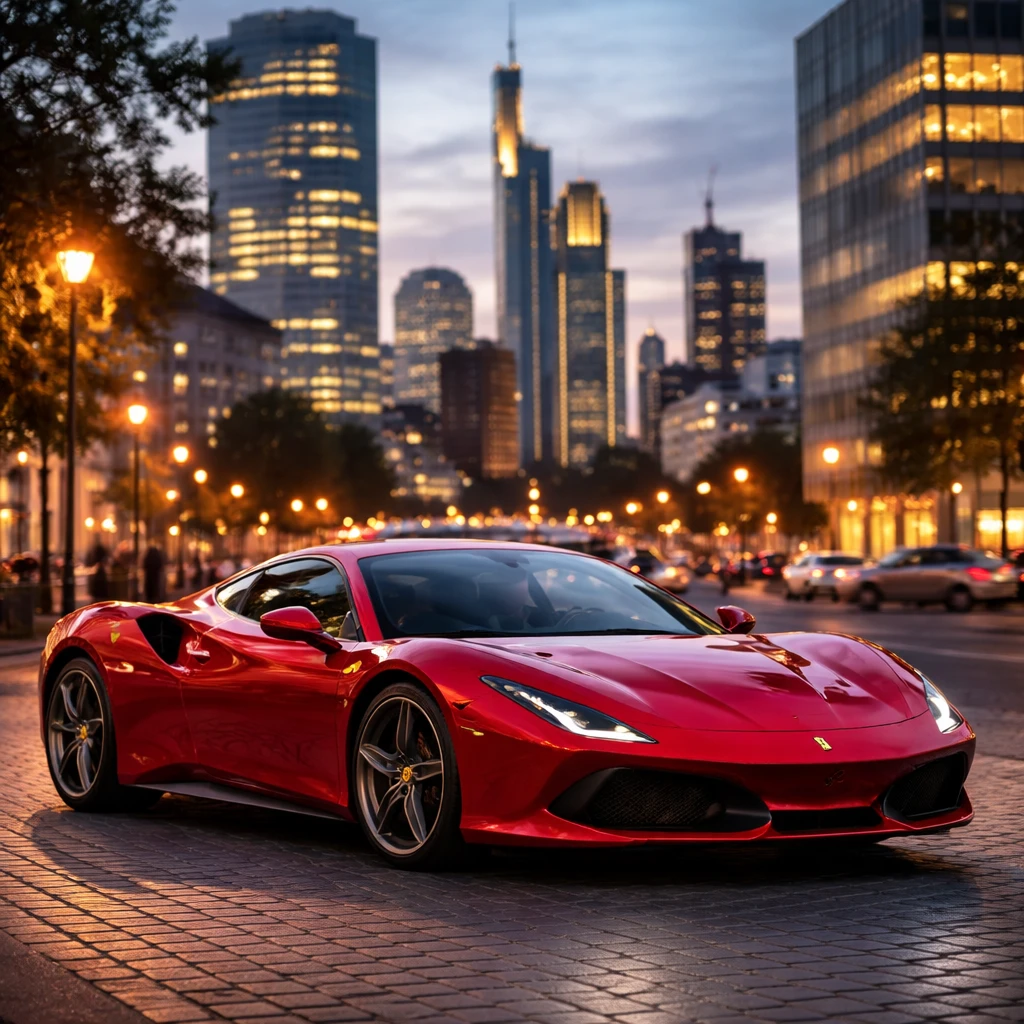
Barclays recommends Ferrari as the preferred way to sidestep most or all of the structural pressures affecting mass-market manufacturers. The investment bank argues that Ferrari's luxury sports car business model provides insulation from many of the issues confronting broader European automakers, making it a relatively defensive exposure within the auto space.
However, Barclays underscores one material caveat: a continued pain trade or a high-beta squeeze could result in Ferrari underperforming. In such a scenario, Ferrari's defensive, higher-quality characteristics could work against it relative to more cyclical or lower-quality names that may outperform in a squeeze.
Recent company developments
Ferrari reported first-quarter 2026 results that exceeded analyst expectations for both revenue and earnings per share. The company also unveiled its first fully electric vehicle, the Luce, an event that prompted Goldman Sachs to raise its price target on the stock. These company-specific developments are noted alongside Barclays' sector view as reasons why Ferrari stands out in the bank's framework.
Geopolitics, oil and tactical positioning
Barclays stresses that the near-term outlook for consumer-facing stocks, including autos, is closely tied to geopolitical developments, with particular attention on the Iran conflict. The bank documents significant underperformance and earnings per share downgrades across the sector since the conflict began.
From a tactical perspective, Barclays suggests an asymmetrical positioning may be preferable. The bank argues that a peace agreement leading to a decline in oil prices could spark a short-covering rally. If that outcome does not occur, Barclays warns that cyclical sectors which have held up better - namely banks, industrials, materials, and technology - could be more vulnerable to an unwind, while consumer sectors would remain less crowded.
In such an environment, Barclays indicates that consumer staples could reassert themselves as a relative safe haven.
Implications for investors
Investors weighing exposure to European autos should consider Barclays' view that most mass-market manufacturers face sustained pressures from competition, cost inflation and regulatory dynamics. By contrast, Ferrari is viewed as a differentiated exposure whose business model can mitigate many of those sector-specific risks, subject to the highlighted squeeze risk and broader geopolitical developments that may shift sentiment quickly.