
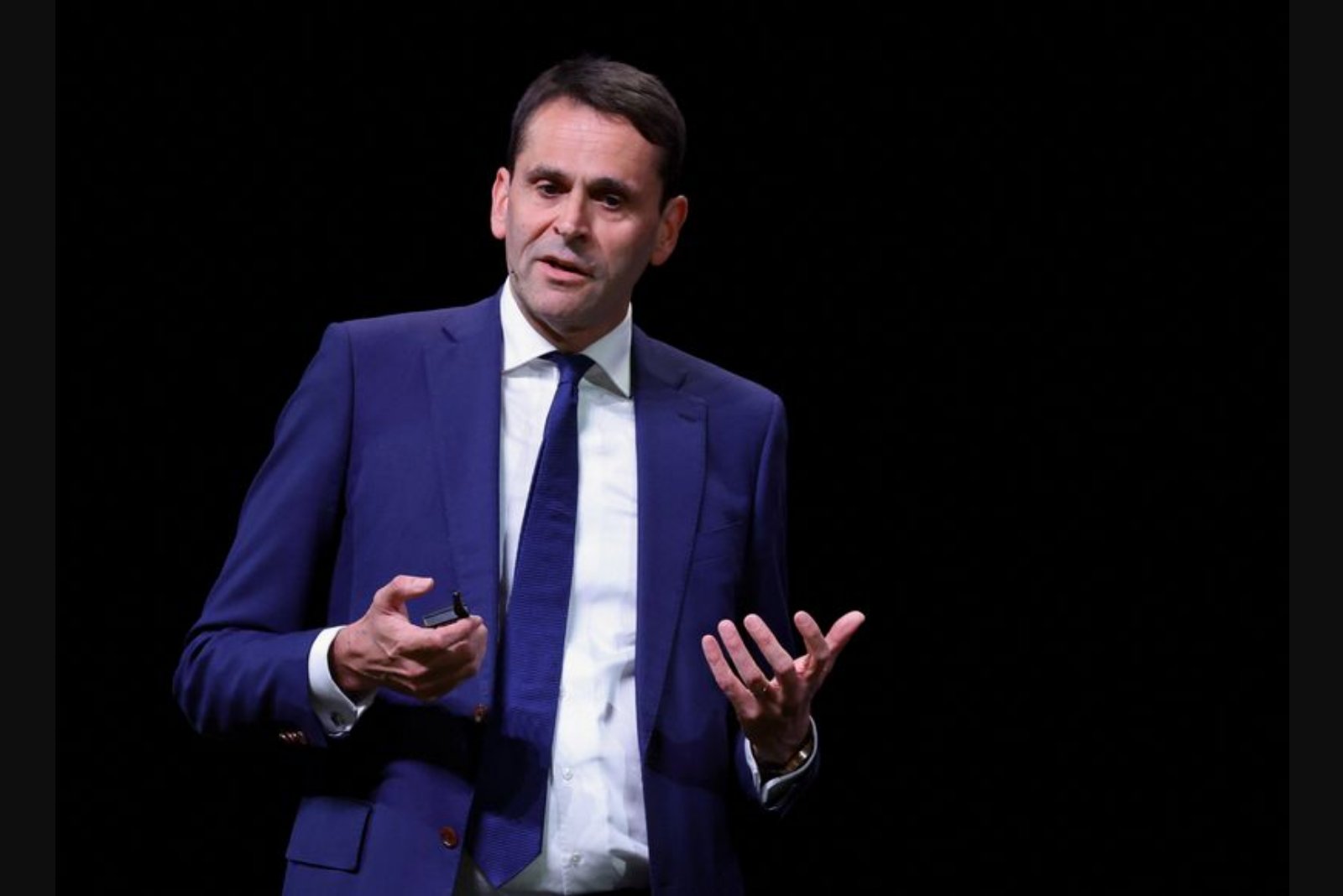
ANTWERP, Belgium - Christophe Fouquet, chief executive of ASML, said the global semiconductor industry is likely to remain in a supply-tight state for some time as demand from artificial intelligence, satellite constellations and robotics outpaces production capacity. Speaking on the sidelines of a technology event in Antwerp on May 20, Fouquet warned that the market will be "tense" and that sporadic bottlenecks are probable across the chip supply chain, even as the industry expands production.
Fouquet said the booming market could reach as much as $1.5 trillion by 2030, and that the pace of demand - particularly from AI-related projects - is strong enough to keep the market supply-limited for an extended period. "Demand on AI is coming so strongly that we will be in a supply-limited market for quite a while," he said, pointing to several large-scale initiatives that could accelerate consumption of chipmaking tools and wafers.
Among the plans Fouquet cited was Elon Musk’s proposed "TeraFab" initiative, a large-scale chip production project intended to supply Tesla, xAI and SpaceX. He said such a plan would further stretch toolmakers’ capacities over coming years and acknowledged that Musk appears committed to those projects. "He’s very serious about all those projects," Fouquet said, adding that he had spoken with Musk but offering no further details.
Fouquet also singled out Starlink as a particularly intriguing driver of chip demand, saying connectivity for satellites and numerous connected devices - from humanoid robots to self-driving cars - will require a steady stream of semiconductors. "One of the most fascinating projects for me is Starlink because we talk a lot about chips, humanoids, self-driving cars, and all those products have to be connected to data," he said.
ASML, the Dutch firm that dominates the market for photolithography systems used to print microscopic circuitry on advanced chips, supplies the most advanced tools necessary for manufacturing the logic chips that underpin AI workloads as well as the memory chips that support them. Tech companies and chipmakers are investing hundreds of billions of dollars to build data centres and expand chip capacity, creating pressure on foundries and memory producers such as TSMC, Samsung, SK Hynix, Micron and Intel - all of which rely on ASML equipment.
To respond, Fouquet said ASML is both increasing output and enhancing the productivity of its existing systems while preparing to introduce new technology. He said the company expects the first logic chips made with ASML’s High NA EUV tool to be produced within months, a platform that enables smaller features and is expected to play a major role for the company in coming years. Intel is mentioned as an early adopter of that High NA equipment, and product data for logic and memory chips produced using High NA is anticipated this year, Fouquet said.
In addition to High NA, ASML is developing a second advanced-packaging tool aimed at producing physically large AI chips, a product Fouquet described as diversifying the company’s portfolio. "Right now it’s a small leg," he said. "But in the future, this presents a new opportunity for ASML." He cautioned, however, that forecasting the full scope and timing of the boom is challenging and that industry planning could be overwhelmed by rapid demand growth.
Fouquet also voiced concerns about regulatory and trade frictions that could affect the European semiconductor industry’s competitive position. He said the European Union risks falling behind during the industrial-adoption phase of AI due to regulatory complexity and urged that the bloc scrap or reform its 2023 AI Act to reduce obstacles for companies operating in Europe. "People are attracted by the EU market, but they are usually scared about the amount of regulation and the complexity you have in Europe to do anything," he said.
On trade controls, Fouquet called for more consistent rules regarding exports of chipmaking equipment to China. He referenced U.S. lawmakers’ proposed measures demanding that allies follow U.S. restrictions - including a potential ban on sales to China of deep ultraviolet (DUV) products made by ASML - and noted the Dutch government has protested those proposals. Fouquet emphasized that the DUV systems sold to China are based on technology introduced in 2015, which he described as "eight generations of chip technology ago."
He warned that if restrictions were further tightened, they could accelerate Chinese efforts to develop domestic alternatives. Using an analogy, Fouquet said: "If I put you in a desert and tell you you’re not going to have access to food anymore - how long does it take you to make your own garden?" He framed that development as a survival response rather than an unexpected consequence.
As demand from AI, satellite networks and emerging robotic applications grows, ASML says it will press to expand its own manufacturing capacity, improve tool throughput and introduce new systems to meet customer needs. Still, Fouquet’s comments underline the possibility of intermittent shortages and logistical pinch points as the semiconductor industry tries to scale rapidly to meet a broad and intensifying set of demands.