
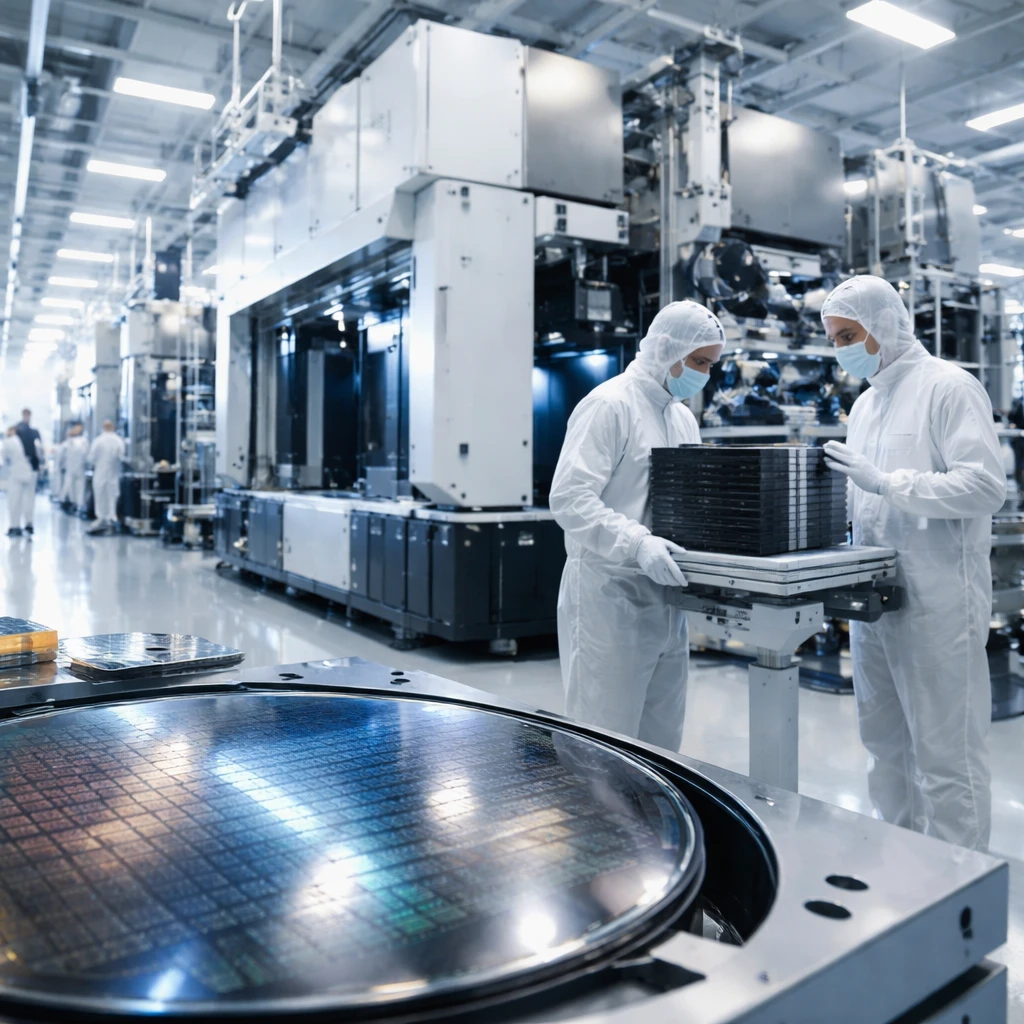
Overview
Christophe Fouquet, chief executive of the Netherlands-based equipment maker ASML, said the global semiconductor market will face continued tight supply conditions because of strong demand tied to advances in artificial intelligence and robotics. Fouquet warned that the industry supply chain, which he said could grow to as much as $1.5 trillion by 2030, will experience periodic bottlenecks as spending on AI infrastructure and related hardware remains robust.
Demand drivers and market context
Fouquet pointed to major proposals such as Elon Musk’s planned "TeraFab" facility for AI chips and the continued build-out of Starlink satellites as factors that will sustain elevated demand for wafers, processors, and the manufacturing tools used to produce them. Those projects, he said, are part of a wave of large capital programs among major technology groups that are focused on constructing the infrastructure necessary to power modern AI models.
Chipmakers including those working closely with Nvidia, as well as leading foundries and memory producers, have been ramping orders for manufacturing equipment. That increase in demand has amplified need for ASML’s advanced systems, which are central to producing many of the processors used in AI applications.
ASML’s position and response
ASML is a pivotal supplier of cutting-edge lithography equipment used in semiconductor fabrication. Fouquet said the company is attempting to raise production and the productivity of its tools to address the supply pressure. He also noted that ASML is developing newer technology to support customer needs.
The company is one of Europe’s most valuable firms, with a market capitalization reported as roughly 505.35 billion euros. Amsterdam-listed ASML shares rose on Wednesday ahead of earnings results from Nvidia, an AI-focused semiconductor leader.
Policy concerns and export rules
Fouquet urged European governments to ease regulatory burdens to keep pace in the international competition to deploy AI. He specifically suggested that Europe should consider scrapping or overhauling its 2023 AI Act, which is intended to establish a legal framework for AI.
On trade policy, Fouquet called for clearer and more consistent rules around exports of chips to China. He warned that if ASML faces more stringent limits on sales into China, it could prompt Beijing to accelerate development of its own competing manufacturing tools. The comments came against the backdrop of a recent U.S. law that would require Washington’s allies to align with U.S. restrictions, including a potential ban on the sale of ASML’s DUV products to China.
Market implications
The combination of intensified capital spending by technology companies, rising orders from chipmakers and foundries, and policy uncertainty is expected to keep ASML’s product demand strong and the broader chip market supply-limited for a sustained period, according to Fouquet.
Note: This report summarizes comments attributed to ASML’s CEO regarding market demand, potential supply constraints, company actions to increase capacity, and policy recommendations. It reflects the information available in those comments and does not introduce additional data or analysis.