
Northland downgraded a set of semiconductor equities to Market Perform, flagging a cluster of demand- and supply-side pressures that it says leave the group exposed over the coming quarters.
The firm moved Astera Labs (NASDAQ:ALAB), Intel (NASDAQ:INTC) and Semtech (NASDAQ:SMTC) to Market Perform, arguing that current share prices largely reflect an ideal outcome and that risks are elevated for the next two quarters.
Central to Northland's view is an expectation that AI infrastructure spending will decline in 2027. The firm notes that hyperscalers are currently allocating roughly 100% of cash from operations to their activities, and that since the start of last year those companies have taken on about $260 billion in debt. At the same time, share buybacks have effectively collapsed in the most recent quarter, according to Northland's assessment.
Northland also pointed to signs of tighter financial discipline from large AI-focused companies preparing to list publicly. OpenAI and Anthropic, which the firm says are going public this year, are moving away from unlimited free usage models toward usage caps, token-based pricing and higher-tier subscription options. Northland relayed an anecdote from a company it spoke with in which software engineers are having token use restricted because of cost.
On cost dynamics, the firm estimated that training expenses for new AI models have surged roughly 4,300% since 2020. It added that inference using newer transformer architectures is both more computationally intensive and more expensive than inference with older convolutional neural networks, amplifying demand-side budget pressure for infrastructure.
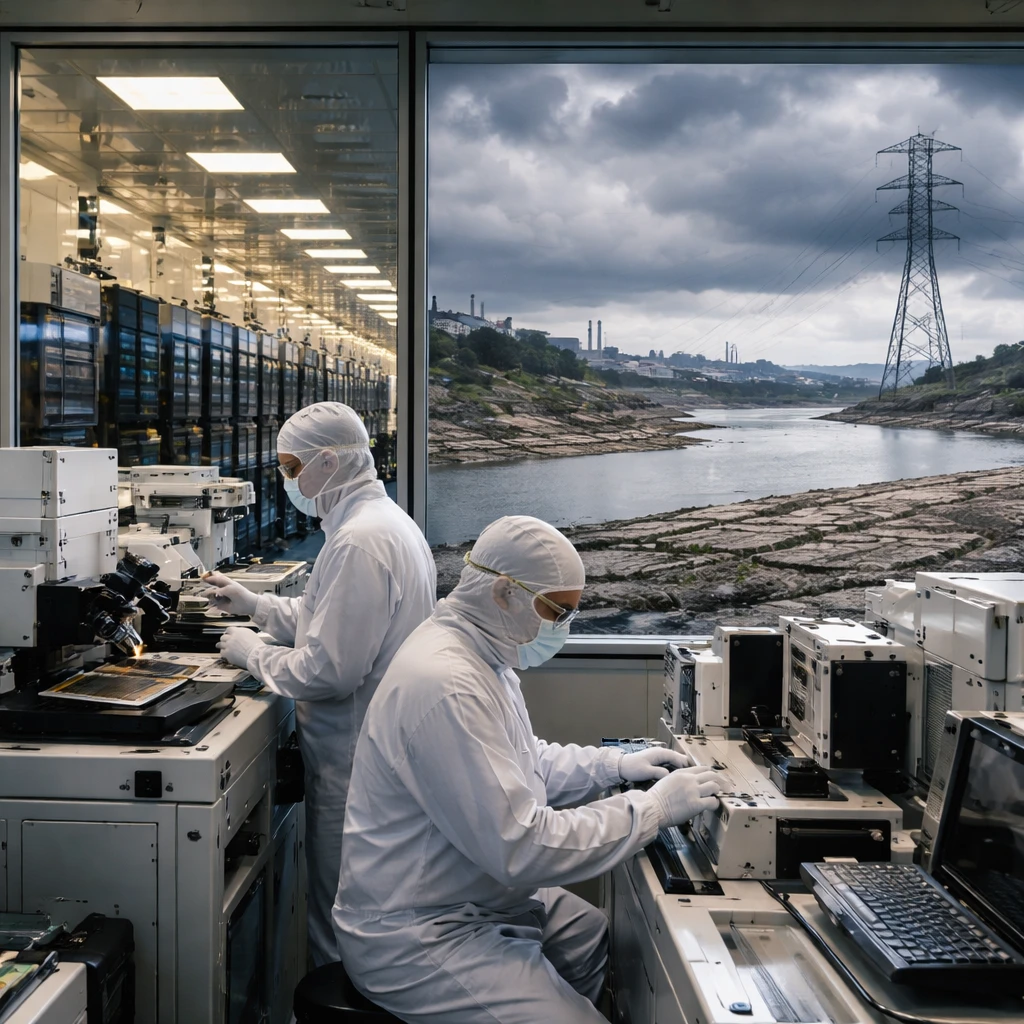
Supply chain and operational disruptions were another focal point. Northland warned that a potentially very strong El Nino - possibly a Super El Nino - is forecast to begin in June. It cited an assessment from the Harvard Business Review indicating that 80% of sites in the United States and 48% in China and Taiwan lack either business continuity plans or readily available alternative sites for rapid operation.
Regional power and water constraints are already impacting production, Northland said. Rolling blackouts and outages in the Philippines and Malaysia are affecting assembly and test houses. The firm noted that Intel's largest advanced packaging facilities are located in Ho Chi Minh City, Vietnam, and Penang, Malaysia, locations vulnerable to those outages. In Taiwan, the government is reportedly granting TSMC only limited access to water and electricity, prompting the company to reduce output of older technologies.
Northland's combined view ties financial constraints among large cloud and AI customers to operational fragilities in supply chains, a mix the firm judges to heighten downside risk for selected semiconductor names in the near term.
Key points
- Northland downgraded ALAB, INTC and SMTC to Market Perform, citing elevated near-term risks and valuations that assume perfection.
- Hyperscalers have been drawing heavily on cash flow and debt - roughly $260 billion of debt raised since the start of last year - and Northland expects AI infrastructure spending to fall in 2027.
- Operational stress from rolling blackouts, regional power and water limits and a forecast strong El Nino threaten production at assembly, test and packaging sites.
Risks and uncertainties
- Declining AI infrastructure budgets among hyperscalers and more disciplined pricing from AI companies could reduce demand for semiconductor components and related services.
- Supply chain interruptions - including rolling blackouts in Southeast Asia and constrained utilities in Taiwan - may disrupt assembly, test and advanced packaging output.
- An unusually strong El Nino event could exacerbate operational vulnerabilities, particularly at sites without business continuity plans or alternative production locations.