
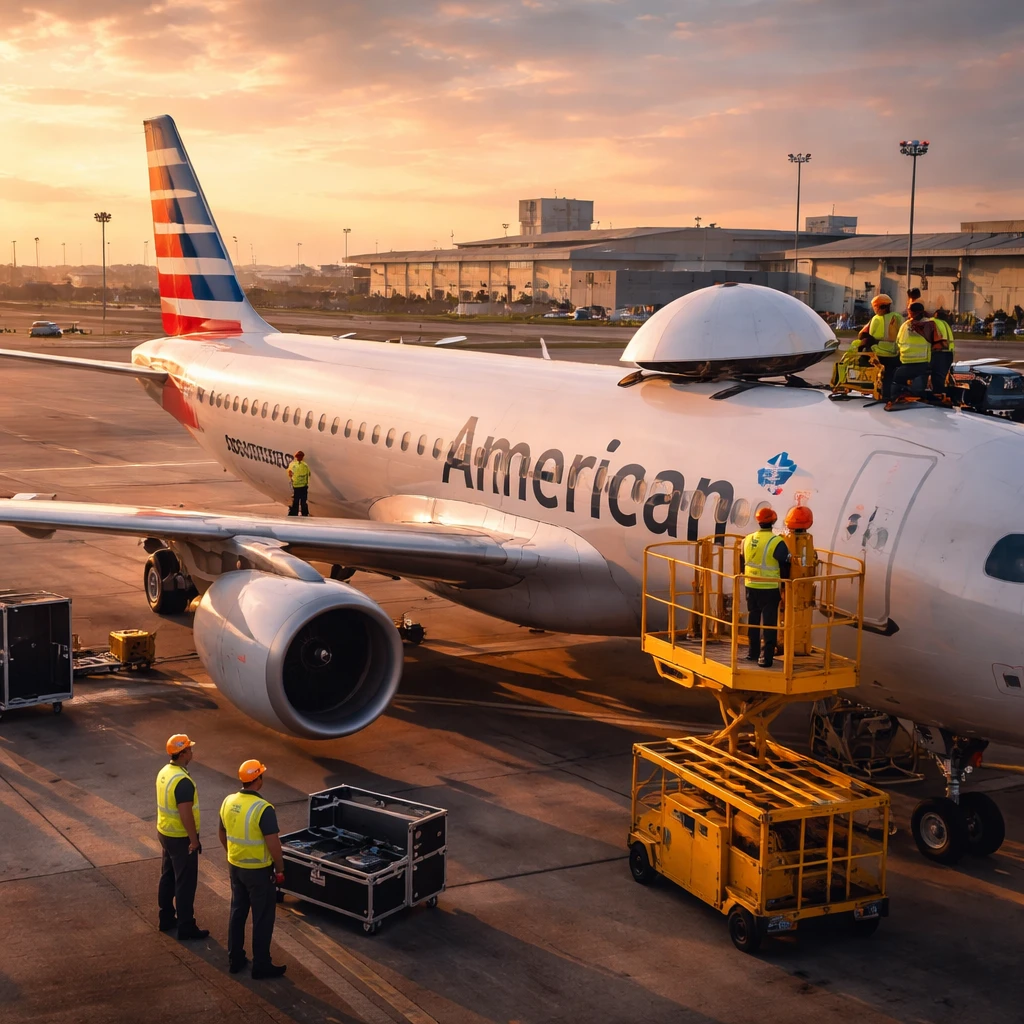
American Airlines announced plans to install Starlink inflight Wi-Fi on in excess of 500 narrowbody aircraft, with the program scheduled to begin in the first quarter of 2027. The carrier said the upgrade will cover its Airbus narrowbody fleet and will include upcoming A321XLR and A321neo deliveries.
Starlink provides connectivity through a low Earth orbit satellite constellation. According to the company, the system’s Aero Terminal can deliver broadband speeds of up to 1 gigabit per second per antenna, supporting bandwidth-intensive activities such as inflight streaming, online gaming and use of collaborative meeting tools.
American Airlines Chief Customer Officer Heather Garboden described the selection of Starlink as part of the carrier’s effort to work with "world-class partners" to meet customer needs. Garboden said the service will enable uninterrupted streaming, web browsing and real-time communications across the airline’s domestic network and on short-haul international routes.
Garboden also said passengers will not need to pre-download documents before flying or be concerned about lag time during flights. She highlighted Starlink’s combination of high speed and low latency as reasons the Wi-Fi should be more reliable for page loading, joining live collaboration tools and maintaining connectivity throughout a flight.
From Starlink’s side, Jason Fritch, Vice President of Starlink Enterprise Sales at SpaceX, said the service will bring fast and reliable internet to both passengers and crew and will enable a fully connected experience from gate to gate.
American specified that the Wi-Fi update will be applied to its fleet of more than 500 Airbus aircraft, explicitly naming expected integration with new A321XLR and A321neo deliveries as part of the program.
Summary
American Airlines will deploy Starlink inflight Wi-Fi on over 500 narrowbody Airbus jets beginning in Q1 2027. The provider’s low Earth orbit satellite system and Aero Terminal technology are positioned to support high-bandwidth activities and low-latency communications across the carrier’s domestic and short-haul international routes.
Key points
- Installation is scheduled to commence in the first quarter of 2027 and will cover more than 500 narrowbody aircraft in American’s Airbus fleet.
- Starlink uses a low Earth orbit satellite constellation; the Aero Terminal is described as capable of up to 1 gigabit per second per antenna, enabling streaming, gaming and collaborative meeting tools onboard.
- The announcement has implications for the airlines and satellite communications sectors, with potential effects on passenger experience and onboard service offerings.
Risks and uncertainties
- Timing uncertainty - the program is planned to start in Q1 2027, which leaves a future implementation window that could be subject to change.
- Scope and fleet integration - the rollout covers more than 500 Airbus narrowbodies and will include new A321XLR and A321neo deliveries, raising questions about scheduling and compatibility across the fleet.
- Performance expectations - stated system capacity of up to 1 gigabit per second per antenna is a technical claim in the announcement; actual in-service speeds and latency experienced by passengers and crew may vary.