
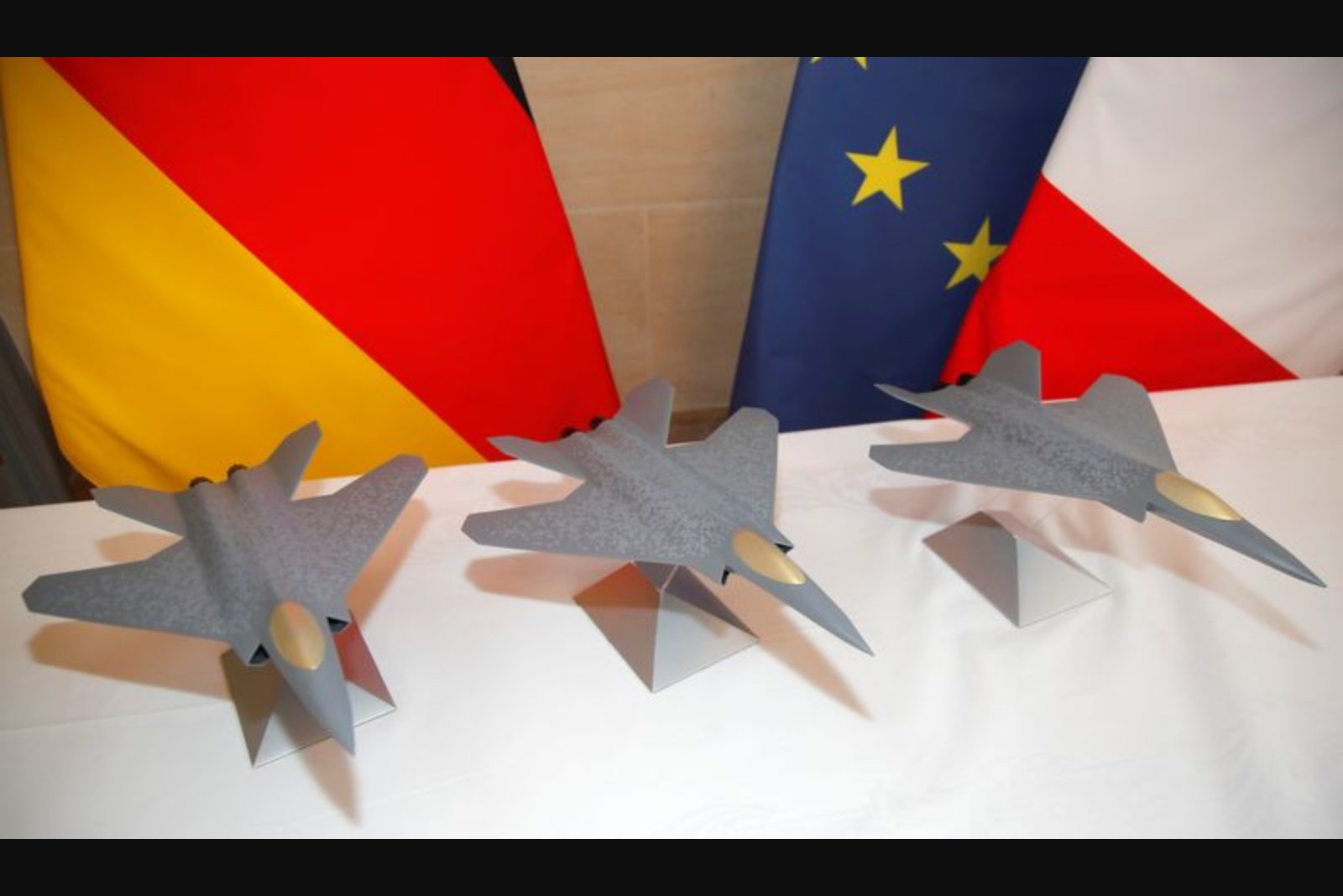
BERLIN, May 27 - The leader of Airbus Defence has dismissed the prospect that the Franco-German FCAS fighter jet programme will collapse completely, while acknowledging severe disagreements inside the project.
Michael Schoellhorn said on Wednesday that, despite a dispute over control between France's Dassault Aviation and Airbus - which represents Germany and Spain in the roughly €100-billion ($116 billion) effort - at least two components will continue. He identified a "Combat Cloud" designed to network weapon systems and a Collaborative Combat Aircraft (CCA) intended as a drone escort for fighter jets as areas that will go ahead.
Schoellhorn described differences between Airbus and Dassault as significant and, at present, in some respects unbridgeable. At the same time he indicated that German and French defence ministries are attempting to find a way forward and that he hopes a political decision can be reached before Berlin's ILA air show on June 10.
He outlined options under consideration for the programme's path, including developing two different manned fighters or forming a new European partnership structure, but stressed that Germany could not carry the initiative on its own. Schoellhorn's remarks left open whether the full air combat system project - particularly the manned fighter element - will be realised under current arrangements.
Key factual points
- The FCAS programme faces a control dispute between Dassault Aviation and Airbus, which represents Germany and Spain in the project.
- Airbus Defence chief Michael Schoellhorn said he sees unbridgeable differences between Airbus and Dassault at present, but still ruled out total project failure.
- Two elements - a Combat Cloud networking system and a Collaborative Combat Aircraft (CCA) drone programme - are expected to proceed.
Sectors and markets affected
- Defence and aerospace contractors involved in fighter and drone development.
- European defence procurement and related supply chains that would support networking and unmanned aircraft capabilities.
- Government defence ministries coordinating multinational projects and procurement decisions.
Risks and uncertainties
- Governance dispute risk - Ongoing control disputes between Dassault and Airbus create uncertainty over whether the full manned fighter element of FCAS can proceed under the current partnership framework.
- Political decision timing - Progress depends on a political resolution being worked out by the German and French defence ministries, with a hoped-for decision before the ILA air show on June 10; delays would prolong uncertainty for the programme and its participants.
- Partnership and funding options - Consideration of alternate pathways, such as two separate fighter designs or a new European partnership, underscores uncertainty over the programme's structure and how costs and responsibilities will be shared; Germany has indicated it cannot shoulder the project alone.
Schoellhorn's comments confirm that while the overarching FCAS manned fighter plan is at risk from internal disagreements, at least the networking capability for weapons and the CCA drone element are expected to move forward. The remarks also make clear that the programme's ultimate direction hinges on political decisions and inter-company alignment that, to date, remain unresolved.
For reference, the euro-dollar conversion noted in reporting of the programme is $1 = 0.8588 euros.