
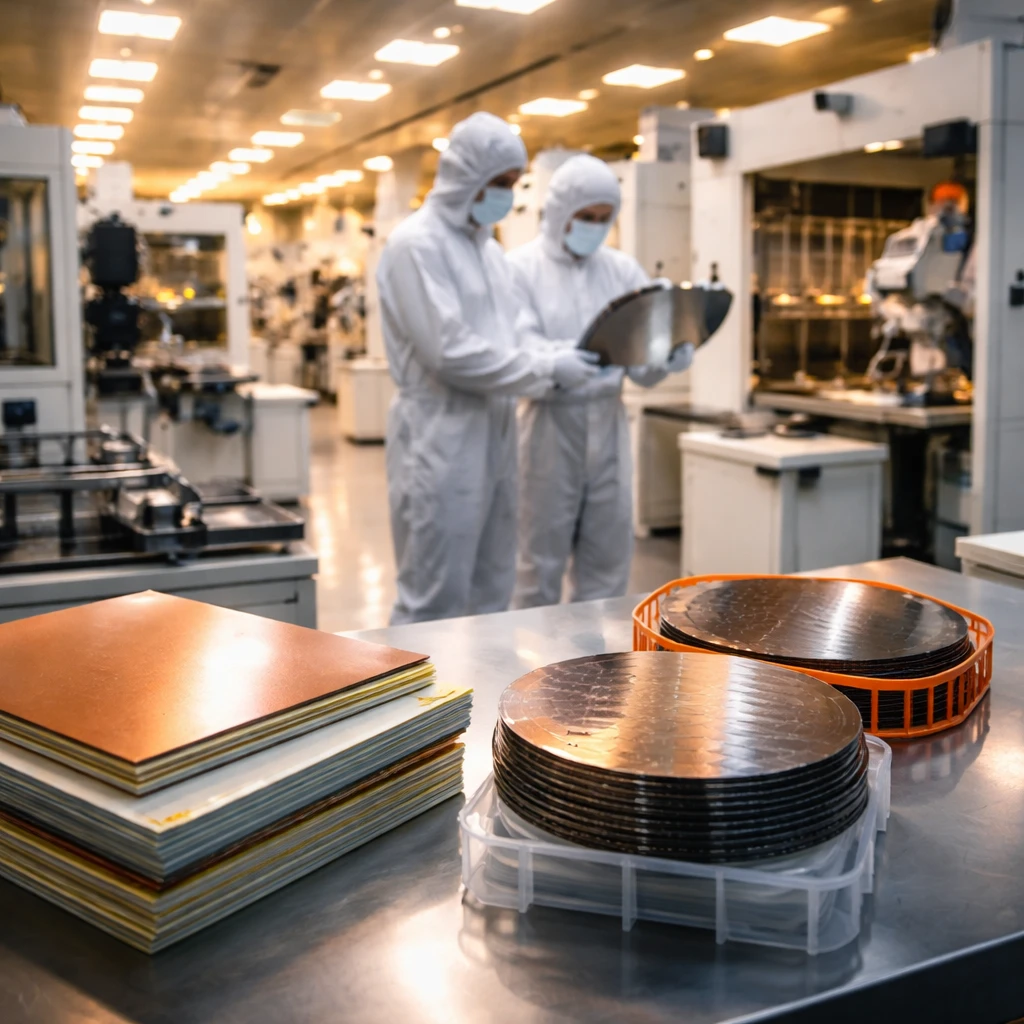
The market rally around artificial intelligence is cascading through the physical infrastructure needed to run next-generation models - from specialty materials and power delivery to test and packaging equipment and custom silicon. Recent moves in share prices show concentrated strength across multiple points in that hardware supply chain.
Investors have focused attention on a series of developments that signal growing commercial commitments across the ecosystem. Examples cited include a new $400 million acquisition by NVIDIA of Kumo AI, multi-year partnerships between NVIDIA and South Korean semiconductor groups such as SK Hynix, and public endorsements from industry leaders - notably a Computex 2026 remark by Jensen Huang that labeled Marvell "the next trillion-dollar company." These items have coincided with a wave of buying pressure for firms supplying the physical and electronic building blocks for high-performance data centers.
Subscribers to the AI-powered ProPicks strategies have been positioned in many of these beneficiaries and, according to the strategy's performance figures, have captured substantial gains. The subscription product was noted as available for under $9 a month at the time of publication.
Several names stood out for particularly sharp moves in June. Materials specialist Kingboard Chem (SEHK:148) led the month with a gain of 43.68% in June alone and a cumulative increase of 341.92% since it was selected by the strategy. Marvell Technology (NASDAQ:MRVL) rose 31.64% in June, while Tokyo Electron (TSE:8035) advanced 13.51% in June and is up 26.93% since selection.
Kingboard Chem's rapid appreciation is attributed to meaningful price increases for upstream inputs used in server boards, specifically electronic glass fiber cloth and copper-clad laminates. The company's vertically integrated manufacturing is described as critical to providing the dense, heat-tolerant layers required in servers that support AI workloads.
Marvell's performance has been underpinned by strong recent fundamentals. The company reported record Q1 FY2027 revenue of $2.4 billion, a 28% year-over-year increase, with its data-center business accounting for 76% of sales. The stock has returned 242% over the prior year, the report says, and Marvell was cited as having received a $2 billion investment from NVIDIA. Management raised the full-year revenue outlook to roughly $11.5 billion.
Tokyo Electron, identified as an upstream infrastructure anchor, has also been upgraded by investors. The equipment maker provided first-half fiscal 2026 sales guidance of 1.57 trillion yen, a 33% year-over-year increase, driven in part by secular AI chip demand that the company projects will represent 40% of total sales. Tokyo Electron is targeting gross margins near 50% within two years.
Beyond those headline names, the ProPicks strategies flagged additional companies that recorded noticeable demand-driven moves in June. These included Wonik QnC (KOSDAQ:A074600), up 8.24% in June; Penguin Solutions (NASDAQ:PENG), up 8.24% in June; Veeco (NASDAQ:VECO), up 6.62% in June; and Onto Innovation (NASDAQ:ONTO), up 5.19% in June. Each firm is positioned in parts of the manufacturing and testing chain where short-term demand for AI-capable hardware has lifted order books.
The June winners are presented as part of a larger multi-month and multi-year pattern of performance across the strategy universe. Several names have posted triple-digit gains since selection by the AI-driven models, including MediaTek (TWSE:2454) at +193.52%, Lenovo Group (SEHK:992) at +162.83%, and ASE Industrial (TWSE:3711) at +157.02%.
Other longer-term beneficiaries listed were Infineon Technologies (XTRA:IFX) at +88.03% since selection, PC Partner (SGX:PCT) at +66.22%, Renesas Electronics (TSE:6723) at +48.27%, and Texas Instruments (NASDAQ:TXN) at +37.15%. The write-up attributes these cumulative gains to investor-grade research combined with machine-learning selection techniques that targeted companies whose fundamentals, growth outlook and market positions suggested outsized returns.
Aggregate performance figures for the AI-powered strategy were included: ProPicks AI has recorded a cumulative return of +216.19% since its launch, outperforming the S&P 500 by +141.59%. The report states these are "real-world numbers" measured since the official deployment of the AI models in November 2023.
Details on how the AI selection engine operates were summarized. At the start of each month the proprietary system evaluates thousands of global equities using a combination of historical inputs and forward-looking metrics. The engine processes more than 15 years of financial data through over 150 quantitative models to identify up to 20 high-conviction names per strategy based on projected medium-term upside. Strategies are rebalanced monthly, adding new opportunities, retaining strong performers and removing stocks that no longer meet criteria. To track performance consistently, each model uses equal weighting across selected holdings.
The stated objective is to maintain exposure to companies showing a strong mix of momentum, valuation and business performance. The report also included subscription references and a brief note that published subscription prices were accurate at the time of publication.
Key points
- AI-related demand is producing pronounced gains across hardware supply chains, from materials to test equipment and custom silicon designers.
- Selected names showed big short-term moves in June, with Kingboard Chem, Marvell and Tokyo Electron among the leaders.
- Longer-term AI-focused selections have produced multiple triple-digit winners, reflecting concentrated exposure to tightening capacity and data-center demand.
Risks and uncertainties
- Concentration risk - Many of the cited gains come from clustered exposure to a narrow set of hardware and materials suppliers; sector-specific volatility could materially affect results.
- Demand and guidance risk - Upgrades and guidance from equipment makers and chip designers underpin the rally; changes in demand patterns or revised guidance could alter expected outcomes.
- Execution risk - The strategy's returns rely on frequent rebalancing and model outputs; operational or model performance limitations could impact future returns.
For readers seeking the full list of monthly picks, the article referenced access for InvestingPro members. It also outlined an ancillary Fair Value calculator, noting it combines 17 valuation models to produce an estimate for individual tickers.