
Context and procedural stakes
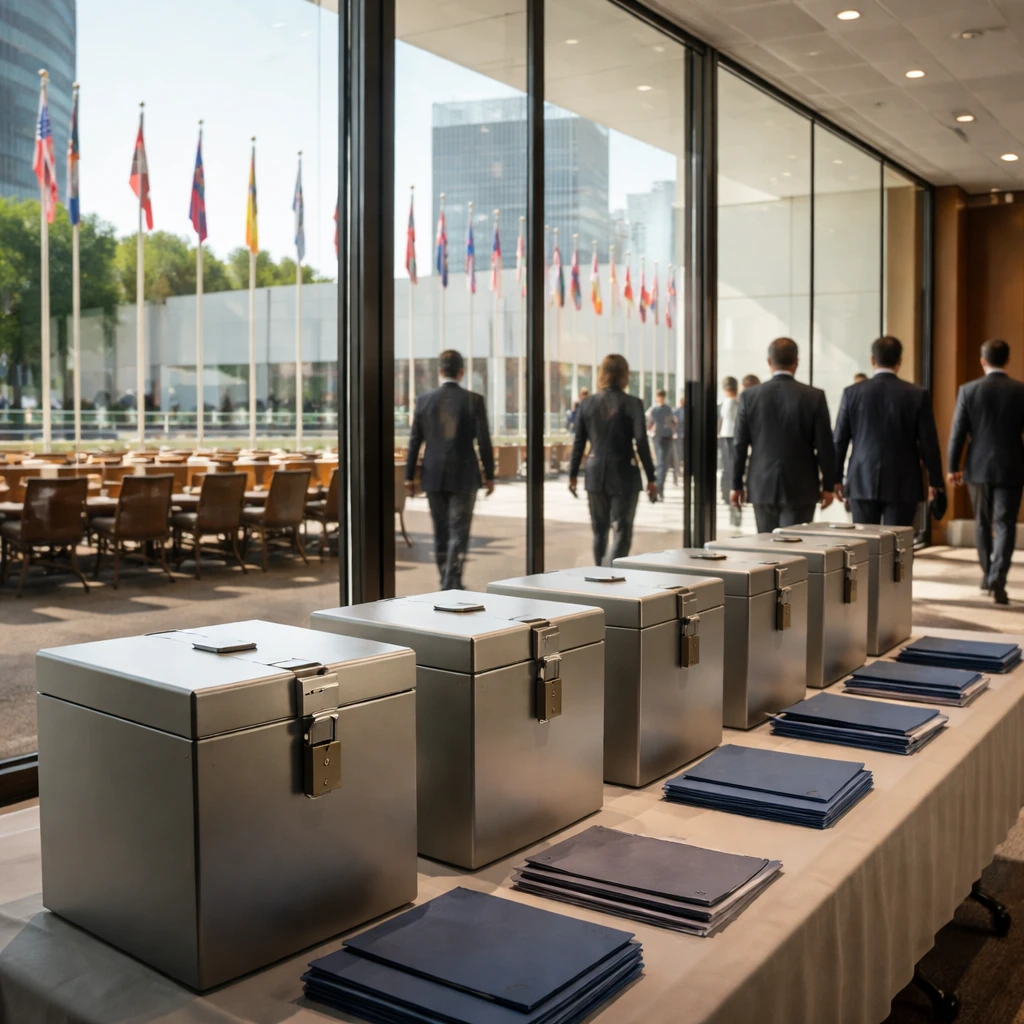
International Criminal Court member countries are scheduled to cast secret ballots on whether to remove Karim Khan from his post as the court's chief prosecutor. The vote is set to take place at the United Nations headquarters in New York, with the ballot expected around 3 p.m. local time (1900 GMT) and results due at approximately 5:30 p.m. (2130 GMT).
Khan, who is 56 years old, denies any wrongdoing. His lawyers have characterized the governing body's decision that produced the removal vote as unlawful, procedurally unfair and lacking evidentiary support. He has been suspended since June and had been on voluntary leave since May 2025 while an internal investigation proceeded.
To effect a dismissal, member states must reach an absolute majority in the 125-member body - at least 63 votes in favour - in the secret ballot.
Allegations and official findings
Officials from the ICC's governing body have said Khan should be dismissed on the grounds that he committed serious misconduct by engaging in an inappropriate sexual relationship with a junior staff member, a conclusion reflected in internal documents. The accuser, a junior ICC staffer, spoke publicly for the first time in a televised interview last week, repeating claims that the relationship was non-consensual.
Khan's legal team has responded by denying "any sexual relationship of any kind" with the staff member.
Political backdrop and international reactions
The vote unfolds amid renewed criticism of the court from the United States, which views the institution as a threat to its sovereignty. During a visit to the Philippines, U.S. Secretary of State Marco Rubio said there were "lunatics and crazies involved in the ICC" and insisted that no U.S. political or military official would ever be tried by the court, reiterating prior criticism.
The U.S., which is not a member of the ICC, has previously imposed sanctions on 11 ICC judges and prosecutors, including Khan. U.S. officials cited the court's arrest warrants against Israeli leaders and a past probe into U.S. troops in Afghanistan as rationales for those measures.
Supporters of Khan argue that a decision to remove him would be interpreted as a capitulation to political pressure, pointing to his recent actions in seeking arrest warrants for senior Israeli officials over alleged war crimes in Gaza. Israel has denied committing war crimes, is not a member of the court, and has described the warrants as bogus.
Even if Khan survives the vote, observers say his authority would be undermined and critics of the court would obtain fresh grounds to attack its credibility. The court itself was established in 2002 to prosecute war crimes, genocide and crimes against humanity.
Immediate institutional consequences
If the member states vote to dismiss Khan, the court will immediately begin the process to elect a new prosecutor. That election is not expected to conclude before next year. Any arrest warrants currently active will remain in force even if Khan is removed, because only ICC judges have the authority to withdraw warrants.
France has announced it will vote in favour of Khan's removal. The Netherlands, host country to the court in The Hague, has also said it will support dismissal.
What remains uncertain
The outcome of the secret ballot is unknown, and the vote's result will determine whether the prosecutor is removed, continues with reduced standing, or escapes dismissal but faces a weakened mandate. The political environment surrounding the court - including actions and rhetoric by non-member states - is a central element in how different delegations will vote.
As the vote approaches, member states will weigh the procedural arguments presented by Khan's defence, the findings cited by the court's governing body, and the wider geopolitical tensions tied to recent prosecutorial decisions.