
WASHINGTON/LUCERNE, Switzerland, June 19 - U.S. Vice President JD Vance has stepped into perhaps the most consequential foreign-policy role of his tenure as President Donald Trump’s chief negotiator in efforts to halt the three-month war with Iran. On Wednesday the two sides accepted a provisional peace agreement that paused active hostilities but left fundamental disagreements unresolved, pushing decisions about Iran’s nuclear activities, its backing of regional militant proxies and the strategically and economically important Strait of Hormuz into 60 days of follow-up negotiations.
The talks present a high-risk environment for all parties involved, for stability across the broader Middle East and for Vance’s own political prospects. The situation has been dynamic: Vance cancelled a planned Thursday-night flight to Switzerland that had been scheduled to mark the start of the talks, though the White House stated the U.S. delegation remained "prepared to depart at the first available opportunity." Representatives from Vance’s office declined to comment for this report.
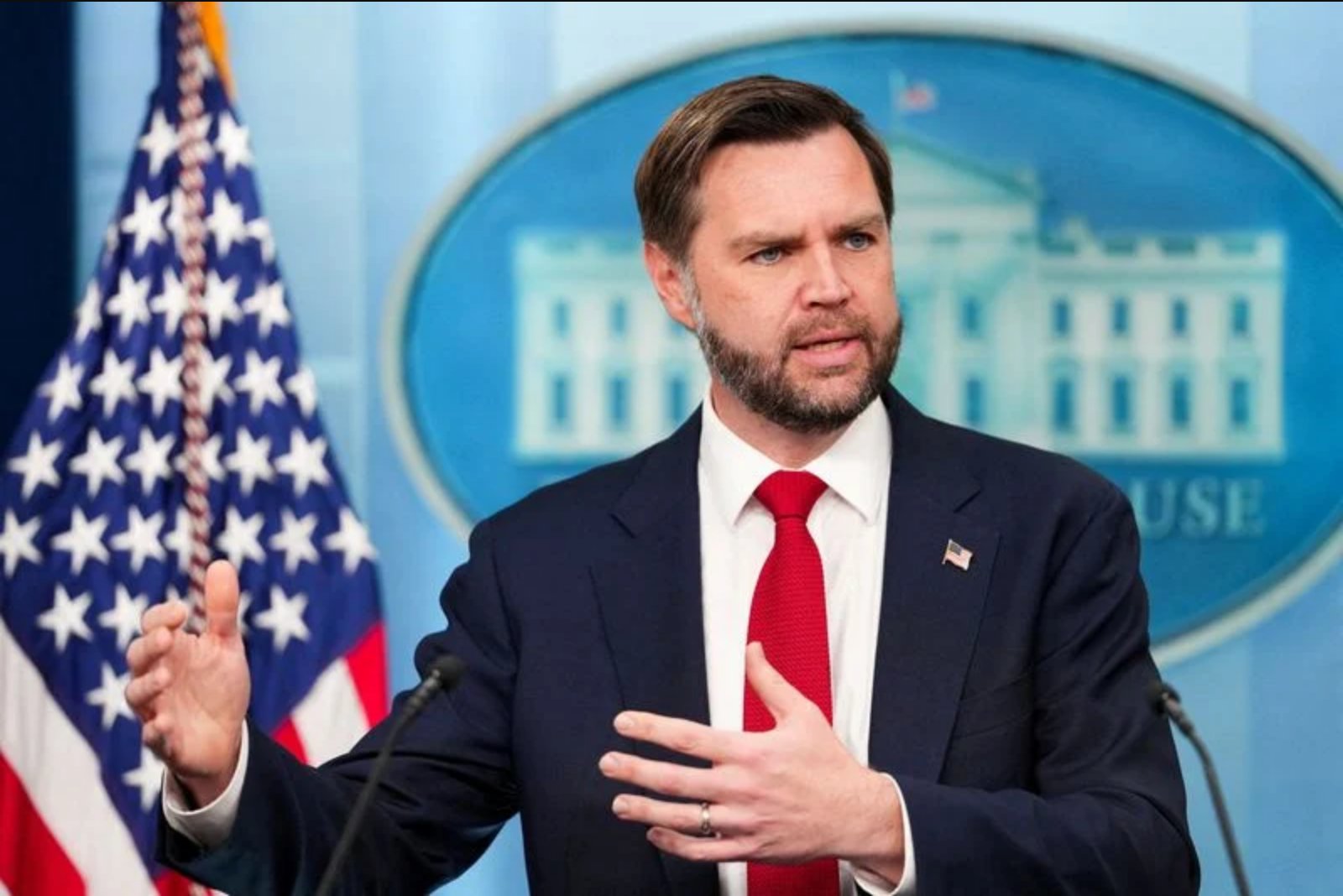
Vance has been unusually prominent in public messaging around the agreement, combining a media tour tied to the release of his book on his conversion to Catholicism, "Communion," with repeated advocacy for the deal. That campaign-style visibility culminated at a White House news conference on Thursday where Vance outlined U.S. aims for a lasting settlement, delivered what some observers described as a forceful public rebuke of Israel, and deflected a question about whether he might run for president.
"If the Iranians don’t change their behavior, their military and their nuclear program is still destroyed," Vance said. "If they do change their behavior, then they are going to have a transformative relationship with the Middle East, and the Middle East will have a transformative relationship with the people of Iran."
Within Republican ranks, officials have noted the significance of Vance’s front-line position. Senator Lindsey Graham of South Carolina, a prominent foreign-policy voice in the party, called Vance the "architect" of the peace agreement and urged that the vice president bring any final accord to the Senate for ratification.
President Trump, speaking at a news conference during the G7 summit in Evian-les-Bains, France, acknowledged the political stakes for Vance in a wry moment: "If it works out, I’m going to take the credit. If it doesn’t work out, I’m blaming JD!" the president said.
Political balancing act
Vance’s elevation to chief negotiator requires him to defend key decisions by the president while carving out distance from some of the administration’s declining political indicators. Trump campaigned on promises of lower prices and an end to what he labeled "forever wars" in the Middle East, yet the post-election period has seen inflation accelerate and a direct escalation with Iran, including U.S. strikes on February 28.
Some Republican allies have accused the administration of making substantial concessions to Tehran in an effort to relieve the price pressures linked to the conflict. The provisional peace accord has been portrayed by Trump as a complete military and diplomatic win, but so far it appears to have fallen short of several of the administration’s initial war aims: Iran’s theocratic system remains intact, it still possesses ballistic missiles and a stockpile of highly enriched uranium, and it continues to support anti-Israel militias such as Hezbollah in Lebanon.
Vance has defended the president’s choices while simultaneously attempting to signal independence from some of Trump’s weaker approval metrics. He has pointed to modest positive movements in economic indicators but acknowledged that more work is required. "Have a little bit of faith in the president of the United States. The idea that he is going to strike a deal that’s bad for the American people, it’s preposterous," Vance said on Thursday.
During an interview earlier in the week with conservative host Megyn Kelly, Vance said he remained actively engaged in resolving the conflict because withdrawing from the process would be "a very immature way to approach the political process." He also criticized hawkish conservatives whom he accused of wanting to sustain U.S. military action "until every bomb has been dropped, or until every Iranian is dead."
Strategic posture and internal criticism
Vance has urged caution about deepening the war and advocated that Trump seek a diplomatic exit. He is identified with an emerging wing of the Republican Party that favors restraining broad U.S. military commitments abroad. That stance has won attention as much as it has drawn criticism.
Right-wing commentator Ben Shapiro said on Fox News that "In my opinion, the vice president - the chief negotiator on this project - has not well served the president." The comment underscored dissent within conservative media about Vance’s handling of such a consequential diplomatic assignment.
Republicans have also noted how the White House has made Vance the public face of the provisional deal instead of Secretary of State Marco Rubio, who by tradition functions as the chief U.S. diplomat. That choice prompted questions among some administration allies about Rubio’s role in the negotiations. A White House official, speaking on condition of anonymity to discuss private conversations, said no one on the president’s team voiced opposition to the provisional peace deal.
Rubio is viewed by some as a potential candidate for the 2028 Republican presidential nomination, though neither he nor Vance have declared any presidential ambitions. The State Department did not immediately respond to a request for comment.
One person close to the White House, speaking on condition of anonymity, characterized Trump’s approach as part of a broader pattern in his management of cabinet officials in his second term. "This back and forth is throwing people off, but Trump knows what he’s doing," the person said. "He is literally conducting a tryout in real time."
Public messaging and personal profile
Through the flurry of diplomatic activity, Vance has consistently tied public appearances to promotion of his book, which chronicles his conversion to Catholicism. He has repeatedly referenced the book during media engagements, using the platform to discuss his personal faith even as he advocated publicly for the Iran agreement. Facing pointed questions about Iran, immigration and civil rights on ABC’s "The View" earlier in the week, the vice president quipped, "Let’s talk about the book - I’m here to sell books."
Vance’s heightened public profile as the administration’s chief negotiator places him in a distinctly visible position. The outcome of the two-month follow-up talks will be closely watched not only for their implications on regional security and U.S. foreign policy, but for how they shape the political calculus of an ambitious vice president whose public image is now intertwined with a delicate diplomatic effort.
Where the agreement leaves open questions
The provisional arrangement paused active fighting but deferred core elements to further negotiation. The 60-day window of talks will have to address Iran’s nuclear program, the country’s support for regional proxies and the future status of the Strait of Hormuz, a waterway described as economically vital. The agreement’s temporary nature leaves significant policy and security questions unresolved, and the coming weeks will determine whether the pause evolves into a more comprehensive settlement or unravels under pressure from political and strategic forces on all sides.