
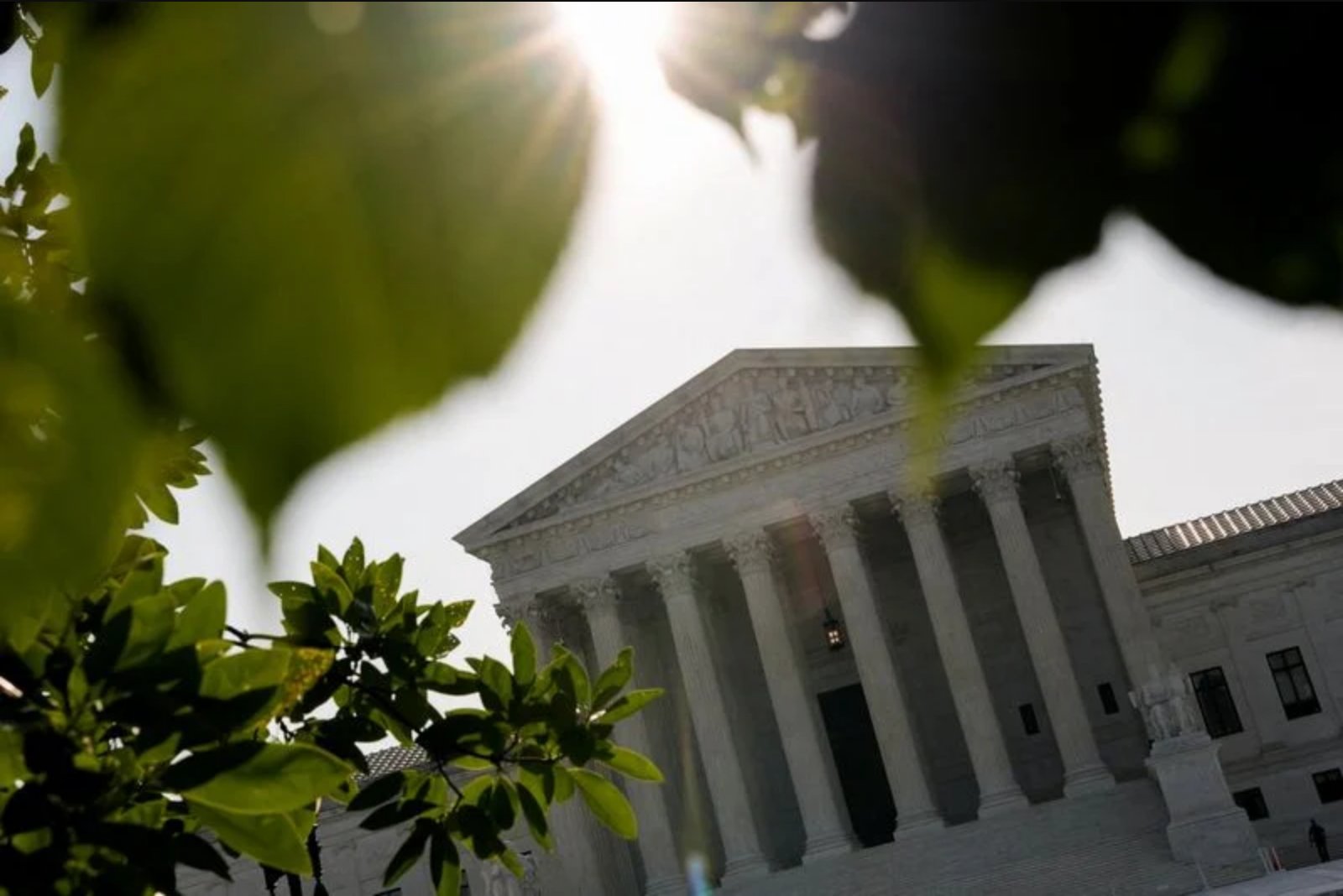
WASHINGTON, July 2 - The U.S. Supreme Court's recent action defending the Federal Reserve against a presidential attempt to remove one of its governors did more than block the immediate firing. It laid bare a deepening dispute among the justices about the role and reach of the court's emergency docket - often called the "shadow docket" or "interim docket" - and whether that shortcut is being used to decide questions that ordinarily would move through prolonged briefing, argument and deliberation.
Chief Justice John Roberts wrote the 5-4 opinion in the case involving Federal Reserve Governor Lisa Cook. The decision, joined by Justice Brett Kavanaugh and the court's three liberal justices, denied President Donald Trump's emergency request to halt lower court rulings that prevent Cook's removal while allegations against her are examined. In doing so, the majority also defended the broader use of the emergency docket in the Cook matter as a choice of "prudence," a characterization Roberts said reasonable minds can disagree about.
Three of the four conservative justices in dissent argued the majority used an unusually expansive approach for a proceeding designed to operate in emergencies. Their criticisms focused on the gravity of what the court decided and on the procedural posture of the case - a dispute that arrived at the Supreme Court by emergency filing just 21 days after the underlying litigation began.
What the emergency docket is and why it matters
The emergency docket permits the justices to act rapidly, often issuing orders before lower courts have finished considering the legal merits of a case. These orders typically bypass the Supreme Court's full procedures, which normally include detailed briefing, oral argument, extended deliberations and an opinion that explains the court's reasoning at length. Emergency orders are generally issued quickly, and they frequently provide little or no textual explanation of the court's rationale.
Critics have for years voiced unease with the court's increasing willingness to employ this mechanism for consequential matters. The concern centers on transparency and accountability: when major legal disputes are decided through terse, rapid emergency orders, the public and lower courts may be left without guidance on the legal reasoning that produced those outcomes.
Division on display in the Cook ruling
The Cook decision simultaneously affirmed the legality of some presidential actions in related contexts and declined to grant immediate relief to the president regarding Cook's alleged misconduct. On the same day that the court issued its order in Cook, it also issued a 6-3 ruling that overruled a 1935 precedent that had insulated federal regulators from at-will removal by a president. That overruling, in a separate matter concerning the firing of Democratic Federal Trade Commission member Rebecca Slaughter, expanded presidential authority to remove certain independent agency officials.
No other president since the Federal Reserve's founding in 1913 had attempted to remove a Fed official. The attempt to remove Cook therefore raised significant concerns about the independence of the central bank. The court's emergency action in Cook denied the president's request to block lower courts' rulings that currently prevent Cook's removal, while emphasizing that the ruling did not foreclose the possibility that the president could succeed after the allegations are more fully developed in lower tribunals.
Conservative dissents: restraint urged
Justice Samuel Alito, joined by Justice Neil Gorsuch, argued the court should have been more restrained. Alito highlighted the early stage of the litigation and the "novel legal issues" involved, noting the case reached the Supreme Court only three weeks after litigation began. "Those problems counseled in favor of a light touch by this court," Alito wrote.
Conservative Justice Amy Coney Barrett added that the court "chooses to go big" rather than taking a modest approach, and warned that the majority opinion establishes precedent across a range of important issues that will have effects well beyond the immediate case.
Roberts responded directly to such criticisms in his majority opinion: "How much to say on our interim docket ... is not reducible to any mechanical formula; it is ultimately a matter of prudence, upon which reasonable minds can (and often do) disagree." The remark reflected the lack of a clear rulebook governing the emergency docket and underscored why the choice to write at length in Cook attracted attention.
Voices outside the majority and dissent
The split among the justices prompted commentary from legal scholars who study the emergency docket. Taraleigh Davis, a professor at Bradley University and an expert on the interim docket, said she found it telling that Roberts felt compelled to put a principle on paper in response to the dissent. "He didn’t have to. The opinion could have just decided the case," Davis said. "He felt the pressure of the complaint enough to put a principle on paper for the first time." She characterized Roberts' description of the choice as one of "prudence" as candid about the reality that no mechanical rule exists for these situations.
George Mason University professor Ilya Somin observed the practical tension confronting the court: both saying too much and saying too little in emergency orders can cause problems. "It can be problematic to both say too much or to say too little," Somin said. He suggested the court cannot easily fix the underlying dilemma and noted that views about when to provide more explanation are likely to divide justices along ideological and philosophical lines.
Yale Law School professor Douglas NeJaime described the larger consequences when significant constitutional questions are resolved through the emergency docket. He emphasized that parties and lower courts are deprived of the opportunity to fully brief and argue cases and that the resulting changes in law are sometimes unclear. "The law changes in ways that are not always clear and that leave state actors, lower courts, and ordinary Americans with an insufficient basis on which to move forward," NeJaime said.
Other recent emergency docket controversies
The Cook controversy echoed criticisms made in March in Mirabelli v. Bonta, another emergency-docket case. In Mirabelli the court blocked several California laws that limit what public schools may share with parents about students' gender identity without the child's permission. The majority in Mirabelli applied the 14th Amendment's due process protections to recognize parental rights to receive that information, concluding in its order that "These policies likely violate parents' rights to direct the upbringing and education of their children."
That decision drew strong rebukes from Justice Elena Kagan and Justice Ketanji Brown Jackson. Kagan called the Mirabelli order a "terse, tonally dismissive ruling designed to conclusively resolve the dispute." She warned that the order will be perceived as a judgment on the merits, even though it was issued as an interim order, and said the emergency docket had "malfunctioned" in producing what she viewed as a major shift in law on a politically charged topic without the usual procedural safeguards.
The court's emergency docket was also central to the matter that allowed President Trump to remove Rebecca Slaughter last September. Using the interim docket, the court gave the green light for that removal and, in doing so, revised a longstanding precedent that had limited presidential authority to remove independent federal regulators. Justice Kagan, dissenting in several such decisions, argued the 1935 precedent should have constrained the court and that the emergency docket ought not be used to overrule precedent or to effect new legal rules.
Procedural choices and institutional consequences
Most emergency orders remain succinct and stop short of providing extended legal explanation. But in some recent instances, including Mirabelli, the court chose to elaborate on the reasoning. Barrett, who was part of the Mirabelli majority, defended the decision to provide rationale and said the court must weigh the risk of "lock-in" that comes from saying too much against the transparency cost of saying too little.
Unlike many emergency-docket rulings, the Cook matter received additional court attention: the justices spent more time on the case than they sometimes do for such applications and took the rare step of hearing oral arguments. Justice Ketanji Brown Jackson noted this difference and compared Cook to other consequential emergency cases where the court provided little explanation.
Still, the broader question persists: as emergency orders increasingly touch on far-reaching legal and constitutional questions, how should the court balance speed and clarity? Several voices quoted in the postterm debate say the choice is inherently fraught and that any institutional fix will face political and ideological disagreement over when the docket should be used.
Where the court stands now
The justices concluded their nine-month term and entered summer recess on Tuesday, with the next term scheduled to begin in October. The Cook ruling and the surrounding disagreements show the court is wrestling publicly with the limits and uses of an instrument that can shape policy in the short term and, in some cases, recalibrate legal precedent.
That dynamic - a process designed for emergency decisions increasingly resolving consequential questions - has left observers and some justices uneasy about the long-term institutional and legal consequences of relying on a procedural shortcut to decide matters with broad implications.
Bottom line
The Cook decision, and the accompanying exchange among the justices, underscores a central tension within the Supreme Court's use of the emergency docket: the need to act swiftly in urgent situations weighed against the need to provide considered legal reasoning when rulings have the potential to reshape existing law and institutional structures. Roberts framed the choice as one of prudence; dissenting justices and outside scholars view it as emblematic of a docket outgrowing the limited role for which it was once reserved.