
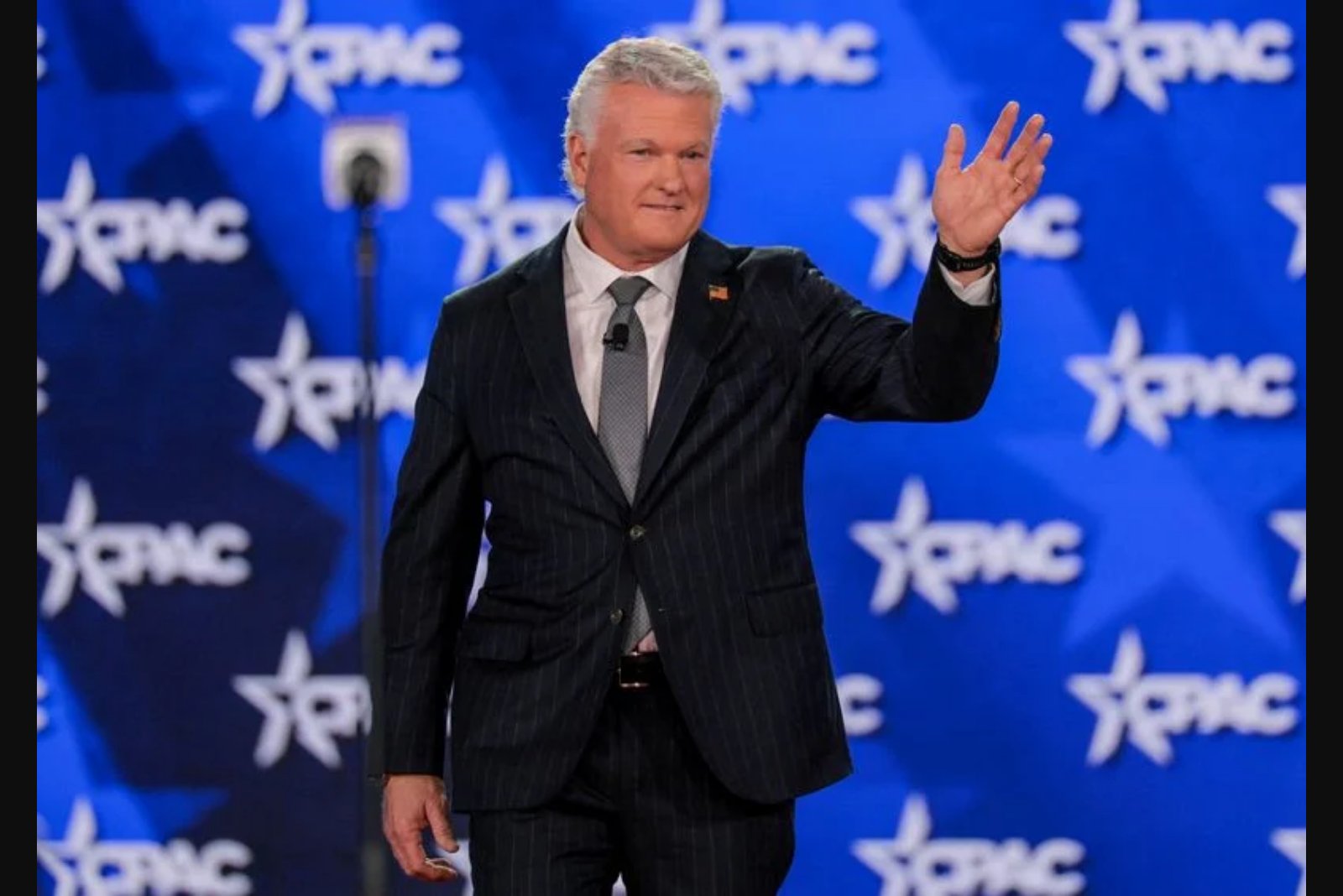
WASHINGTON, June 16 - Republican voters in Georgia will decide on Tuesday which candidate will challenge Democratic U.S. Senator Jon Ossoff, a figure many Democrats view as an ascendant national leader and a potential presidential contender in 2028. The immediate matchup is a runoff between U.S. Representative Mike Collins and former football coach Derek Dooley.
Over the weekend, former President Donald Trump publicly backed Collins and gave him the nickname "MAGA Mike" on Truth Social, calling him a "WARRIOR and WINNER" who supported Trump "from the very beginning." In his post, Trump contrasted Collins with Dooley, writing: "I don’t know Derek Dooley, and neither does anyone else, but he seems like a nice person. Unfortunately, he has lived outside of Georgia for most of his life, didn’t vote in 2020 or 2016, and said that I lost Georgia in 2020 when, in actuality, the facts have now proven that I won by a lot!" The former president narrowly lost Georgia to Joe Biden in 2020 by 0.3 percentage points.
Outgoing Georgia Governor Brian Kemp, whose refusal to assist Trump in efforts to overturn the 2020 election result in Georgia created a rift with the former president, has endorsed Dooley. Dooley, in turn, told media outlets he has "great respect" for Trump while casting himself as the outsider best positioned to defeat Ossoff.
Either Republican nominee faces a steep fundraising challenge against Ossoff. The incumbent has amassed nearly $33 million in campaign funds, compared with Collins' roughly $1.2 million and Dooley's about $1.7 million. Ossoff's campaign credits its resources to hundreds of thousands of small donors, reporting average quarterly donations in the range of $32 to $38.
Georgia is one of two states President Trump carried that Democratic Senate incumbents are defending this November - the other being Michigan. For Democrats to regain control of the Senate, they would need a net gain of four seats.
Trump's influence in Southern Republican primaries remains on display as he has sought to shape outcomes in multiple races. In Georgia, he has also endorsed Lieutenant Governor Burt Jones for governor, while in Alabama he has backed Representative Barry Moore in the Senate race over former Navy SEAL Jared Hudson. Jones faces businessman Rick Jackson in the Republican contest to replace Governor Kemp, with the GOP primary winner set to face Democrat Keisha Lance Bottoms, who served as Atlanta's mayor and previously worked as an adviser to President Biden.
Despite a string of primary wins by Trump-backed candidates, observers note a separate question about their electability in general elections when Trump himself is not on the ballot. "This is not going to be a particularly good year to be a Republican in this state," said Charles Bullock, a political science professor at the University of Georgia. "Democrats could win the governorship."
Outside Georgia, other contests on Tuesday include a high-profile mayoral and non-voting congressional delegate race in Washington, D.C.; a statewide ballot question in Oklahoma on minimum wage; and an initial special election in the San Francisco Bay Area to fill the remainder of a departing U.S. House term.
In Washington, D.C., the mayoral contest is open following the departures of Mayor Muriel Bowser and congressional delegate Eleanor Holmes Norton. Leading in the polls for mayor is Councilmember Janeese Lewis George, described in campaign coverage as a democratic socialist in the mold of New York Mayor Zohran Mamdani. President Trump said last week he "wouldn’t like it" if Lewis George were elected mayor and warned he would "take back Washington and run it on the federal basis" if she prevailed. Her principal opponent in the crowded field is former Councilmember Kenyan McDuffie. The two leading mayoral contenders have spent nearly $6 million combined.
For the non-voting delegate slot being vacated by Norton, 89, the top contenders include Councilmembers Brooke Pinto and Robert White, and former Democratic National Committee deputy finance chair Kinney Zalesne. Given the district's strong Democratic tilt, the winners of the primary contests are widely expected to carry victory into the general election.
Oklahoma voters will weigh a ballot measure that would raise the state's minimum wage from the federal floor of $7.25 to $15 by 2029. Republican Governor Kevin Stitt and more than 100 Republican state legislators oppose the proposal, warning that its passage would cause "severe" economic consequences, including job losses and higher prices.
Not all Oklahoma Republicans oppose the measure. Republican Labor Commissioner Leslie Osborn has voiced support, telling a local news outlet that everyday costs have risen while the state's minimum wage has not changed since 2009. She said many workers face a situation where "You absolutely cannot pay the gas to get to a job, have an apartment and live extremely frugally. You’re going to have to rely on government programs." Osborn added, "As a Republican, we should want people ... to stand on their own two feet."
In the San Francisco area, voters will hold an initial special election to determine who completes the term of former Representative Eric Swalwell, who earlier this year ended a gubernatorial bid and resigned from Congress amid allegations of sexual misconduct that he has denied. Eleven candidates are competing, among them State Senator Aisha Wahab and Bay Area Rapid Transit Board President Melissa Hernandez, both Democrats.
The special election uses a top-two system: the two candidates with the most votes, regardless of party, will advance to a special general election scheduled for August 18 to serve through early January. Separately, Wahab and Hernandez have already secured places on the November ballot for the full two-year term representing the district.
Voters in Alabama, Oklahoma, Washington, D.C., and the Bay Area will help resolve these contested primaries and the state referendum. While the immediate outcomes will determine matchups for November and, in the case of Oklahoma, whether a major change to the state's wage floor is enacted, the broader political implications - including how Trump’s endorsements play in both primaries and the general election - will remain a subject of scrutiny as campaigns pivot toward November.