
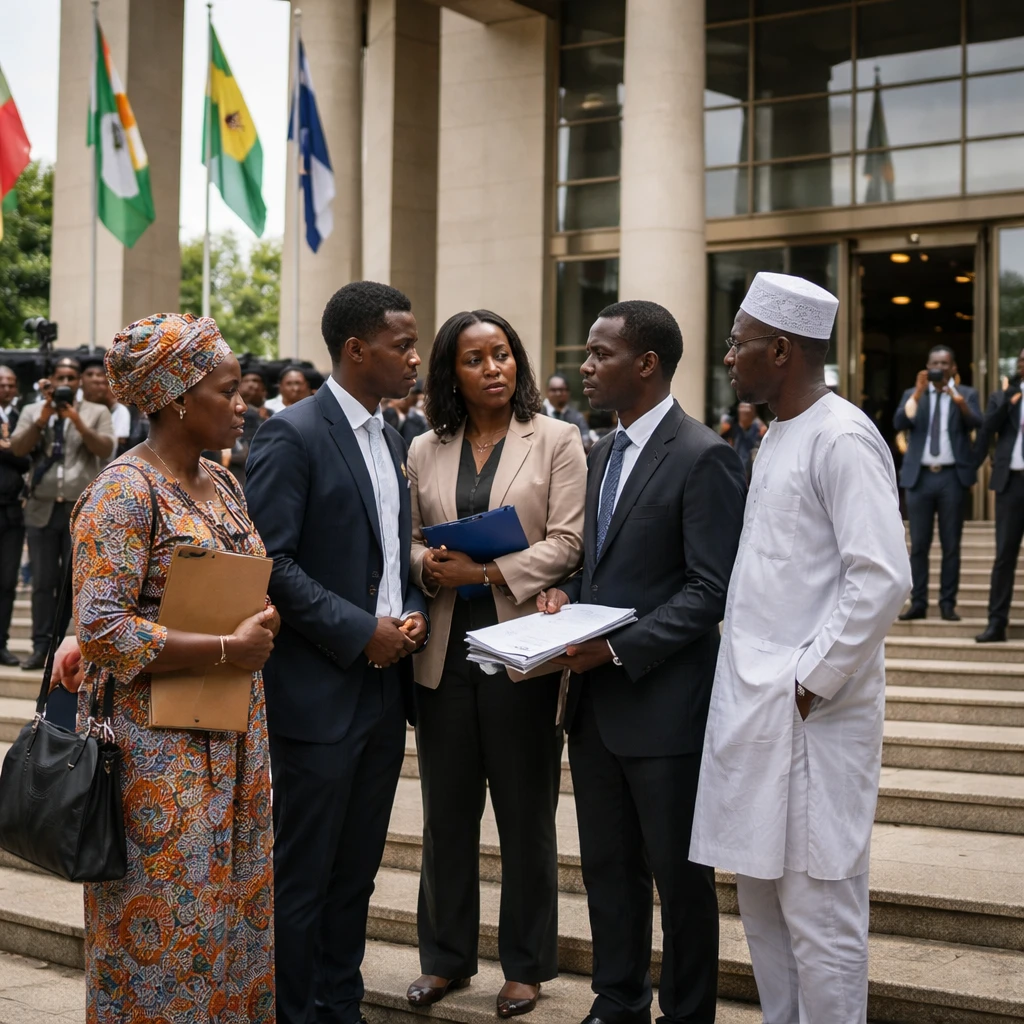
Advocacy groups have filed a formal application at the regional court for West Africa challenging Ghana’s participation in deportations carried out under a U.S. policy that began moving people to Ghana in September 2025.
The legal action was lodged before the Community Court of Justice of the Economic Community of West African States (ECOWAS) on behalf of 27 deportees who were returned from the United States to Ghana. The complaint seeks to halt further removals under the same arrangement and to require Ghana to disclose the contractual terms it agreed with the U.S. government.
At least 60 people in total were deported to Ghana beginning in September 2025 as part of a policy the U.S. administration has described as intended "to end illegal and mass immigration and bolster America’s border security." According to the complaint, many of those sent to Ghana told authorities they had been granted forms of protection in the United States, yet were removed soon after arrival in Ghana to the countries they had initially fled.
The filing states that most of the deportees were transferred onward within hours or days of reaching Ghana, and that some found themselves stranded in third countries without resources to continue their journeys. The coalition representing the plaintiffs says the deportees fear for their safety and that most are now either hiding in their home countries or staying covertly in third nations.
It was not possible to interview any of the deportees or to view the witness statements referenced in the court filing. Spokespeople at ECOWAS and at the government of Ghana could not immediately be reached for comment.
Beatrice Njeri, a litigator with the Global Strategic Litigation Council representing the deportees, said the case is designed in part to discourage other ECOWAS member states from entering into similar arrangements with the U.S. administration. She also said the legal team is seeking at least $100,000 in compensation for each deportee from Ghana, in addition to other forms of reparation.
The advocacy groups contend the suit should force transparency about the deal between Ghana and the U.S. and should bar Ghana from accepting additional deportations under the same agreement.
Financial details tied to broader third-country removal operations remain unclear. A report published in February by Democrats on the Senate Foreign Relations Committee noted that the overall cost of third-country removals was unknown, while saying more than $32 million had been sent directly to five countries, including $7.5 million to Equatorial Guinea.
Those figures were cited by the advocacy coalition in outlining one component of the dispute, which combines claims about individual safety and legal procedure with requests for monetary compensation and transparency from a national government that entered into an agreement with the U.S. administration.