
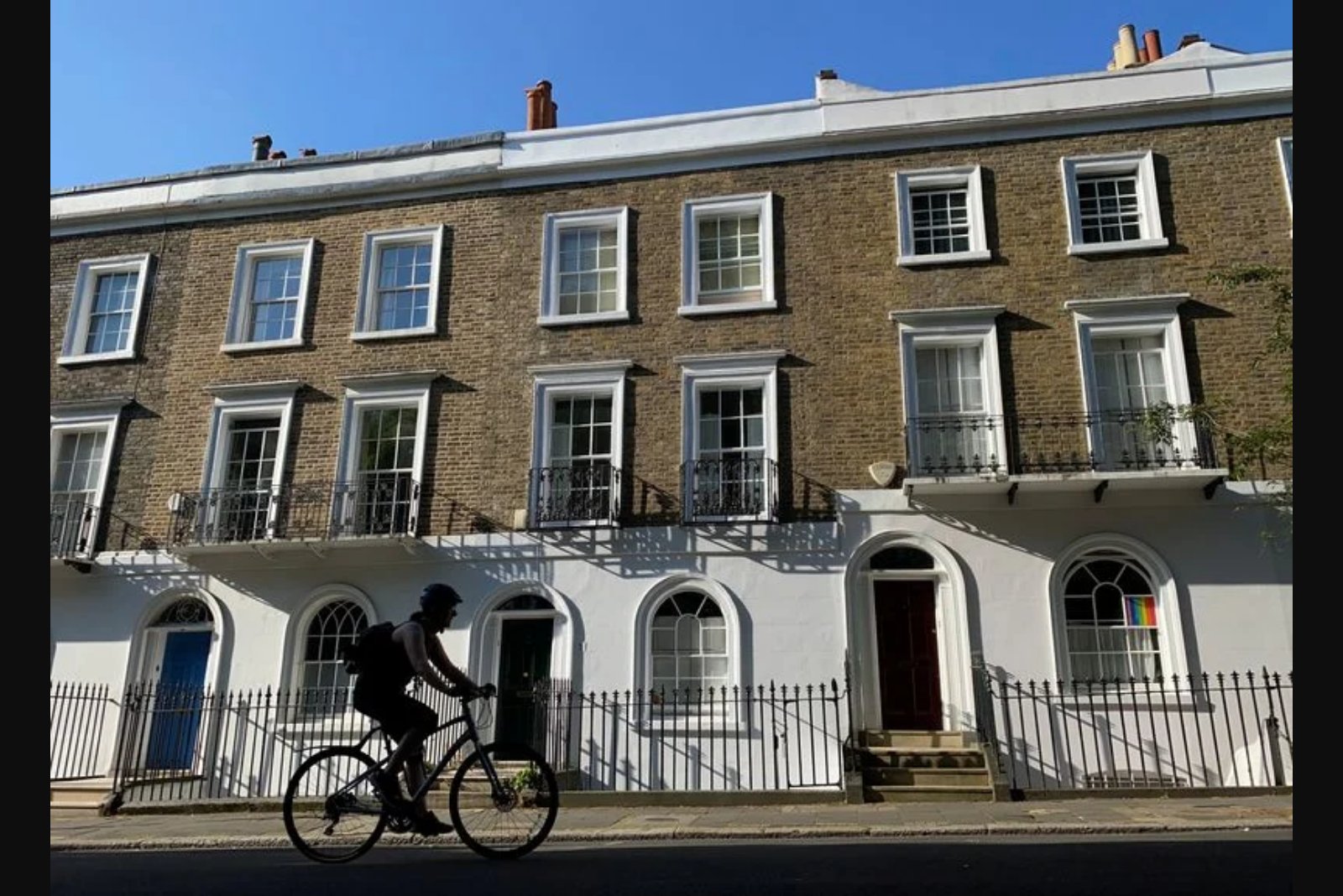
British home values are projected to increase by a smaller margin this year than analysts expected three months ago, and the London market is forecast to record a modest decline, according to a Reuters poll of housing analysts carried out between May 26 and June 8. The poll found the average cost of buying a property will rise 1.8% this year, down from a 2.5% increase predicted in the previous quarterly survey.
Median forecasts for 2027 and 2028, however, were left unchanged at a 3.0% rise in each year, indicating analysts expect a return to modest growth after the near-term slowdown.
Analysts pointed to a recent increase in mortgage rates and ongoing inflation as the principal headwinds limiting buyer activity. "The recent uptick in mortgage rates, partly driven by global uncertainty and the war in the Middle East, is likely to weigh on house price growth in the near term," said Aneisha Beveridge at estate agency Hamptons Property. "Higher borrowing costs reduce purchasing power and tend to cool demand, particularly in more expensive markets."
Data from mortgage lender Halifax showed that home prices unexpectedly fell in May, adding to evidence of cooling conditions. The Reuters poll specifically projects that prices in London - historically a magnet for foreign investors - will decline 0.3% this year, before rising 2.0% in 2027 and 3.0% in 2028.
Respondents to the poll were asked to identify the two biggest constraints for first-time buyers, and answers coalesced around three factors: the large deposits required, elevated mortgage rates and high asking prices. Marc Von Grundherr at estate agency Benham and Reeves said: "Saving for a deposit remains the single biggest barrier to homeownership, particularly in higher-value markets such as London where buyers must accumulate a substantial amount of capital before they can even begin their homebuying journey."
Property website Rightmove recently reported the average asking price of a first home, excluding inner London, was 228,048 pounds in May, underscoring the challenge of accumulating the typical 10% deposit for an initial mortgage for many prospective buyers.
Rental markets are expected to tighten further and see rents rise faster than house prices over the next several years, according to the poll. Some property investors are leaving the rental market after the government’s Renters' Rights Act came into effect last month, a development that the poll indicates is reducing supply.
The survey projects rental fees in the capital will increase 3.0% this year and by the same amount in each of the following two years. For urban areas more broadly, rents are forecast to rise 3.3% in 2026, then 3.0% in 2027 and 2.5% in 2028.
"Going forward there is only one way rents are going i.e. \"up\" - and this is due to rising household formation and a shortage of supply of both new build and existing accommodation," said Tony Williams at advisory firm Building Value. Those dynamics point to stronger rental growth than the modest increases expected in house prices in the near term.
On the lender side, British buy-to-let lender Paragon Banking Group reported it had raised its annual net interest margin forecast but warned of softer consumer and business sentiment in the face of political and geopolitical uncertainty.
Implications for markets and sectors
- Residential property markets are likely to see slower price growth this year, with the London segment under particular pressure.
- Rentals are forecast to outperform house price growth, which may support buy-to-let economics for landlords who remain in the market but will create affordability pressures for renters.
- Mortgage lenders and credit-sensitive consumer segments may face headwinds from rising rates and muted demand.
($1 = 0.7504 pounds)