
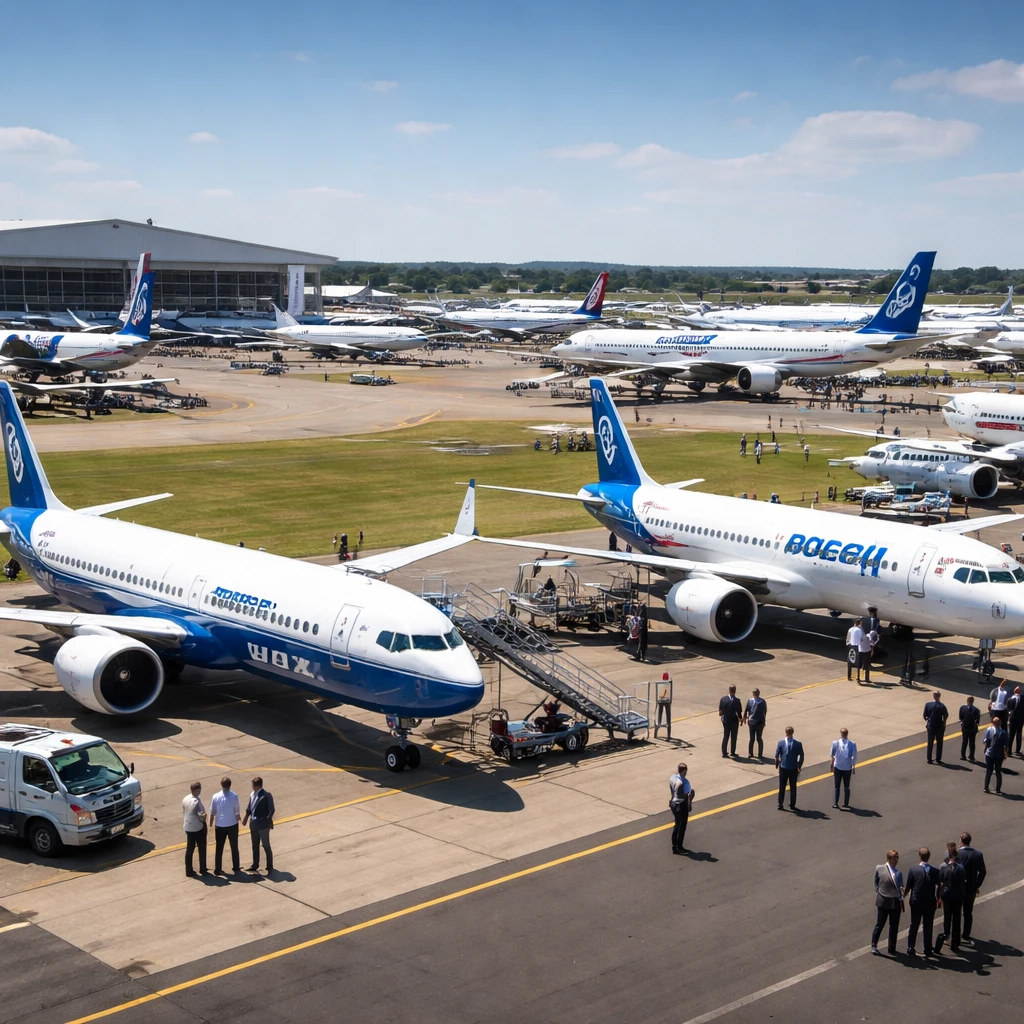
The Farnborough Airshow produced a clear winner by headline order count: Boeing recorded 173 orders during the event, compared with Airbus's 154. Together the two firms accounted for 327 aircraft orders, a figure that fell short of several external forecasts that had expected as many as 800 sales and was modestly above industry expectations of just over 300.
Leading the show's commercial deals, SMBC Aviation Capital - the world's second-largest lessor - placed the week's largest order, committing to 200 single-aisle jets split evenly between the manufacturers. The order comprises 100 Boeing 737 MAX aircraft and 100 members of the Airbus A320neo family.
Manufacturers and market watchers also adjusted the headline numbers to reflect transactions that had already been entered into manufacturer order books without named customers. After removing those previously recorded deals, including Boeing's portion of the lessor order, the net tally of newly recorded aircraft at Farnborough stood at 218.
Compared with the prior Farnborough event in 2024 the order count represents a small increase, but it remains far from the 2018 high-water mark when 1,109 orders were logged for the two planemakers. Both Airbus and Boeing continue to carry order backlogs that extend into the next decade, driven by years of supply chain disruptions, labor shortages and manufacturing setbacks that have constrained deliveries.
Other transactions announced at the show underscore continued demand across aircraft categories. Widebody orders were recorded by both manufacturers from carriers including Riyadh Air and Philippine Airlines. Lessors also added to existing commitments, with AerCap acquiring additional Boeing 787s. On the regional side, Embraer reported orders for 50 aircraft, of which 20 were freighters.
The Farnborough order flow highlights the gap between market optimism for large-scale deal activity and the practical limits imposed by current production capacity. While headline figures offered a sign of continued commercial interest, the adjustments to net new orders and the persistent delivery backlog reflect the operational constraints that are shaping the market.
Contextual note: The figures cited here are those reported in connection with the Farnborough Airshow this week and account for manufacturer-reported orders and adjustments for previously recorded deals.