
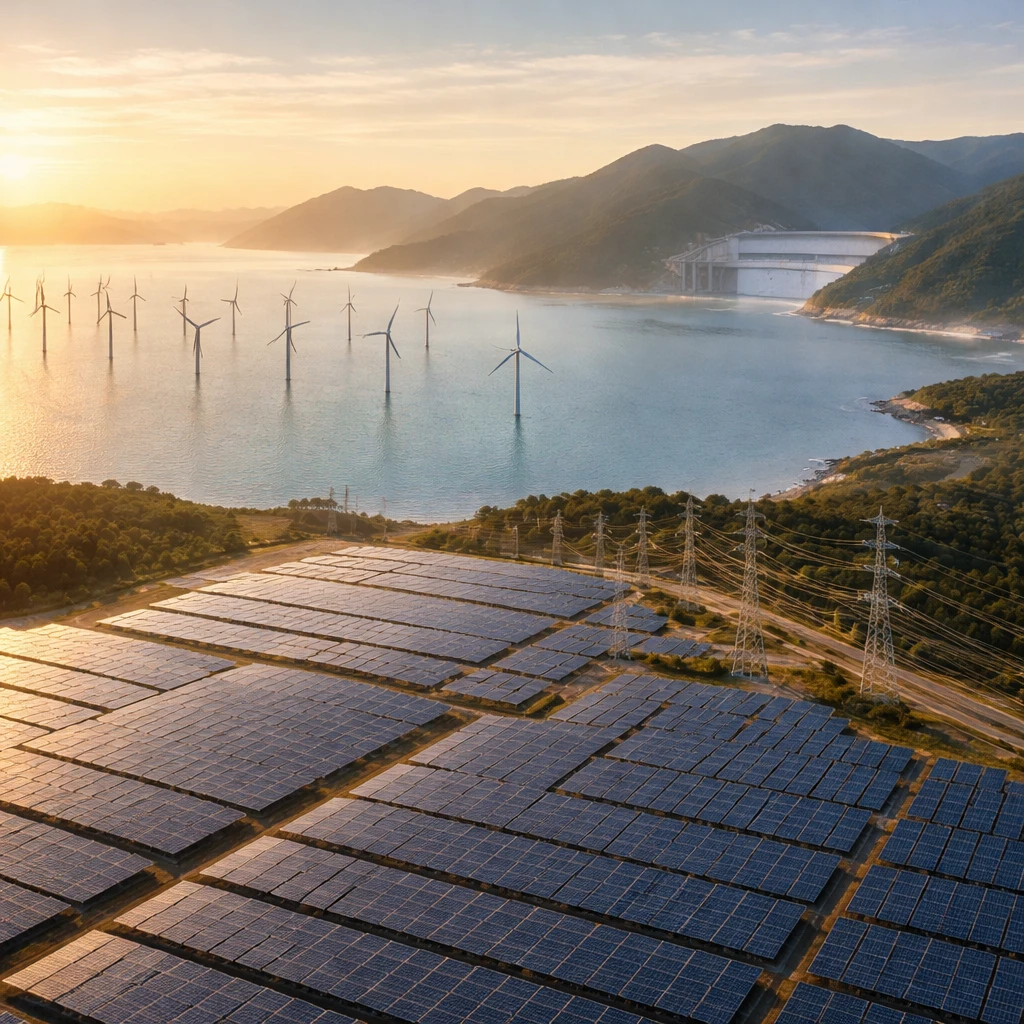
China has released a national renewable energy plan that makes, for the first time, a binding commitment to raise wind and solar power generation by 53% over the five years through 2030. The plan sets multiple targets across generation, dispatchability and non-power uses of renewables.
At the center of the plan is an increase in overall renewable generation to 1.8 billion tons of coal equivalent (tce) by 2030, up from 1.18 billion tce projected for 2025. The document frames this as the first occasion on which China has set a binding green power target.
Operational requirements in the plan emphasize the ability of wind and solar to contribute during system stress. By 2030, wind and solar installations - when paired with storage systems - are expected to be capable of delivering 8% of their installed capacity during periods of peak demand. In addition, the plan says renewable sources should account for 20% of electricity consumption during demand spikes.
To support that capability, the plan calls for more than 300 gigawatts of renewable peaking capacity by 2030. The term peaking capacity in the plan refers to renewable generation that can be dispatched to meet increases in electricity demand.
The document also targets broader uses of wind and solar outside the power sector. It sets a goal of 150 million tce of wind and solar consumption in applications such as heating and cooling powered by renewables and for green hydrogen production. Beijing has included a target of 2 million metric tons per year of green hydrogen production by 2030 as part of that aim.
Hydropower targets are raised as well: the plan directs China toward 570 gigawatts of hydropower capacity by 2030, compared with a 450 GW target for 2025. Included in the 2030 objective is 160 GW of pumped storage hydro capacity, up from 66 GW slated for 2025.
Infrastructure and industrial plans in the document include development of deep-sea offshore wind bases and pilots that integrate offshore wind with underwater data centers. The plan also proposes piloting renewables megabases designed to transmit 100% green electricity. The text notes that wind and solar presently constitute about 20% of the power transmitted via China’s ultra-high voltage network, according to Global Energy Monitor.
Key takeaways
- Binding increase of wind and solar generation by 53% by 2030 and total renewables to 1.8 billion tce.
- Targets for dispatchable renewable peaking capacity (300+ GW) and requirements for wind and solar with storage to provide capacity during peaks.
- Expanded non-power uses including 150 million tce of wind/solar for heating, cooling and green hydrogen (2 million metric tons/year by 2030); enlarged hydropower and pumped storage goals.
Sectors likely affected - power generation, transmission, energy storage, industrial energy users (heating/cooling), hydrogen production and data center infrastructure.
Risks and uncertainties
- The plan presents numerical targets but provides limited detail in the released text on implementation pathways and specific timelines, creating uncertainty about execution.
- Meeting the large increases in pumped storage and peaking renewable capacity implies substantial infrastructure deployment; the plan does not specify project-level delivery mechanisms or financing in the published summary.
- Pilots for deep-sea offshore wind integration with underwater data centers and renewables megabases are proposed, but the plan does not include detailed operational or deployment schedules for these initiatives.