
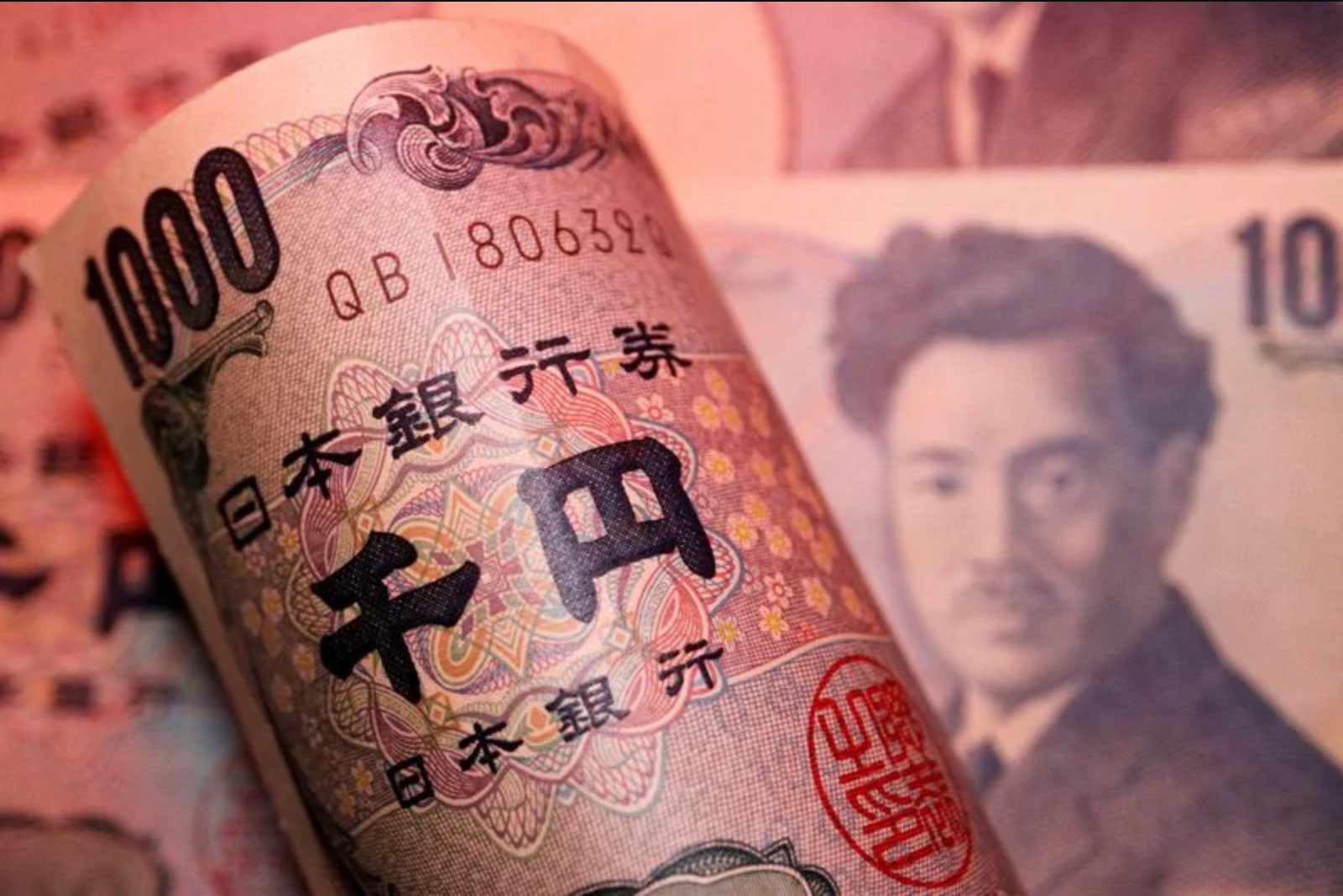
Japanese financial authorities kept market participants guessing on Monday about whether they will step into foreign exchange markets to support the yen, using restrained public language that has heightened uncertainty over the timing and form of any intervention.
Finance Minister Satsuki Katayama repeated a standard line that Tokyo "will respond appropriately to currency moves at any time," a formulation officials regularly employ irrespective of the yen's level. That choice of phrasing contrasted with some of Katayama's earlier comments, when she issued more forceful warnings and said the government had a "free hand" to intervene.
The yen eased to 161.7 per dollar on Monday, not far from a two-year trough reached last week. A further slide beyond 161.96 would mark the currency's weakest point since 1986.
Silence from a key policymaker
Markets are also watching whether Atsushi Mimura, Japan's top currency diplomat, will make public remarks. Mimura speaks far less often than Katayama, who holds regular press briefings; as a result, his rare comments are taken as more deliberate policy signals. Mimura has not spoken publicly since early May, shortly after Tokyo sold dollars to prop up the yen for the first time in nearly two years.
Hours before that May intervention, Mimura said the time "for decisive action" was approaching and described it as a "final warning" for markets. Two government sources said that his warning still stands, a development that keeps open the possibility of sudden intervention.
Why communication matters
Analysts say authorities may be altering their signaling tactics after Mimura's earlier, explicit warnings gave speculators room to close out short-yen positions ahead of the intervention, muting its market impact. "Some speculative players likely managed to escape without taking any damage, so the next intervention may be carried out as much as possible as a surprise," said Shota Ryu, FX strategist at Mitsubishi UFJ Morgan Stanley Securities. He added that, while officials' comments lacked urgency, traders remained cautious about the risk of intervention.
Speculative net short positions on the yen rose to 145,818 contracts, Commodity Futures Trading Commission data showed on Friday - the highest level since July 2024. That build-up of positions has left market participants sensitive to any hint of official action.
Market positioning, rates expectations and energy risks
Yuji Saito, executive advisor at SBI FX Trade, pointed to a shift in expectations toward higher U.S. interest rates and renewed uncertainty in the Middle East, which has pushed oil prices higher. Those factors have made it harder for investors to unwind dollar-long positions when there is not an imminent threat of intervention, Saito said. "That could ultimately increase the impact of any intervention, as authorities would be acting while positions remain stretched," he added.
Last week the yen weakened to as low as 161.8, its weakest since July 2024, erasing the appreciation seen after interventions at the end of April. Between late April and early May, Tokyo spent a record 11.7 trillion yen, or $72.44 billion, intervening in foreign exchange markets.
A persistently weak yen raises import costs and can add to domestic price pressures. At the same time, an energy shock from the Middle East has pushed fuel costs higher, a combination that prompted the Bank of Japan to warn about the risk of falling behind the curve on inflation.
Policy signals from the central bank
Bank of Japan Deputy Governor Ryozo Himino told parliament on Monday that inflation could overshoot the bank's 2% target, reiterating concerns about the cost of delaying interest rate increases. That pronouncement underscores official vigilance about rising prices amid a weak currency and higher energy costs.
Official exchange-rate data at the close of reporting showed $1 = 161.5200 yen.
Implications for markets
The combination of cautious verbal intervention by finance officials, a notable build-up in speculative short positions on the yen, and external pressures such as higher oil prices has left investors on edge. Traders face the prospect that any future intervention could be executed with little notice to maximize market impact and avoid the advance position adjustments that blunted recent policy action.
For now, comments from officials have not conveyed a clear sense of urgency, but market participants remain alert to the possibility of sudden moves if authorities choose to act.