
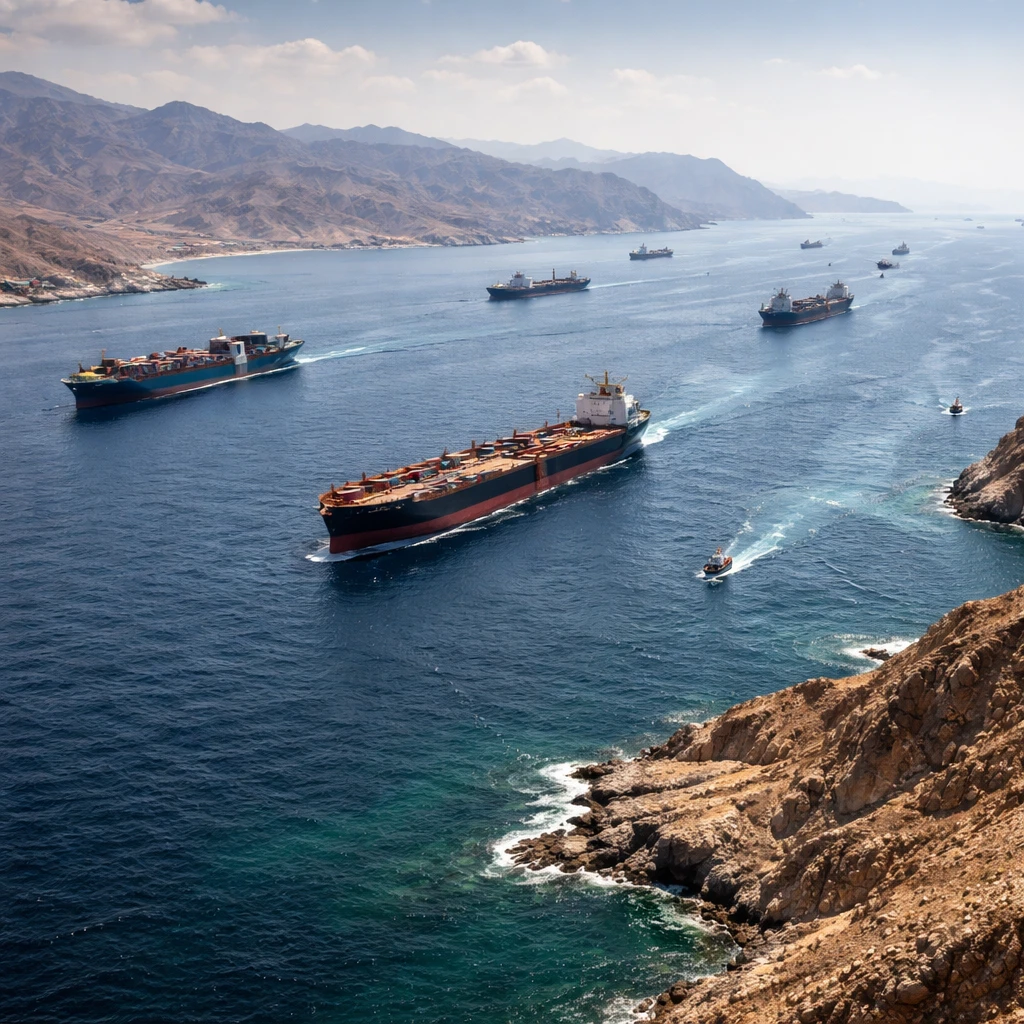
Several major European governments now regard charges levied by Iran and Oman on ships transiting the Strait of Hormuz as a likely outcome, officials told interlocutors, according to a report released Thursday. The shift reflects a growing acceptance among some EU capitals that service fees may become part of the operating environment for vessels using the strategically important waterway.
Officials from certain Gulf Arab states have privately echoed that assessment, though those private views do not necessarily represent formal government positions. What remains unsettled is the nature and level of any fees that would be tolerated by European states.
The United States and Gulf Arab governments maintain a firm public stance that Iran and Oman cannot impose charges for passage through the strait. Central to their objection are questions over compliance with international maritime law and concerns about setting a precedent that could encourage other countries to levy charges on different global waterways.
Despite acknowledging the increased likelihood of additional costs for shippers, European governments have pressed Iranian and Omani officials to ensure that any measures apply uniformly and do not discriminate against vessels on the basis of nationality. That emphasis on nondiscrimination is an explicit request from European diplomatic channels.
European officials were told by Omani counterparts last week that restoring the pre-war status quo in the Strait of Hormuz is not possible, the report said. In that context, ships moving through the chokepoint - a critical artery for Gulf energy exports - could be asked to pay for services connected to de-polluting the strait and for navigation-related expenses.
Oman occupies a delicate position. The sultanate maintains relationships with both Western countries and with Iran, sits along the southern edge of the strait and has offered mixed public signals about its intentions. Omani authorities have indicated they will act in accordance with international maritime law while balancing competing pressures.
Omani officials are reportedly examining the Strait of Malacca in Asia as a potential model for how to structure services and charges. Leaders in Muscat view a Malacca-style arrangement as viable only if all Persian Gulf states agree to participate. Whether Iran would accept a voluntary, multilateral system remains unclear.
Commercial shipping through the Strait of Hormuz has risen since Iran and the United States signed an interim peace agreement around two weeks ago. That pact, together with American military support for vessels, has helped increase oil flows through the chokepoint from exporters such as Saudi Arabia to more than 10 million barrels per day, slightly above half of pre-war levels. Iran has also boosted its crude exports after the United States lifted a blockade of its ports.
The evolving calculus among European capitals underscores the complexities governments face when operational realities collide with legal positions and strategic concerns. While some accept the practical possibility of fees being charged, substantial diplomatic objections remain focused on legality, nondiscrimination and the long-term implications for maritime norms.
Key points
- Some EU governments now privately accept that Iran and Oman may charge ships transiting the Strait of Hormuz.
- The United States and Gulf Arab states publicly oppose such charges on grounds of international maritime law and the risk of setting a precedent.
- Commercial oil flows through the strait have increased to more than 10 million barrels per day, slightly above half of pre-war levels, following a recent interim peace agreement and enhanced U.S. military support.
Sectors impacted
- Energy - crude oil export flows and shipping costs.
- Maritime transport - commercial vessel operating expenses and routing decisions.
- International trade - potential implications for supply chains dependent on Gulf exports.
Risks and uncertainties
- Legal and precedent risk: The imposition of charges raises questions about conformity with international maritime law, a concern highlighted by the United States and Gulf partners.
- Operational uncertainty: The specific form and amount of any fees are not yet determined, creating cost unpredictability for shippers and energy exporters.
- Political ambiguity: Omans balancing act and mixed public signals leave unclear whether a multilateral, voluntary system would gain full regional acceptance, including from Iran.