
Economy July 2, 2026 07:13 AM

Skyroot Schedules Window for Vikram-1, India's First Privately Built Orbital Launcher

Company sets July 12 - August 4 window for partially commercial maiden mission carrying mixed domestic and international payloads

By Jordan Park
Share
Twitter Reddit Facebook LinkedIn

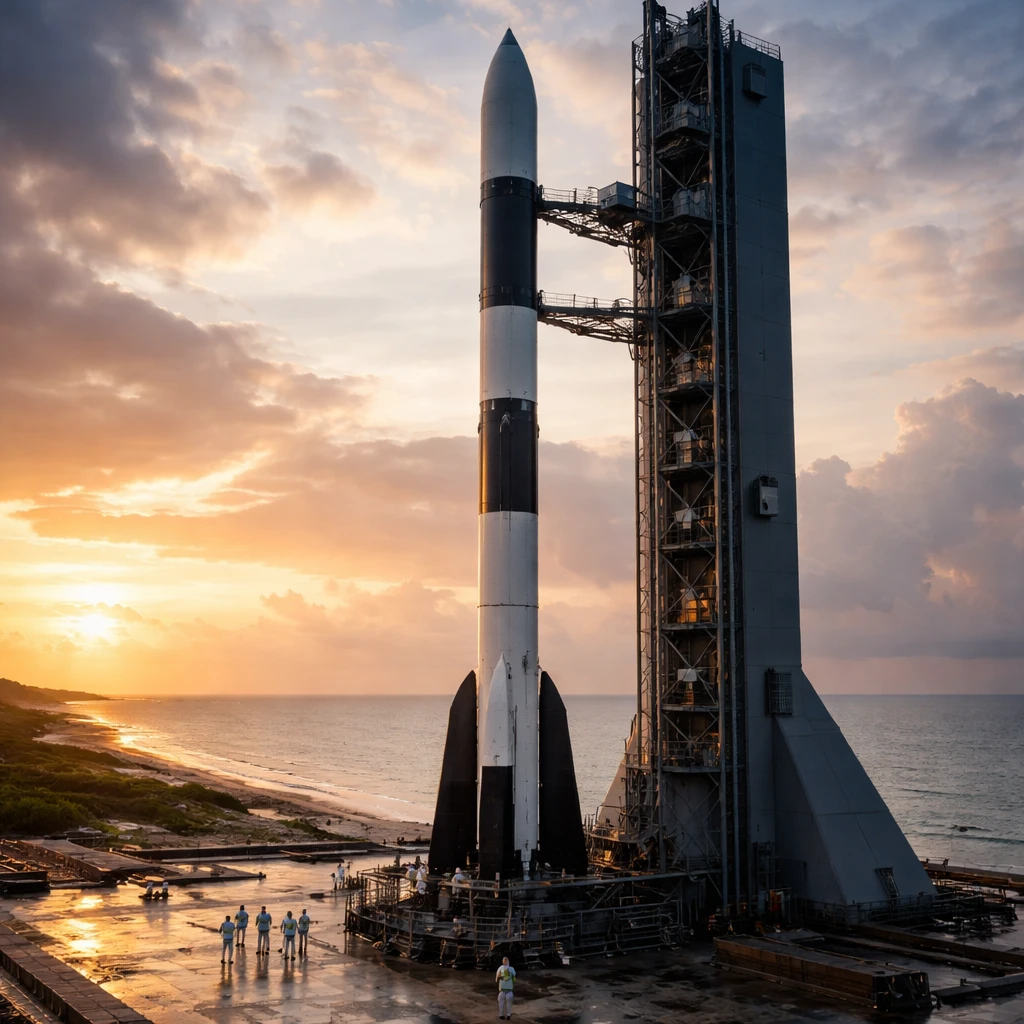
Skyroot Aerospace has announced a launch window between July 12 and August 4 for Vikram-1, the first orbital rocket designed and developed by a private Indian company. The mission will be a partially commercial flight carrying undisclosed payloads for a mix of domestic and international customers, and the company plans to start full commercial operations after one or two successful demonstrations to orbit. Vikram-1 follows Skyroot's 2022 suborbital test of Vikram-S and is built as a seven-storey, multi-stage vehicle with an all-carbon composite structure and a suite of in-house propulsion systems.

Skyroot Schedules Window for Vikram-1, India's First Privately Built Orbital Launcher
Summarize with
ChatGPT Perplexity Claude Grok Gemini

Key Points

  • Skyroot will attempt to launch Vikram-1 between July 12 and August 4; the mission is described as partially commercial and carries a mix of domestic and international payloads.
  • Full commercial operations are planned only after one or two successful demonstrations to orbit, meaning commercial cadence depends on the outcome of the test flights - sectors impacted include satellite services and private aerospace.
  • Vikram-1 is a seven-storey, multi-stage vehicle with an all-carbon composite structure, 3D-printed engines, and in-house solid-fuel boosters; it is designed to place satellites up to 350 kg into low earth orbit, targeting 450 km altitude at 60-degree inclination.

Skyroot Aerospace Pvt said on Thursday it will attempt to launch Vikram-1, billed as India’s first orbital rocket designed and developed by a private firm, within a launch window running from July 12 to August 4. The company described the upcoming flight as a partially commercial mission that will carry payloads for a combination of domestic and international customers; it did not disclose the identities of those customers.

Skyroot framed the mission as a stepping stone toward routine commercial operations, noting that it expects to begin full commercial flights only after completing one or two successful demonstrations to orbit. The company said the lift-off will play a role in validating the vehicle’s designs and guiding future vehicle development. “This will be partially commercial flight, with the company planning to commence full commercial flights after one or two successful demonstrations to orbit,” the firm said in a statement.

The planned launch represents a landmark for the private sector in India’s space industry. Skyroot has been described as the country’s first space unicorn and the mission would add to India’s satellite launch capacity as private participation in the sector grows following policy changes that opened the market to private companies three years ago.

Skyroot named the launcher Vikram-1 in honor of the founder of India’s space program. The firm previously completed a suborbital test on November 18, 2022, when the Vikram-S vehicle reached an altitude of 89.5 kilometers and splashed down in the Bay of Bengal about five minutes after liftoff, making Skyroot the first Indian company to conduct a suborbital launch. The company has postponed the orbital launch on multiple occasions since that suborbital flight.

Vikram-1 is described as a seven-storey, multi-stage orbital launch vehicle constructed with an all-carbon composite airframe. Its propulsion suite includes engines produced with 3D printing techniques and high-thrust solid-fuel rocket boosters that Skyroot developed in-house. The rocket is designed to place small satellites weighing up to 350 kilograms into low earth orbit.

For its maiden mission, Skyroot has targeted an operational orbit at an altitude of 450 kilometers with a 60-degree orbital inclination. The company emphasized that the test will carry a mix of payloads from both domestic and international customers but reiterated that it would not disclose customer names ahead of the flight.


What to watch next

  • Whether Vikram-1 achieves orbit within the July 12 - August 4 window.
  • Confirmation of one or two successful demonstrations before the start of full commercial flights.
  • Details on the payloads and customers once the launch is complete.

Risks

  • The company has postponed the orbital launch multiple times, indicating schedule risk for the planned July 12 - August 4 window; this affects timelines for customers in the satellite and launch services markets.
  • Full commercial flights hinge on one or two successful demonstrations to orbit; if those demonstrations do not achieve their goals, initiation of routine commercial operations could be delayed, impacting revenue expectations for Skyroot and dependent satellite operators.
  • Payload customers have not been disclosed, which leaves uncertainty around manifest commitments and market exposure for sectors relying on these launches, such as telecommunications and Earth observation services.

More from Economy

Russia's tax basis for crude drops to $63.52 in June after sharp monthly decline Jul 2, 2026 Quantum Systems secures $1.2 billion in major funding round, valuing company at about $8 billion Jul 2, 2026 Merz Unveils 34-Point Plan Targeting Growth Through Tax, Pension and Labor Overhaul Jul 2, 2026 Hungary Signals Tougher Enforcement for EV Battery Plants, Threatens Closures Jul 2, 2026 Ireland trims Q1 2026 domestic demand growth to 0.3%, GDP figures revised lower Jul 2, 2026